Victoria’s political landscape is entering what many observers see as one of its most significant transition periods in decades, with both major parties signalling that the era of expansive government spending is drawing to a close ahead of the state election on 28 November.
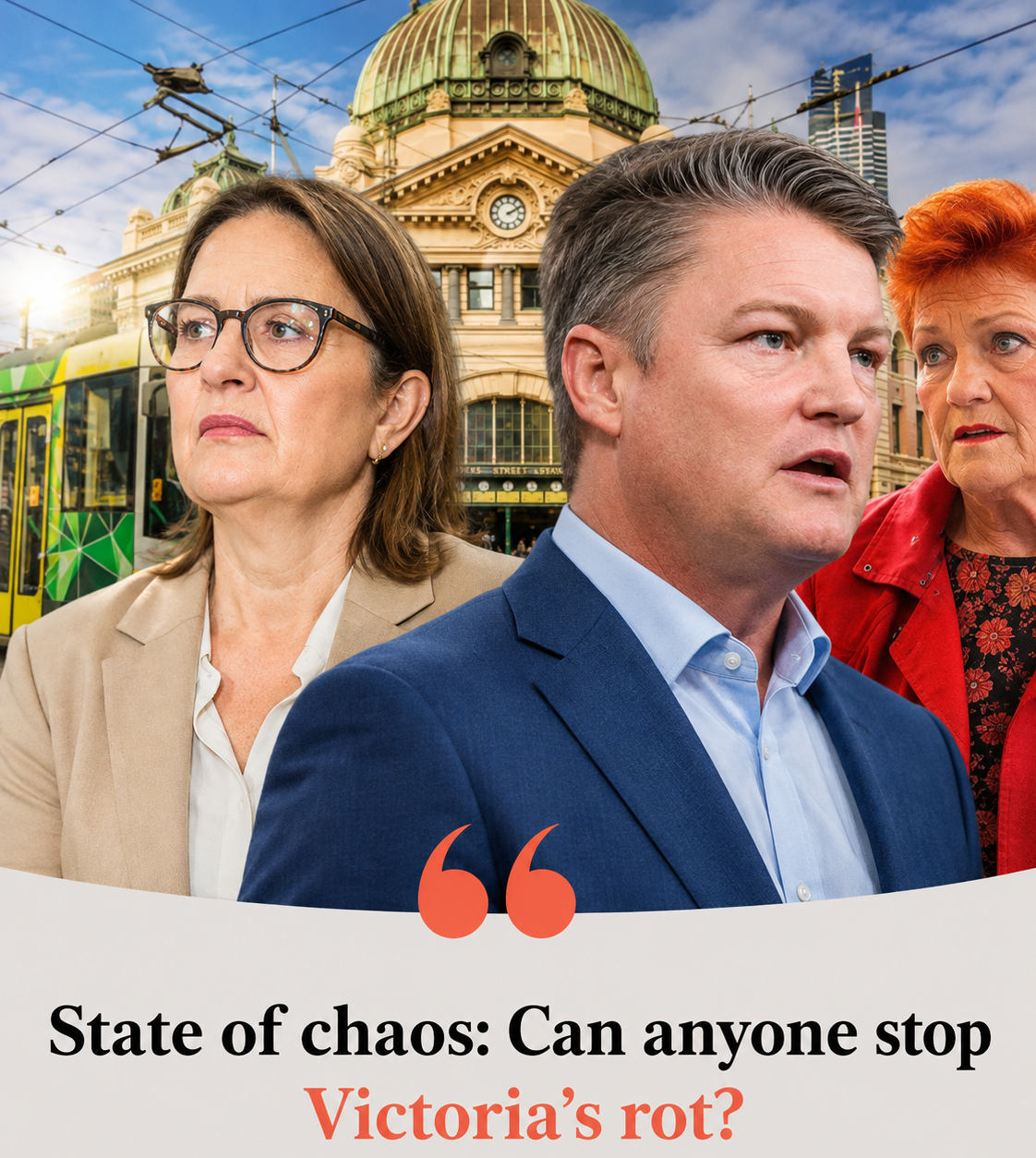
The debate has intensified following the publication of a commentary arguing that, regardless of whether Premier Ben Carroll’s Labor government or Jess Wilson’s Liberal-National Coalition wins office, Victoria is likely to move away from what critics have described as an era of “spendathon politics”. As an opinion article, the piece reflects the author’s analysis rather than an established statement of fact.
The argument is built around a simple proposition: Victoria’s fiscal position has deteriorated to the point where whichever party forms government will have limited room to continue the large-scale spending programs that characterised much of the Daniel Andrews and Jacinta Allan administrations.
Victoria’s finances have become a dominant political issue.
State debt is projected to approach $200 billion over coming years, with increasing interest repayments expected to consume a growing share of government revenue. At the same time, concerns over major infrastructure costs, housing affordability, business confidence and economic growth have become central issues in the election campaign.
Ben Carroll, who recently became Premier following Jacinta Allan’s resignation, has sought to distinguish his leadership from that of his predecessors.
Since taking office, Carroll has promised a renewed focus on budget discipline, stronger engagement with the private sector and a royal commission into alleged corruption connected with Victoria’s multibillion-dollar Big Build infrastructure program. His government has also begun reshaping senior public service leadership as part of a broader administrative reset.
Supporters of Carroll argue he represents a more economically pragmatic style of Labor leadership, drawing comparisons with the Bracks and Brumby governments, which were widely regarded as maintaining closer relationships with business while pursuing fiscal restraint.
Whether Carroll can successfully convince voters that he represents genuine change remains one of the central political questions heading into November.
The commentary argues that Carroll must persuade Victorians he is not simply continuing policies developed under Daniel Andrews and Jacinta Allan, despite having served in their governments for many years. According to the analysis, achieving that distinction will be essential if Labor hopes to retain office after more than a decade in government.
The Coalition is presenting an alternative vision built around many of the same fiscal concerns.
Opposition Leader Jess Wilson has repeatedly argued that Victoria requires tighter financial management, structural reform of the public sector and renewed confidence from private investors. While differing from Labor on specific policies, the Coalition likewise emphasises reducing government expenditure, improving productivity and restoring business investment.
Both parties therefore appear to accept that the state’s financial circumstances no longer permit the scale of spending seen during previous administrations, although they disagree sharply on how budget repair should be achieved.
Infrastructure spending remains one of the most contentious issues.
Victoria’s Big Build program includes dozens of major rail, road and transport projects worth well over $100 billion. While supporters argue the investments are essential to accommodate population growth and modernise transport infrastructure, critics contend escalating costs have contributed significantly to the state’s debt burden.
The Suburban Rail Loop has become the project’s most debated component.
Originally announced before the 2018 election, the orbital rail project has attracted both strong political support and sustained criticism because of its projected long-term cost. Some analysts argue future governments may need to reassess its scope or timing as part of broader fiscal repair efforts.
The article also points to business confidence as another major challenge facing the next government.
Several business leaders have argued that Victoria needs to strengthen investment conditions by reducing debt, improving regulatory certainty and restoring confidence among employers. Advocates of this approach believe stronger private-sector investment will be essential to supporting long-term economic growth and employment.
At the same time, critics of significant spending reductions warn that public investment has played an important role in supporting jobs, expanding transport capacity and maintaining public services. They argue that overly aggressive fiscal consolidation could slow economic growth if not carefully managed.
The election is also unfolding against a backdrop of broader public concerns.
Housing affordability, cost-of-living pressures, crime, health services and government integrity have all featured prominently in political debate during recent months. Carroll has pledged to address several of those issues through changes in government priorities, while the Coalition argues only a change of government can deliver meaningful reform.
Polling has suggested the contest remains competitive.
Recent surveys indicate Labor and the Coalition remain relatively close on a two-party-preferred basis, raising the possibility of either a narrow majority government or a minority parliament depending on the final distribution of seats. Smaller parties and independents, including One Nation in some regional areas, could influence the outcome if neither major party secures an outright majority.
The significance of the election extends beyond Victoria.
As Australia’s second most populous state, Victoria plays an important role in the national economy and federal politics. Any substantial shift in the state’s political direction could influence broader debates about infrastructure spending, debt management, housing policy and economic reform across Australia.
The commentary ultimately argues that Victoria has reached a turning point where fiscal realities are likely to shape government policy regardless of which party wins office. While that assessment remains the author’s opinion rather than an established prediction, it reflects a broader political discussion that has emerged as both Labor and the Coalition increasingly emphasise budget discipline, economic management and rebuilding confidence in the state’s finances.
Whether those promises translate into meaningful policy change will only become clear after Victorians cast their votes on 28 November. Until then, the campaign is expected to revolve around competing claims over which party is better equipped to restore economic confidence while maintaining essential public services in one of Australia’s most politically significant states.






