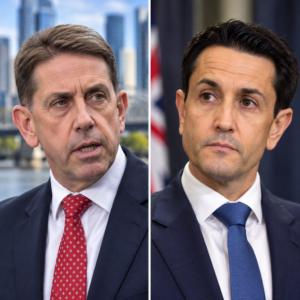
Home Affairs Minister Tony Burke has postponed a major National Press Club address while the Albanese government completes a sweeping package of migration reforms aimed at reducing net overseas migration and preventing people from “gaming the system”.
Burke had been scheduled to outline the government’s next phase of migration reforms at the National Press Club, but the appearance was cancelled shortly before the event after ministers concluded that several elements of the package required further work.
A spokesperson for the minister said the speech would be rescheduled, explaining that some components of the reform package were not finalised in time.
“The speech will deal with the migration system as a whole,” the spokesperson said.
“Yesterday it became clear that some elements of the speech would not be finalised by Thursday. We’re working with the National Press Club to arrange a new date.”
According to multiple reports, the government has been preparing a broad package of measures intended to reduce net overseas migration more quickly while addressing loopholes ministers believe are being exploited by some temporary migrants.
The reforms are expected to tighten several areas of Australia’s migration system without changing the government’s long-term permanent migration program.
Among the proposals reportedly considered by cabinet are stricter rules governing family visas, new limits affecting Working Holiday Maker visa holders and stronger restrictions on the work rights and appeal opportunities available to some asylum seekers whose protection claims have been refused.
One proposal would reportedly prevent the spouses, children and parents of Australian citizens and permanent residents from applying for permanent family visas while visiting Australia on tourist visas.
Instead, applicants would generally need to remain overseas until their permanent visas had been processed, reducing reliance on bridging visas that currently allow many applicants to stay, work and access Medicare while waiting for decisions.
The government is also understood to be considering further changes affecting Australia’s Working Holiday Maker program.
Officials have reportedly examined options that would place broader limits on backpackers seeking to extend their visas into second or third years.
At present, lotteries already apply to applicants from several countries in some visa categories, while many backpackers become eligible for additional years by completing specified regional work. The government has not yet confirmed which, if any, of those arrangements will change.
Another key focus is the asylum system.
Sources familiar with the discussions say ministers are considering measures to reduce incentives for non-genuine protection claims by limiting employment rights for certain applicants while their cases are assessed and tightening access to review and appeal processes after unsuccessful decisions.
The proposed package forms part of Labor’s broader strategy to bring net overseas migration closer to the levels projected in recent federal budgets.
Following the post-pandemic reopening of Australia’s borders, net overseas migration rose to record levels before beginning to decline.
Although the latest figures show a substantial reduction from the 2023 peak, migration has remained above Treasury’s earlier forecasts, placing continuing pressure on housing, infrastructure and public services.
The Albanese government argues that migration remains essential for Australia’s economy but says it must be managed at sustainable levels.
Ministers have repeatedly stated that skilled migration remains important for sectors such as healthcare, aged care, construction and defence while acknowledging community concern about housing affordability and infrastructure capacity.
Recent administrative changes have already shifted visa processing priorities toward skilled migrants already living in Australia and workers in sectors experiencing significant shortages. Visa application charges have also increased across several categories.
Political pressure surrounding migration has intensified during the past year.
Both the Coalition and Pauline Hanson’s One Nation have argued that migration should be reduced further, linking higher population growth to Australia’s housing shortages and rising cost-of-living pressures.
The growing political focus on migration has become one of the defining policy debates ahead of Parliament’s return.
The postponement of Burke’s speech has prompted speculation that elements of the package generated robust discussion within cabinet.
While some reports suggested disagreements over particular reforms, government sources have downplayed claims of major internal divisions, describing the remaining issues as matters of policy detail rather than fundamental disagreement.
Officials have said ministers wanted to ensure the package was legally robust before announcing reforms that could significantly reshape Australia’s migration system.
Opposition politicians have criticised the delay, arguing it reflects uncertainty within the government over how to address migration.
Coalition Home Affairs spokesman Jonathon Duniam said Labor had lost control of Australia’s migration system, while One Nation has continued calling for substantially lower migration levels than either major party currently supports.
Business groups have urged caution.
The Australian Chamber of Commerce and Industry warned against introducing measures that unnecessarily reduce access to skilled workers, arguing that labour shortages remain a significant challenge for many industries.
The organisation supported migration returning to sustainable levels but cautioned against changes that could unintentionally damage economic growth or worsen workforce shortages.
Human rights and refugee organisations have also expressed concern about reports that asylum seekers could face tighter work rights and reduced access to appeals.
Several advocacy groups argue that any reforms should continue protecting Australia’s international humanitarian obligations while ensuring asylum seekers are able to support themselves during lengthy visa processing periods.
Although Burke’s speech has been delayed, government sources indicate the reform package itself remains on track.
Once final details are settled, the Home Affairs Minister is expected to return to the National Press Club to outline what is likely to become one of the Albanese government’s most significant migration policy announcements since winning office.