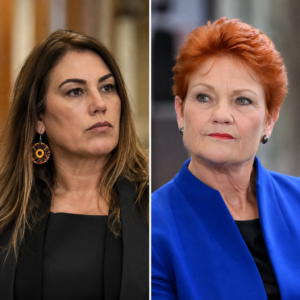
High school and university students across Australia are preparing to walk out of classrooms next week as part of a coordinated national protest targeting Pauline Hanson and her political party, One Nation, in what organisers describe as one of the largest youth demonstrations against the party in recent years.
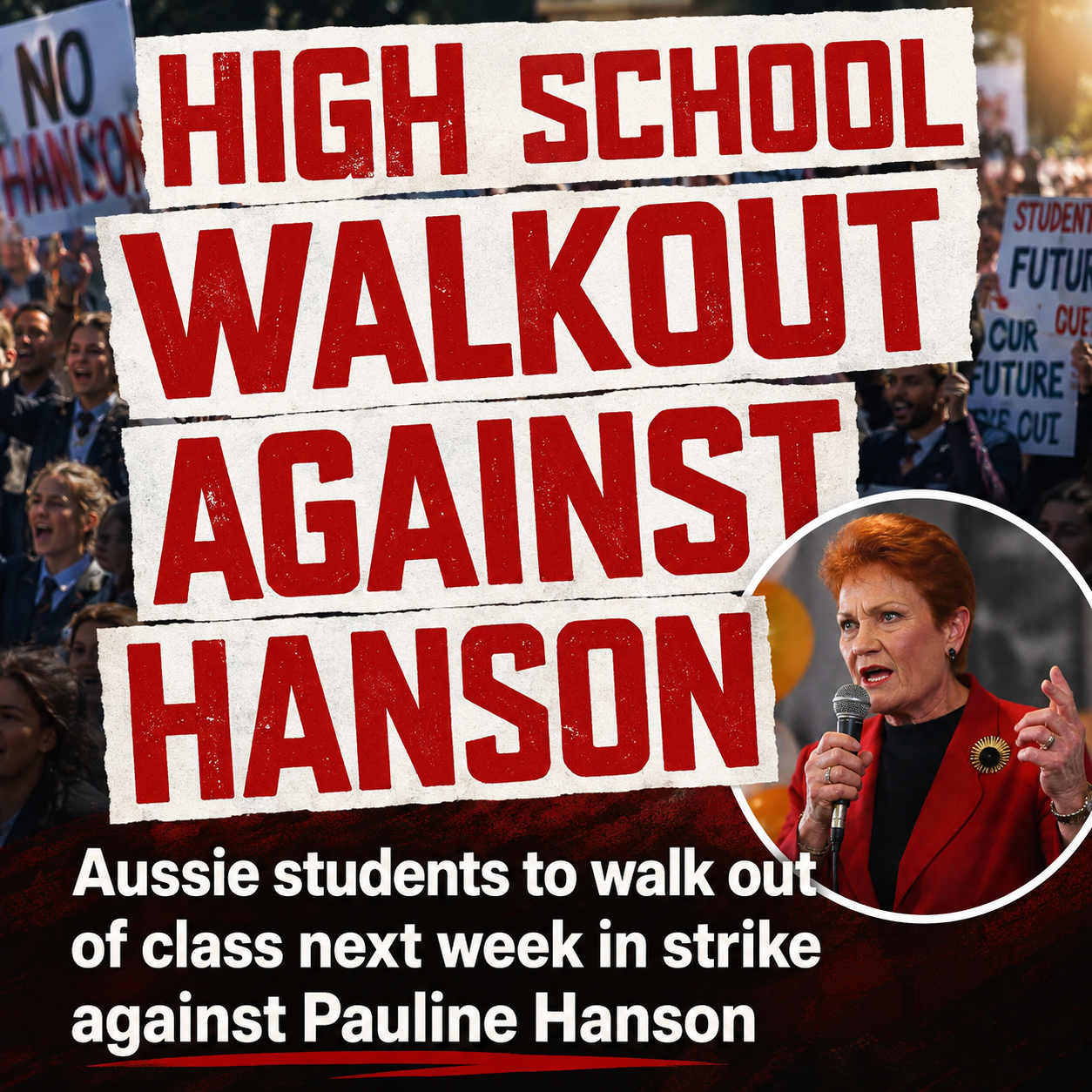
The protest, branded Students Say No to Hanson, is scheduled for 13 August and is being organised by activist groups including High School Anticapitalists, with support from a number of university student organisations around the country. Demonstrations are planned in Adelaide, Melbourne, Sydney, Brisbane, Canberra, Perth, Wollongong and Newcastle.
Organisers say students will leave school during the day to protest what they describe as the growing influence of Pauline Hanson and One Nation ahead of upcoming elections.
In promotional material circulated online, High School Anticapitalists accused One Nation of promoting “racist”, “anti-worker” and authoritarian politics while claiming the party’s ideas have increasingly been legitimised by Australia’s major political parties.
The group also argued that mainstream political debate has shifted in ways that have helped normalise positions it opposes on immigration, multiculturalism and social policy. Those statements reflect the organisers’ political views and have not been independently verified.
One of the campaign’s most widely shared social media posts claimed that One Nation was polling at around 30 per cent nationally and was “rapidly cohering a large following of bigots and sickos”.
That characterisation represents the organisers’ opinion rather than an established fact. While several recent opinion polls have shown One Nation enjoying significantly stronger support than in previous years, polling results vary between organisations and should not be interpreted as election outcomes.
Student organisers say they see the demonstrations as a continuation of earlier youth campaigns against Hanson dating back to the late 1990s, when One Nation first emerged as a major political force.
Melbourne organiser Jules Arpula said students believed they had a responsibility to publicly oppose what they consider far-right politics, arguing that remaining silent would contribute to the normalisation of ideas they strongly reject.
In South Australia, organiser Jordan Armstrong said the demonstrations were intended to express widespread opposition to Hanson’s political agenda and encourage young Australians to become politically active.
Armstrong said organisers expected thousands of students to participate nationwide, with rallies planned outside state parliament buildings and other public locations.
The campaign has attracted backing from several student organisations, including Socialist Alternative branches at universities, university student representative bodies and local activist groups.
Supporters argue that students have a long history of participating in political demonstrations on issues they believe will shape Australia’s future, including climate change, education funding and social justice.
They contend that peaceful protest is an important democratic right and that young people should not be discouraged from participating in public debate simply because they are still at school.
One Nation has rejected the campaign’s portrayal of the party.
South Australian One Nation president Carlos Quaremba said the party respected the right of Australians to protest peacefully but criticised organisers for refusing to engage in discussion with party representatives.
According to reports, two One Nation staff members attended a protest planning meeting but were asked to leave after being recognised by organisers. Quaremba argued the incident suggested organisers were more interested in campaigning against the party than engaging in genuine debate.
The demonstrations have also prompted responses from education authorities.
South Australian Education Minister Lucy Hood said regular school attendance remains the government’s expectation but acknowledged that participation in protests ultimately rests with individual families.
“School is the best place for a child to be during the school week,” Hood said, while noting that parents are responsible for decisions about whether their children attend the rallies. Similar advice has been issued by education authorities in Victoria, where normal attendance policies will continue to apply.
The planned walkouts come during a period of heightened attention on One Nation following a series of high-profile political developments.
Pauline Hanson recently launched the party’s Victorian election campaign, announced Warren Pickering as the party’s Victorian leader and generated widespread debate after excluding journalists from the ABC, The Guardian and The Age from the campaign launch media conference.
At the same time, recent polling has suggested One Nation has increased its support in several jurisdictions, although estimates differ depending on the polling organisation and methodology used.
The protests have also become part of a broader debate about political activism in schools.
Supporters say students have every right to participate in peaceful demonstrations outside school hours or by choosing to miss classes in support of causes they believe are important.
Critics argue that schools should remain focused on education rather than political campaigning and question whether organised walkouts encourage balanced civic engagement.
Opinion pieces published this week have reflected those differing views. Some commentators argue young people are exercising their democratic rights, while others claim activist organisations are using schools as a platform for broader political campaigns. Those commentaries represent the views of their respective authors rather than established facts.
Australia has a long tradition of student activism stretching back decades, with previous generations participating in demonstrations over the Vietnam War, climate policy, Indigenous rights, university funding and education reform.
Whether the latest protests have any lasting political impact remains uncertain.
For organisers, the objective is to send a public message that young Australians oppose Pauline Hanson and One Nation’s political platform.
For One Nation, the demonstrations represent another example of organised political opposition as the party seeks to build on recent electoral momentum ahead of upcoming state and federal contests.
As 13 August approaches, schools, parents and political leaders will be watching closely to see how many students ultimately take part and whether the demonstrations become another flashpoint in Australia’s increasingly polarised political debate.