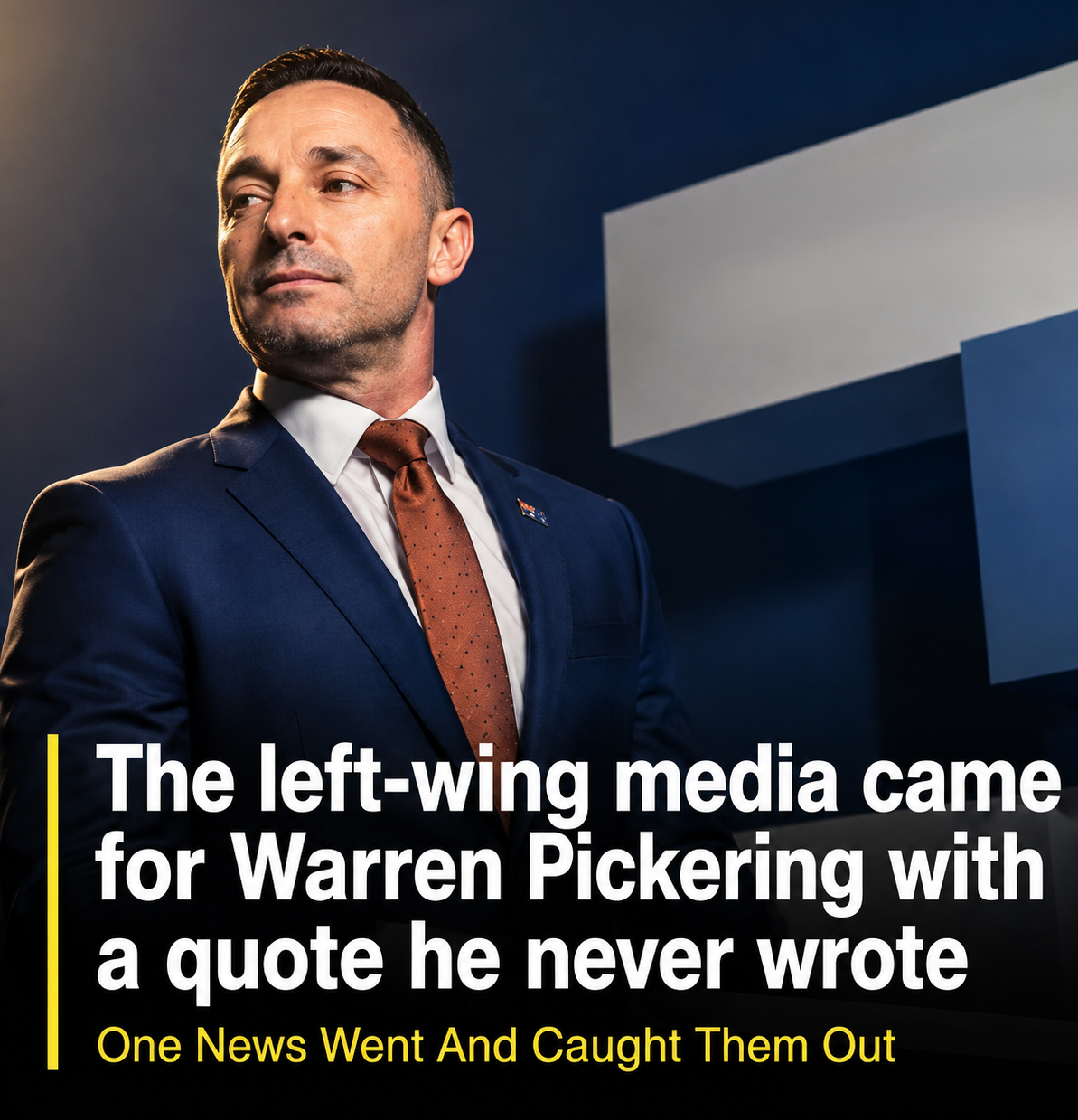
A dispute over the way several of Australia’s largest news organisations quoted newly appointed One Nation Victoria leader Warren Pickering has intensified, with critics accusing the publications of altering the meaning of a public Facebook post during coverage of his political debut.
The controversy follows One Nation’s decision to bar journalists from The Age, the ABC and The Guardian from the party’s Victorian candidate launch in Melbourne earlier this week. The move itself drew widespread criticism from political opponents and media organisations, while Pauline Hanson defended the ban by alleging long-running bias against her party. The exclusion was widely reported across Australia’s major news outlets.
According to the source material provided, the central dispute concerns the way a Facebook post by Mr Pickering was quoted in subsequent reporting.
The supplied source alleges that The Age, The Sydney Morning Herald and later the ABC presented a quotation suggesting Pickering had described himself as a conspiracy theorist. It argues that the published quotation combined words taken from different parts of his original post while omitting a section that identified the specific organisations he was referring to.
The source contends that the omitted wording changed the meaning of the post, arguing that Pickering was discussing how people like himself were labelled “conspiracy theorists” rather than identifying himself as one.
At the time of writing, the organisations involved have publicly characterised Pickering’s comments differently in their reporting, while the supplied material disputes those interpretations. This article does not independently verify the competing claims about the precise wording beyond the material supplied.
The disagreement has become part of a much broader political battle over media coverage of One Nation as the party attempts to expand its presence ahead of Victoria’s state election.
Warren Pickering was officially unveiled this week as One Nation’s Victorian leader and the party’s candidate for Pakenham. Pauline Hanson described him as central to the party’s campaign in Victoria as it seeks to build on recent polling gains nationally.
Pickering’s personal background has featured prominently in One Nation’s presentation of its new leadership team.
He has previously worked as a bricklayer, served in the Australian Army as a combat engineer and has spoken publicly about raising his daughter as a sole parent. During his appearance on Paul Murray Live, Pickering discussed what he described as the challenges faced by fathers seeking custody through Australia’s family law system.
Those comments have become part of One Nation’s broader campaign messaging, with the party continuing to argue that family law reform deserves greater political attention.
The dispute over media reporting emerged within days of Pickering’s appointment and quickly became intertwined with the broader debate surrounding One Nation’s relationship with mainstream media.
Pauline Hanson defended excluding several major media organisations from Monday’s launch, arguing they had repeatedly treated her party unfairly. Critics, including federal ministers, responded that politicians should remain accountable to all media regardless of whether coverage is favourable.
The decision sparked significant national discussion because the ABC, The Age and The Guardian are among Australia’s most influential news organisations.
Opinion writers have also entered the debate. Some commentators defended Hanson’s decision as a response to perceived media bias, while others argued restricting journalistic access undermines political transparency and public accountability.
The disagreement also highlights a broader issue that extends well beyond this particular political dispute: the importance of accurate quotation and context in political reporting.
Journalistic practice generally requires quotations to fairly represent a speaker’s intended meaning, even where minor edits are made for brevity or clarity. Critics argue that removing contextual wording can substantially alter how readers interpret a statement, while editors maintain that quotations may be shortened provided their essential meaning remains intact.
Whether that standard was met in this instance remains contested.
The supplied source argues that readers can compare Pickering’s original Facebook post with the published articles and reach their own conclusions regarding whether the quotation accurately reflected his comments.
Meanwhile, Pickering himself has already attracted broader national attention following earlier reporting examining his previous podcast interviews, political positions and comments on immigration policy. Those reports have contributed to increasing scrutiny as One Nation attempts to establish a stronger electoral presence in Victoria.
The dispute comes at a politically significant moment.
Victoria’s state election campaign is expected to feature growing competition among Labor, the Coalition, the Greens and several minor parties, including One Nation, which believes dissatisfaction with the major parties has created opportunities in a number of electorates.
For One Nation, media coverage surrounding its candidates is likely to remain a central campaign issue.
For Australia’s major news organisations, the episode has also renewed discussion about editorial standards, quotation practices and the responsibilities that accompany reporting on highly polarising political figures.
Regardless of where readers fall politically, the controversy demonstrates how disputes over wording and context can quickly become larger debates about trust, media credibility and public confidence in political journalism.






