Tasmania’s Justice Department has launched a review of past parole decisions to determine how widely artificial intelligence may have been used, after the Supreme Court found that a parole-board document relied on fictitious case law that was likely produced by AI.
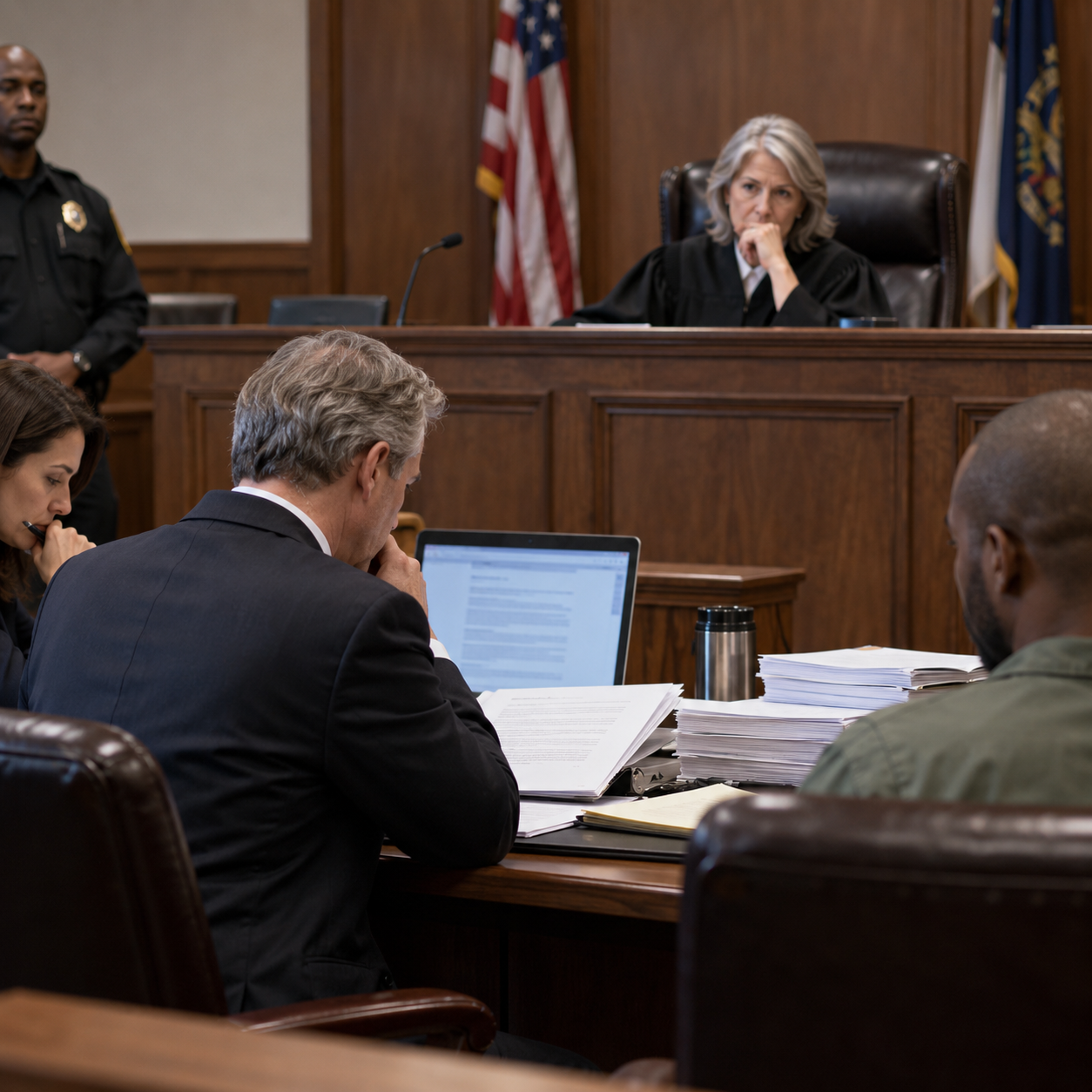
The review follows the successful legal challenge by Susan Neill-Fraser to a parole condition that restricted her from speaking to the media about her claimed innocence or alleged wrongful conviction.
Neill-Fraser was convicted of murdering her partner, Bob Chappell, in 2009 and served 13 years in prison before being released on parole in 2022. Her conviction remains in place. The recent Supreme Court case concerned a condition of parole, not a retrial of the murder conviction.
The Parole Board of Tasmania had added a condition in December 2024 restricting her media comments. A replacement condition introduced in May 2025 was challenged in the Supreme Court.
Justice Stephen Estcourt ruled the condition invalid, finding that it denied Neill-Fraser procedural fairness, was legally unreasonable and created uncertainty. The court also heard that a document used to support the condition cited case law that did not exist.
The board conceded that artificial intelligence had been used in preparing the material. The fictitious authorities were described in court as likely “AI hallucinations” — the term commonly used when a generative AI system produces information that appears plausible but is false.
The immediate legal problem was not simply that software had been used. It was that false legal authorities entered a decision-making process that affected a person’s parole conditions and were not caught before the material was relied upon.
That distinction is important as governments and courts consider how AI can be used in legal and administrative work. Software may assist with tasks such as summarising documents or organising information, but responsibility for checking the law and making a valid decision remains with the human decision-maker.
Tasmanian Attorney-General Guy Barnett has described the episode as an access-to-justice and procedural-fairness issue. He has also stressed that the parole board is independent and that the government does not direct its individual decisions.
After the Supreme Court ruling, Mr Barnett sought an explanation from the board about its professional standards and asked for assurances that the failure would not be repeated.
The Justice Department has now gone further by confirming it will examine past parole-board decisions to establish the extent to which AI may have been used and whether that use informed outcomes.
The wording of that review is deliberately broader than the Neill-Fraser case, but it should not be read as proof that other decisions were affected by fabricated material. At this stage, the department is trying to find out whether the problem was isolated or part of a wider practice.
The Parole Board has declined to provide detailed public answers about how often AI was used, what internal policies applied or whether other files are affected. It has said it does not comment on individual matters.
That leaves several practical questions for the review. Investigators will need to distinguish between incidental use of AI and use that materially influenced reasons, legal analysis or conditions imposed on parolees.
They will also need to determine whether AI-generated material was independently checked against authorised legal sources. A fabricated case name can look convincing, especially when a system produces realistic citations, but a basic verification against court databases or official reports should reveal that the authority does not exist.
The Neill-Fraser episode is especially serious because parole conditions can affect fundamental aspects of a person’s daily life, including where they live, who they contact, what they do and, in this case, what they could say publicly.
Parole is not the same as an unconditional release from sentence. Boards can impose conditions designed to manage risk and support reintegration, but those conditions still have to be lawful, clear and reached through a fair process.
When a public authority relies on invented legal material, the risk is not limited to embarrassment. False authorities can distort the reasoning used to justify a decision, make it harder for an affected person to understand the legal basis for a restriction and undermine confidence that similar cases are being handled consistently.
Legal advocates have responded strongly. Barrister Greg Barns SC, from the Prisoners Legal Service, has argued that people responsible for generating or relying on the false case law should resign or be removed. That is his position; the government has not announced dismissals and has said employment matters involving individuals are not something it will publicly address while the review is under way.
The Human Rights Law Centre has also criticised the use of AI in the case, arguing the episode exposed serious weaknesses in the parole process. The organisation represented concerns about the impact of the condition on Neill-Fraser’s ability to speak about her case.
For the Justice Department, the task now is to separate the systemic question from the political reaction. The review will need evidence about what tools were used, when they were used, who checked the output and whether any inaccurate material made its way into final decisions.
There is also a record-keeping issue. If AI was used informally by staff or board officers, there may be a difference between material generated during drafting and material that became part of an official decision record.
That matters because not every use of a digital tool necessarily changes an outcome. The key concern is whether unverified or incorrect AI output influenced a decision that would otherwise have been made differently or on a different legal basis.
The case is part of a wider challenge facing courts, tribunals and government agencies. Generative AI can produce fluent language quickly, but it does not reliably distinguish between genuine and invented authorities unless users verify the output against primary sources.
Legal professionals have already been warned in multiple jurisdictions about submitting AI-generated material without checking citations. The Tasmanian case shows the same risk can arise inside public administration, where decisions may be made by boards and agencies rather than courts.
That does not mean the Justice Department has concluded that AI should never be used. Its announced review is focused on understanding past use and its effect. Any future rules, safeguards or restrictions will depend on what the review finds.
The immediate status of Neill-Fraser’s case is clearer. The challenged media condition has been ruled invalid. Her murder conviction remains unchanged, and she remains a parolee subject to other lawful conditions.
The broader uncertainty sits with the parole system itself. If the review finds other decisions relied on unverified AI material, the department and board may need to determine whether those cases require fresh consideration.
If no further affected decisions are found, the episode may remain an isolated but significant failure of verification.
The concept of procedural fairness is central to the court’s criticism. Public decision-makers must generally give an affected person a fair opportunity to know and respond to material that may influence a decision, particularly where the decision restricts rights or liberty.
If a rationale contains non-existent cases, the person affected cannot meaningfully test those authorities or understand the legal foundation being used against them. That is why fabricated citations can become more than a technical drafting error.
There is also a difference between using AI for low-risk administrative assistance and using it to generate legal propositions. A tool that helps format a chronology is not performing the same function as a tool that supplies supposed precedents to justify a coercive condition.
Any review of past files will therefore need to identify where AI sat in the workflow. It may need to distinguish material generated by secretariat staff, draft notes considered by board members and reasoning that appeared in final decisions.
Verification is particularly important with legal citations because the existence, jurisdiction and authority of a case can usually be checked against official court databases or authorised reports. A plausible-looking name and citation should never substitute for that check.
The episode also raises governance questions about audit trails. If agencies permit generative AI, they need to know what information was entered, what output was produced, who reviewed it and whether sensitive information was exposed to an external system.
The Justice Department has not yet announced the review’s methodology or completion date. Until it does, claims about how many parole decisions may be affected would be speculation.
What the department has confirmed is narrower but important: it is looking back through past decisions to determine the extent of AI use and whether that use informed outcomes. That review now becomes the factual basis for any later changes to policy, training or case handling.
Either way, the review has already established a central principle: using AI does not transfer responsibility away from the people making public decisions. When liberty, legal rights and conditions of parole are involved, the underlying law and evidence still have to be checked by humans and capable of standing up to scrutiny.