Tasmania’s Parole Board is facing calls to explain how fictitious legal authorities believed to have been generated by artificial intelligence were cited in a Supreme Court case over a parole condition imposed on convicted murderer Susan Neill-Fraser.
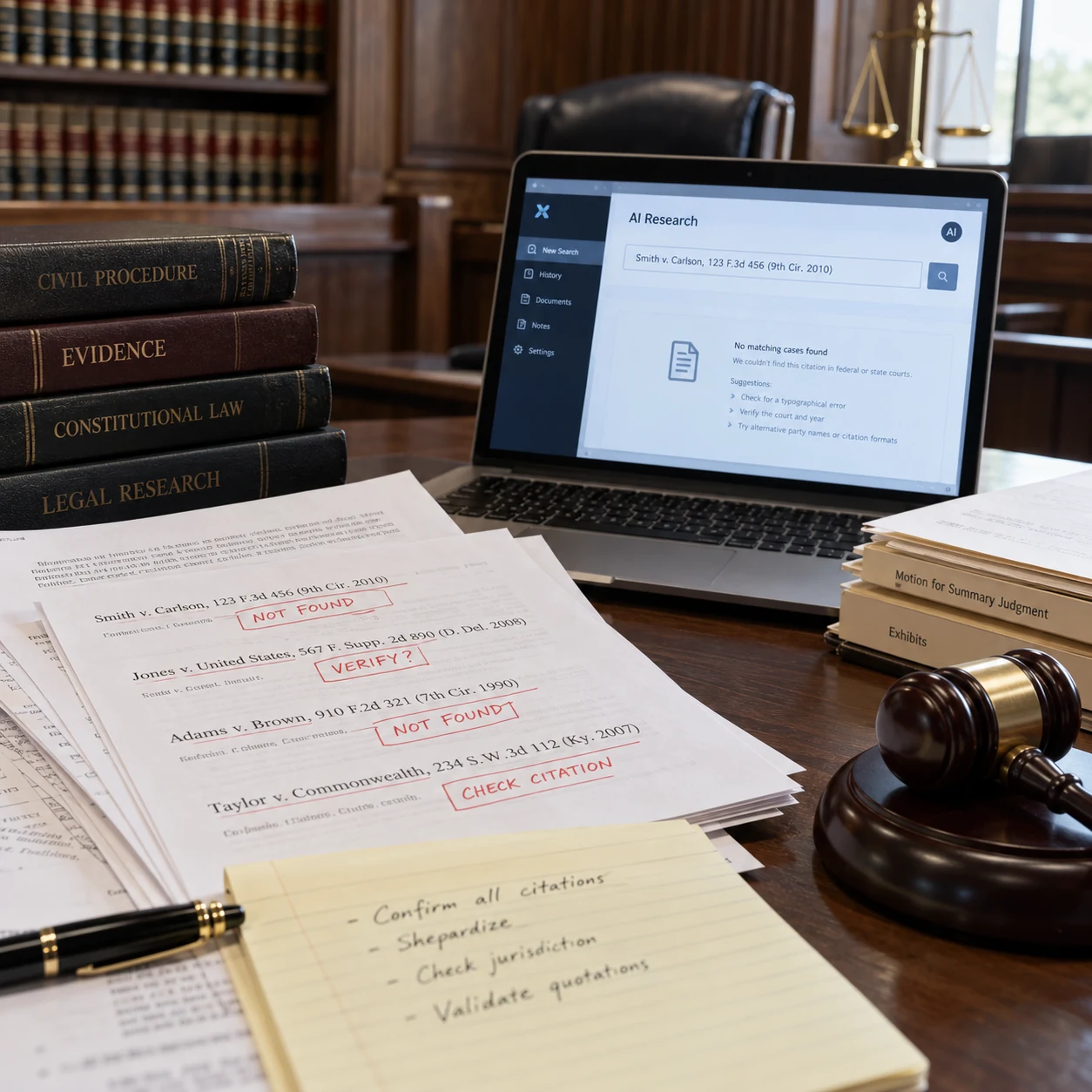
The scrutiny follows a ruling by Justice Stephen Estcourt that invalidated a condition restricting Neill-Fraser from discussing her claim of innocence or alleged miscarriage of justice with the media. In examining the board’s legal material, the court identified case citations that did not exist and were described in the proceedings as likely AI “hallucinations”.
The finding has created a separate institutional issue from the underlying Neill-Fraser case: how unverified AI-generated legal research could enter material relied on by a statutory decision-making body and reach the state’s highest court.
Neill-Fraser was convicted of murdering her partner, Bob Chappell, and spent about 13 years in custody before being released on parole in 2022. She has continued to maintain her innocence.
The latest court case did not overturn her murder conviction.
It concerned a later parole condition that sought to prevent her from engaging with media about claims of innocence or wrongful conviction. Justice Estcourt ruled the condition invalid on administrative-law grounds, including procedural fairness, legal unreasonableness and uncertainty.
That distinction is essential. The Supreme Court was examining the legality of a parole condition, not retrying the murder case or determining that Neill-Fraser had been wrongfully convicted.
During the challenge, Neill-Fraser’s legal team checked authorities cited in material associated with the board’s position and discovered that some could not be located.
ABC News reported that the judgment described the supposed authorities as fictitious and likely examples of artificial-intelligence hallucination — the term used when a generative AI system produces information that sounds plausible but is false.
Legal citations are particularly vulnerable to this kind of error because AI systems can construct realistic-looking case names, court abbreviations, dates and citation numbers by imitating patterns found in genuine legal writing.
To a reader who does not independently verify the source, a fabricated citation can look authoritative.
In a legal proceeding, that risk is serious.
Courts depend on parties and decision-makers accurately identifying statutes, judgments and other authorities. A non-existent case cannot support a legal proposition, cannot be read in context and cannot be tested by the opposing side.
The problem is therefore not simply that an AI tool made a mistake. The institutional question is why the mistake was not detected before the material was used.
Tasmanian Attorney-General Guy Barnett has asked the Parole Board for an explanation and assurances about professional standards following the judgment. The board is an independent statutory body, and the government does not direct its individual parole decisions.
That independence protects parole decisions from day-to-day political interference, but it does not remove the need for accountability over administrative and legal processes.
Critics and advocates connected with the Neill-Fraser case have called for stronger action, including scrutiny of board practices and, in some cases, resignations. Those calls are political or advocacy responses; they are not findings made by Justice Estcourt.
The court’s findings themselves are more specific.
The parole condition was invalid, and the legal material before the court included authorities that could not be verified and were regarded as fictitious. The judgment raises questions about the reliability of the research process used in the matter.
Artificial intelligence is increasingly used across professional workplaces to summarise documents, draft text, search large amounts of information and generate first-pass research.
Law is one of the areas where the efficiency gains can be attractive but the consequences of an unchecked error can be unusually high.
A hallucinated citation can affect a client’s case, waste court time, undermine confidence in a submission and expose the person or institution relying on it to professional or reputational consequences.
The safest professional use of generative AI in legal work therefore requires verification against authoritative legal databases or the original judgment.
That principle is not unique to courts.
Government agencies, boards and tribunals often make decisions that affect liberty, employment, benefits, licensing or other important rights. If AI is used to help research or draft material, the human decision-maker still has to ensure the information is accurate and the cited authority actually exists.
The Neill-Fraser case is likely to attract particular attention because the broader murder conviction has been the subject of sustained public debate and advocacy for years.
That history makes precise language especially important.
Neill-Fraser remains a convicted murderer who is on parole. The Supreme Court’s ruling about the media condition did not declare her innocent. The finding about fictitious authorities concerns the Parole Board’s legal material and decision-making process in the later parole dispute.
Those facts can coexist.
It is possible for a criminal conviction to remain in force while a later administrative decision involving the same person is found unlawful. Administrative-law review is designed to test whether a public body acted within its powers and followed legally required procedures, rather than to reopen every underlying fact in the original criminal case.
The Attorney-General’s request for an explanation now puts attention on what the board does next.
Important questions include whether AI was in fact used, who generated or approved the citations, what checking process existed, whether other decisions should be reviewed and what safeguards will apply to future research.
There is no basis to assume from this single case that every Parole Board decision contains AI errors. Any broader audit or review would need evidence rather than inference.
But the incident demonstrates why high-stakes public bodies cannot treat generative AI output as a legal authority in itself.
For courts, lawyers and statutory boards, a citation is useful only if it can be found, read and verified.
The immediate legal outcome is that the challenged media restriction on Neill-Fraser was struck down. The wider institutional issue — how fictitious case law entered the process and what will be done to prevent a repeat — is now the question the Tasmanian government and Parole Board are being pressed to answer.