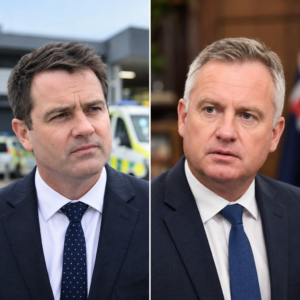
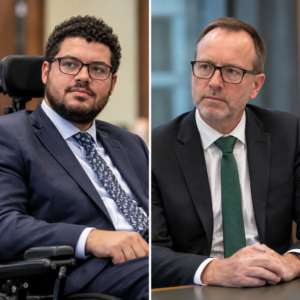
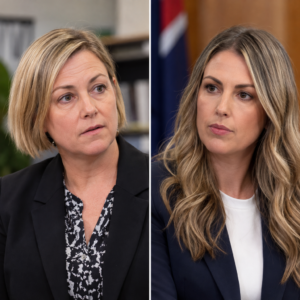
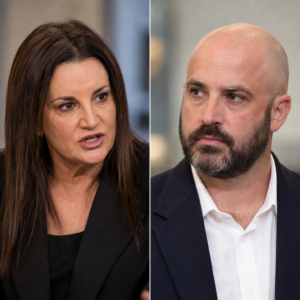
Senior Labor minister Tanya Plibersek has condemned the circulation of an AI-generated image falsely depicting herself and several female cabinet colleagues wearing expensive designer fashion in Parliament, warning that artificial intelligence is already reshaping Australia’s political landscape through increasingly convincing misinformation.
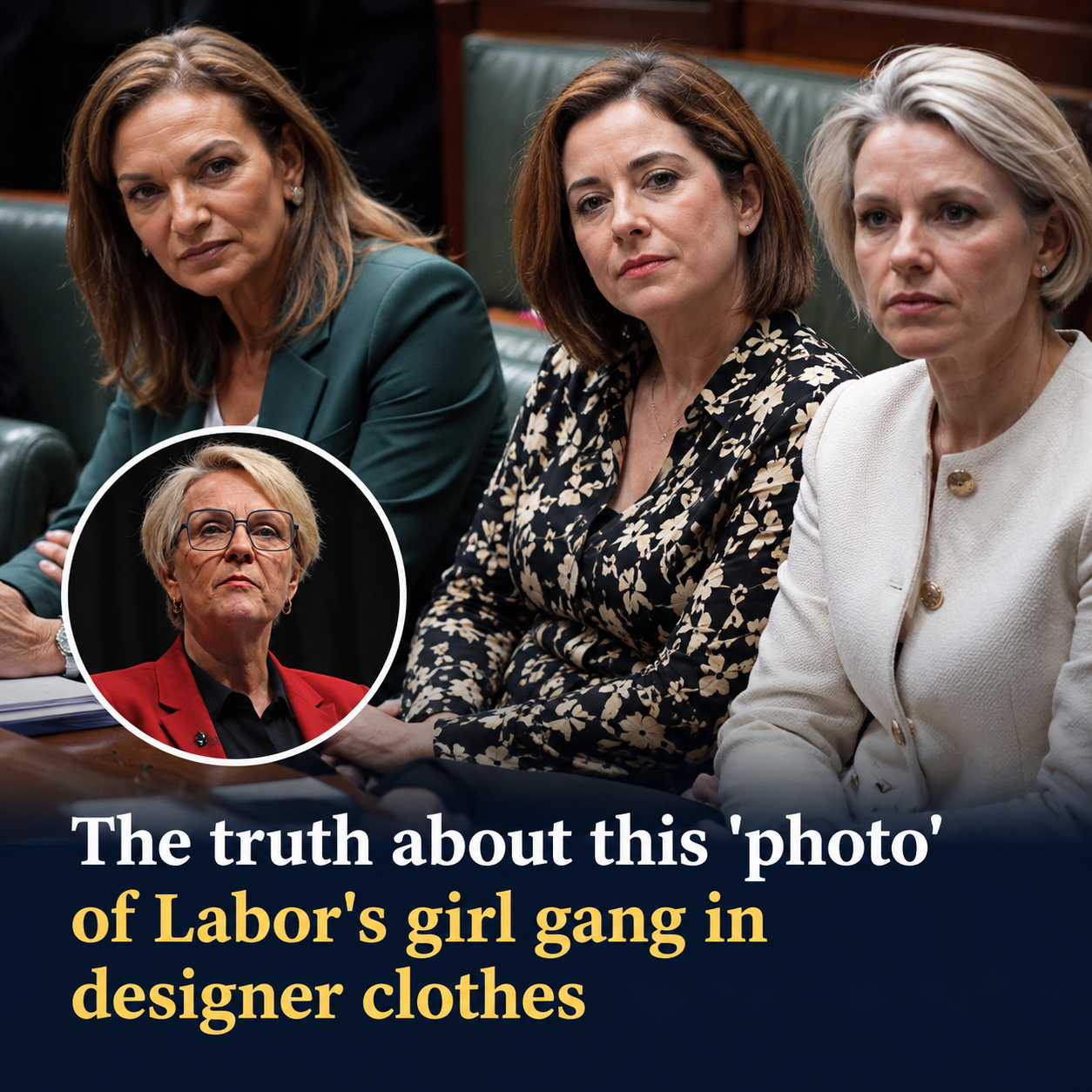
The manipulated image, which has spread widely across Facebook, X and other social media platforms, appears to show Social Services Minister Tanya Plibersek, Housing Minister Clare O’Neil, Communications and Sport Minister Anika Wells and Small Business Minister Anne Aly seated during Question Time wearing clothing branded with luxury labels including Gucci, Versace, Prada and Louis Vuitton.
In reality, the image is an AI-edited version of a genuine Australian Associated Press (AAP) photograph taken by photographer Mick Tsikas during Question Time in the House of Representatives on 25 November 2025. The original photograph shows all four ministers wearing ordinary business attire with no visible luxury branding.
Reverse image searches and independent fact-checking have confirmed the social media image was digitally altered using artificial intelligence to add designer clothing and logos that never appeared in the original photograph.
The fabricated version has nevertheless attracted significant attention online, with numerous users appearing to believe it was authentic and suggesting taxpayers had funded extravagant wardrobes for cabinet ministers.
Responding publicly to the doctored image, Plibersek described it as one of many examples of AI-generated content that has targeted her in recent months.
“I know a lot of people are worried about AI and how it’s already changing our daily lives,” she said.
“This photo is one of the milder examples of the ways my image has been manipulated.”
She added that much of the AI-generated material circulating online involving her was “too inappropriate to share”, describing much of it as “AI slop”.
Plibersek said the episode demonstrated why governments need to remain alert to the rapid development of generative artificial intelligence and its growing capacity to create realistic but entirely false political content.
“Australia might seem like a small player in this global conversation, but we have a history of standing up to big tech when it matters,” she said.
She pointed to the federal government’s broader digital reform agenda, arguing Australia had already shown a willingness to regulate major technology companies through previous online safety measures and should continue developing stronger safeguards for AI technologies.
According to Plibersek, the next phase of reform should establish clear national standards governing artificial intelligence while strengthening protection for Australian intellectual property and creative industries.
She argued that creators, artists, photographers and rights holders deserve greater certainty about how their work may be used to train or generate AI systems in future.
The comments align with the Albanese government’s broader AI policy agenda.
In July, the federal government announced plans to develop national standards and legislation designed to ensure artificial intelligence is deployed safely and in Australia’s interests.
The Office of AI has been established within the Department of the Prime Minister and Cabinet to coordinate policy development and work alongside National Cabinet on a nationally consistent regulatory framework.
The government intends to introduce legislation supporting those standards during the coming year as part of its wider digital governance strategy.
The emergence of convincing AI-generated political imagery has become an increasingly significant challenge for governments, election authorities and technology companies around the world.
Generative AI systems can now produce highly realistic photographs, videos and audio recordings within minutes, making it increasingly difficult for ordinary users to distinguish authentic material from sophisticated digital fabrications.
Experts warn that false political content shared during election campaigns can spread rapidly before corrections or fact checks reach similar audiences.
The viral image involving Labor ministers illustrates how AI-generated material can reinforce existing political narratives even when entirely fabricated.
Some social media users responded to the altered image by criticising the ministers over alleged extravagance and misuse of taxpayer funds, apparently believing the luxury clothing shown in the image was genuine.
Those reactions demonstrate the persuasive power of realistic AI-generated imagery and the importance of verifying content before sharing it online.
Independent fact-checkers were able to identify the manipulation by tracing the image back to the original AAP photograph and comparing the two versions side by side.
The comparison clearly showed that clothing, logos and other visual elements had been digitally inserted while the ministers’ poses and parliamentary setting remained identical to the authentic photograph.
The incident is not the first time Australian politicians have become the subject of AI-generated misinformation.
Public figures from across the political spectrum have increasingly reported seeing fabricated images, manipulated videos and synthetic audio circulating online, reflecting the growing accessibility of generative AI software.
Media experts say these developments present new challenges not only for governments but also for journalists, social media platforms and the public, all of whom must adapt to an environment in which highly convincing fake content can be created quickly and distributed globally within minutes.
Technology companies have introduced a range of measures, including AI labels, detection systems and content moderation tools, but researchers acknowledge that identifying manipulated material remains an ongoing technological race between AI developers and detection systems.
For Australia’s political leaders, the incident involving Plibersek has become another reminder that artificial intelligence is no longer simply a future policy issue.
Instead, it is already influencing public debate, shaping political narratives and creating new risks for democratic institutions.
As Parliament considers future AI regulation, policymakers face the challenge of balancing technological innovation with safeguards that protect Australians from deception, misinformation and misuse while preserving legitimate freedom of expression and creativity.