A swimmer has died after a shark attack at Sorrento Beach in Perth’s northern suburbs, prompting a major emergency response and the closure of beaches across the City of Joondalup.
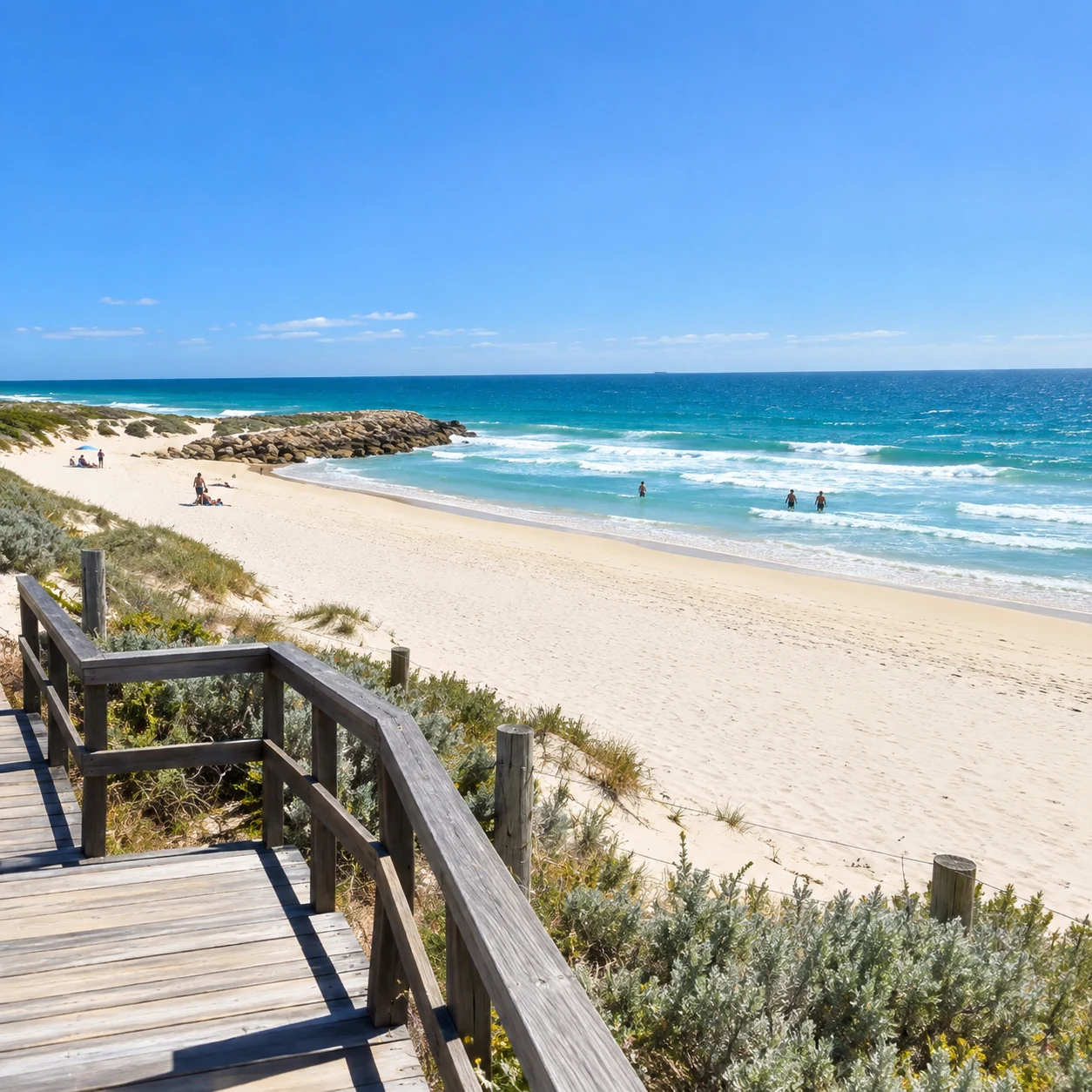
Emergency services were called to the popular beach at about 10.15am on Friday after reports of a serious shark incident involving a swimmer. Western Australian authorities later confirmed the man had died as a result of the attack.
Witness accounts described two men swimming offshore before the incident unfolded. One swimmer returned to shore while the other did not. Police and maritime authorities mounted a response involving officers on the beach, vessels on the water and aerial surveillance.
The Department of Primary Industries and Regional Development said it was assisting WA Police and local authorities. The City of Joondalup closed beaches within its boundaries as a precaution, while SharkSmart WA warned people to stay out of the affected area and follow directions from rangers, police and surf lifesaving personnel.
The closure initially covered the coastline from the Marmion Beach Emergency Number sign in the south to the Iluka area in the north. Authorities said the beaches would remain closed until at least midday on Saturday, when conditions would be reassessed.
WA Police attended Sorrento Beach while Water Police patrolled offshore. Surf Life Saving WA’s Westpac Lifesaver Rescue Helicopter conducted aerial patrols and a Department of Primary Industries and Regional Development vessel monitored the area from the water.
City officers were positioned on beaches to warn the public about the closure. SharkSmart advised beach users to take additional caution, check official shark activity updates and report any sightings to Water Police.
The incident occurred on a stretch of coast heavily used by swimmers, surfers and families. Sorrento Beach sits about 20 kilometres north of central Perth and is part of a metropolitan coastline where shark monitoring and aerial patrol systems have been expanded over recent years.
Western Australia operates a network of tagged-shark detection receivers, warning towers, helicopter patrols and digital alerts as part of its shark hazard mitigation program. Sorrento has a shark monitoring receiver linked to an onshore warning tower capable of using lights, sirens and audio messages when tagged sharks are detected nearby.
The state government has previously said the technology is intended to improve warning times rather than eliminate risk. Only tagged sharks can trigger the receiver network directly, and many shark encounters occur without a prior electronic detection.
Authorities had also recorded a reported shark sighting in the broader area before Friday’s fatal incident. ABC News reported that a shark estimated at about 2.5 metres had been seen in the vicinity. Officials had not publicly confirmed the species responsible for the fatal attack at the time of reporting.
That uncertainty is common in the early stages of shark investigations. Witness observations, injuries, environmental conditions and any available video or biological evidence can all contribute to an assessment, but authorities may not be able to determine a species immediately.
Closing beaches after a serious shark incident is intended to reduce the chance of another encounter while authorities search the area and assess reports. Local government rangers, police, fisheries officers and surf lifesavers can coordinate both land and water surveillance before deciding when to reopen the coastline.
SharkSmart WA urged people not to enter closed beaches even if conditions appeared calm. It also asked the public to rely on official alerts rather than social media speculation, particularly while police were still working to establish the circumstances of the attack.
The City of Joondalup said it was aware of the reported incident and asked residents to avoid the Sorrento Beach area. It thanked emergency services and first responders attending the scene.
Friday’s attack came only days after another reported shark incident at Glenfield Beach near Geraldton, where a male surfer was bitten. That beach was also temporarily closed while authorities monitored the area. The separate incidents have again focused attention on shark risk at the beginning of the warmer coastal season.
Western Australia’s mitigation strategy combines surveillance, warnings and public education. Helicopter patrols cover parts of the Perth metropolitan and South West coast, while the SharkSmart app and website publish tagged-shark detections and reported sightings. Beach Emergency Number signs also provide location identifiers that can help emergency services respond quickly to incidents along long stretches of coastline.
Despite those measures, officials repeatedly stress that entering the ocean always involves some level of risk. Shark monitoring systems can provide additional information but cannot guarantee that an animal is not present.
For swimmers, the government’s standing advice is to check SharkSmart before entering the water, obey beach closures, stay alert to warnings from surf lifesavers and leave the water when instructed. People who see a shark are asked to report it promptly so the information can be distributed to authorities and the public.
The death at Sorrento will also have a profound impact on witnesses and first responders. Fatal attacks are rare events, but their consequences extend well beyond the immediate victim, particularly when they occur at busy suburban beaches used daily by local communities.
Police had not released further personal details about the swimmer at the time of the latest official updates. Authorities were continuing their work at the scene and had asked people to give emergency crews space.
Attention will now turn to the formal investigation, any further information about the shark involved and the decision on when Joondalup beaches can safely reopen. Until then, the key public instruction remains straightforward: stay out of the closed area and follow official updates from SharkSmart, WA Police, Surf Life Saving WA and the City of Joondalup.
The Sorrento response shows how several parts of Western Australia’s shark-safety system are intended to operate together. The state’s monitoring network can distribute tagged-shark detections, while local authorities can close beaches, Surf Life Saving WA can conduct aerial patrols and Water Police can respond on the water. None of those measures replaces the others, and none can eliminate risk entirely.
In 2022, the state installed an upgraded tagged-shark receiver off Sorrento linked to an onshore warning tower. The system can activate lights, sirens and audio warnings when relevant detections are received, and local rangers can also activate warnings manually after reported sightings. The technology forms part of a wider network across metropolitan and regional Western Australia.
The timing of Friday’s incident also means the attack occurred as seasonal helicopter patrols were beginning to increase for spring and the approaching summer period. SharkSmart said metropolitan aerial patrols were already operating on weekends in September before moving to daily patrols later in the month.
For authorities, the immediate priority after a fatal incident is not to determine a policy response but to manage the scene, support witnesses, locate any missing person or remains, preserve evidence and reduce the risk of another encounter. That can involve keeping swimmers out of the water well beyond the immediate beach where the attack occurred.
Fatal shark attacks remain uncommon when measured against the number of people who enter Australian waters each year, but rarity does not reduce the seriousness of an individual event. The combination of uncertainty, a potentially mobile animal and a popular urban coastline explains why precautionary closures can cover a broad area even before the species involved has been confirmed.