Sussan Ley’s appointment to the board of Snowy Hydro has revived arguments about political appointments, but the more important question is whether the former Liberal leader can strengthen oversight of a publicly owned company carrying one of Australia’s largest infrastructure risks.
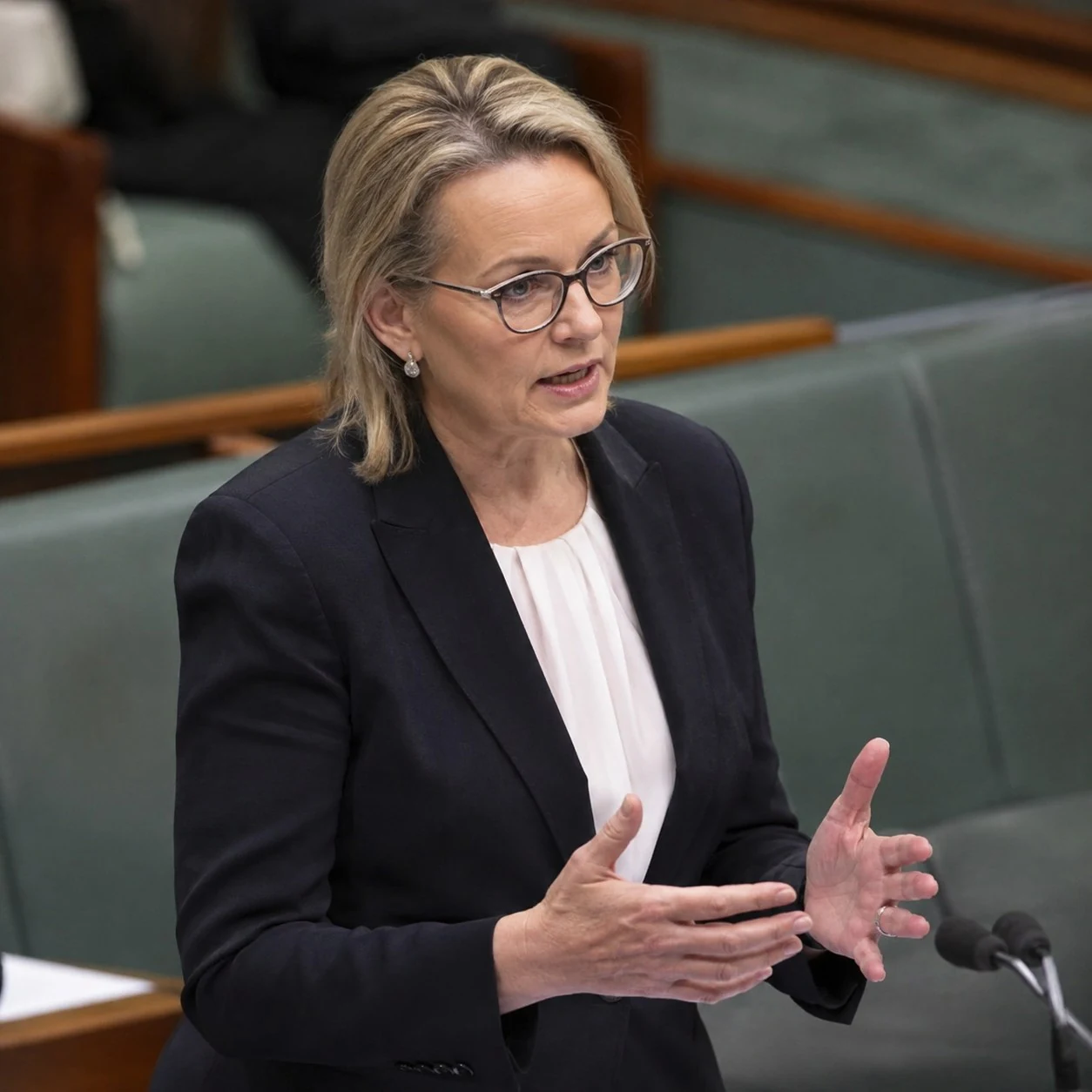
The Albanese government announced that Ley and energy-sector executive Merryn York would join the Snowy Hydro Limited board, replacing Sandra Dodds and Scott Mitchell. The appointment came only months after Ley lost the Liberal leadership to Angus Taylor and left federal politics, giving the decision an unusual cross-party character.
Climate Change and Energy Minister Chris Bowen has defended the choice by pointing to Ley’s experience as a former environment and water minister, her long representation of the regional NSW seat of Farrer and her familiarity with Snowy 2.0. Bowen said he wanted to use people with relevant skills regardless of how they had voted or what they had said about him in the past.
York brings a different background. She has decades of experience in the electricity system, including senior roles at Powerlink Queensland and the Australian Energy Market Operator. The pairing gives the board one director with extensive political, regulatory and regional experience and another with deep technical knowledge of transmission and electricity-market design.
That combination matters because Snowy Hydro is not entering a routine period. The Commonwealth-owned company is responsible for the original Snowy Mountains Scheme and a broad generation portfolio, but its biggest governance challenge is Snowy 2.0, the massive pumped-hydro expansion linking the Tantangara and Talbingo reservoirs through underground tunnels and a new power station.
The project is intended to provide about 2,200 megawatts of dispatchable capacity and large-scale energy storage. When electricity is abundant, water can be pumped uphill. When demand rises, it can be released through turbines to generate power. The concept is strategically important in an electricity system relying increasingly on variable wind and solar generation.
The difficulty is cost, timing and project control. Snowy 2.0 has already undergone a major reset. The 2023 reset lifted the approved delivery cost to $12 billion and moved the commercial operation date from May 2026 to December 2028. Since then, Snowy Hydro has acknowledged further delays and begun another cost reassessment likely to result in an increase beyond the $12 billion figure.
An Australian National Audit Office report released in June concluded that Snowy Hydro had been only partly effective in managing the project to achieve value for money. The audit identified continuing weaknesses in cost forecasting, risk management, performance controls and contractor accountability. It also found there was no agreed baseline schedule and that key geotechnical and construction productivity risks remained extreme.
Those findings make the role of the board particularly important. The ANAO said the board had challenged and interrogated information presented by management, but that direction to the project had been limited. In other words, the issue was not simply whether directors received reports, but whether governance translated into stronger control of delivery.
Ley now joins the board at precisely the point where that criticism matters most. As a director she will not be there to represent the Liberal Party or to continue political arguments with Labor. Her duty will be to the company and, through its public ownership, to the Commonwealth shareholder. That means scrutinising management, contractors, cost forecasts and schedule claims rather than defending the position of either side of politics.
The appointment has nevertheless attracted political commentary because of its timing. Ley was leading the federal opposition only months ago and spent much of her tenure attacking the Albanese government’s energy policies. It is therefore striking to see her appointed by that same government to one of the country’s most important public energy boards.
Some critics interpret the move as evidence that senior figures from the major parties circulate through the same institutions regardless of partisan conflict. That “uniparty” label is a political judgment, not evidence that the appointment itself was improper. Former politicians have often been appointed to public bodies by governments of the opposite side when their experience is considered useful. The appropriate test is whether the appointment can be justified on qualifications, independence and performance.
Ley has a plausible claim to relevant experience. She served in senior ministerial roles, including environment and water, and represented a large regional electorate in southern NSW for more than two decades. Snowy 2.0 passed through federal environmental approval while she held the environment portfolio, giving her direct familiarity with the project’s complexity. Her political career also exposed her to the scrutiny and accountability expected around major public expenditure.
The challenge is whether that experience will translate into sharper governance. Snowy 2.0 is no longer at a stage where broad political support is enough. The project needs credible cost forecasts, a realistic schedule and disciplined contractor management. The ANAO audit makes clear that the Commonwealth ultimately carries growing financial exposure when cost controls fail.
That point is sometimes lost in arguments over the headline price. The project was promoted in its earliest political phase with much lower figures, but the more meaningful formal baseline is the investment and reset process that followed. What matters now is that the current approved $12 billion cost is expected to be exceeded and the final figure has not yet been publicly settled.
The schedule is also uncertain. The 2023 reset aimed for full commercial operation by the end of 2028, but contractor programs and subsequent project reporting have pointed to further slippage. Snowy Hydro has continued working toward revised targets while acknowledging a possible later completion window. That uncertainty has direct financial consequences because delays extend contractor costs, financing exposure and the period before the asset begins delivering its intended value.
For the Albanese government, appointing Ley also spreads political ownership of the project in an unusual way. Snowy 2.0 began under Malcolm Turnbull, moved through investment and environmental approval under Coalition governments and has undergone its largest reset and additional Commonwealth support under Labor. Its history is already bipartisan, even if responsibility for specific decisions remains with the government and board of the time.
Bowen’s comparison with his earlier appointment of former NSW Liberal energy minister Matt Kean to the Climate Change Authority suggests a deliberate approach. The government is signalling that it is willing to place political opponents in energy institutions when it believes they have useful expertise. Supporters see that as pragmatic. Critics may view it as blurring accountability. The result will ultimately be judged less by symbolism than by performance.
York’s appointment may prove just as important. Snowy 2.0 is not simply a construction project; it must operate within a changing National Electricity Market where transmission constraints, renewable integration and dispatchable capacity are central challenges. Technical understanding of system planning can help the board test whether project decisions line up with the grid conditions the asset is meant to serve.
Ley’s task is different. She brings experience in politics, regulation and regional communities. That can be useful when the board is dealing with environmental obligations, public accountability, workforce issues and shareholder ministers. It will also mean she cannot plausibly claim unfamiliarity with the pressures that come with large taxpayer-backed projects.
The appointment therefore creates a simple benchmark. If the board becomes more demanding on cost, scheduling, risk and management accountability, the decision will be easier to defend regardless of party politics. If Snowy 2.0 continues to drift while directors approve another round of optimistic assumptions, the government will face questions about whether it chose reputation over the governance skills the project needed.
For Ley, the role is a rapid return to national public life after a bruising end to her political career. For Snowy Hydro, it is an opportunity to strengthen oversight at a moment when confidence in the project’s management has been challenged by the national auditor. The political novelty of the appointment will fade quickly. What remains will be the far harder task of delivering a credible final cost, a believable completion timetable and a project that justifies the enormous public investment already committed to it.