Victoria’s Suburban Rail Loop has again become the centre of political debate after renewed criticism over how the multibillion-dollar transport project will be financed and what its long-term impact could be on the state’s finances.
The discussion follows claims from the state opposition that interest payments on borrowing required to build the project could substantially increase its overall cost over coming decades. The Allan Government, however, continues to argue that the project represents a long-term investment in Melbourne’s future transport network, housing supply and economic development.
The first stage of the Suburban Rail Loop, known as SRL East, is currently estimated to cost around A$34.5 billion. According to the Victorian Government, the new orbital rail line is intended to connect major suburban centres, reduce pressure on Melbourne’s existing transport network and support the development of new housing precincts around future stations. Planning associated with the project is expected to unlock capacity for hundreds of thousands of additional homes over coming decades.
The Victorian opposition argues that the published construction cost does not fully reflect the long-term cost of financing the project. It says interest payments on government borrowings could add many billions of dollars over the life of the project, describing the arrangement as creating a “multi-generational debt trap” that future taxpayers will ultimately need to service. Opposition figures have also questioned whether the state’s borrowing capacity could become more constrained for other priorities such as health, education and additional transport projects.
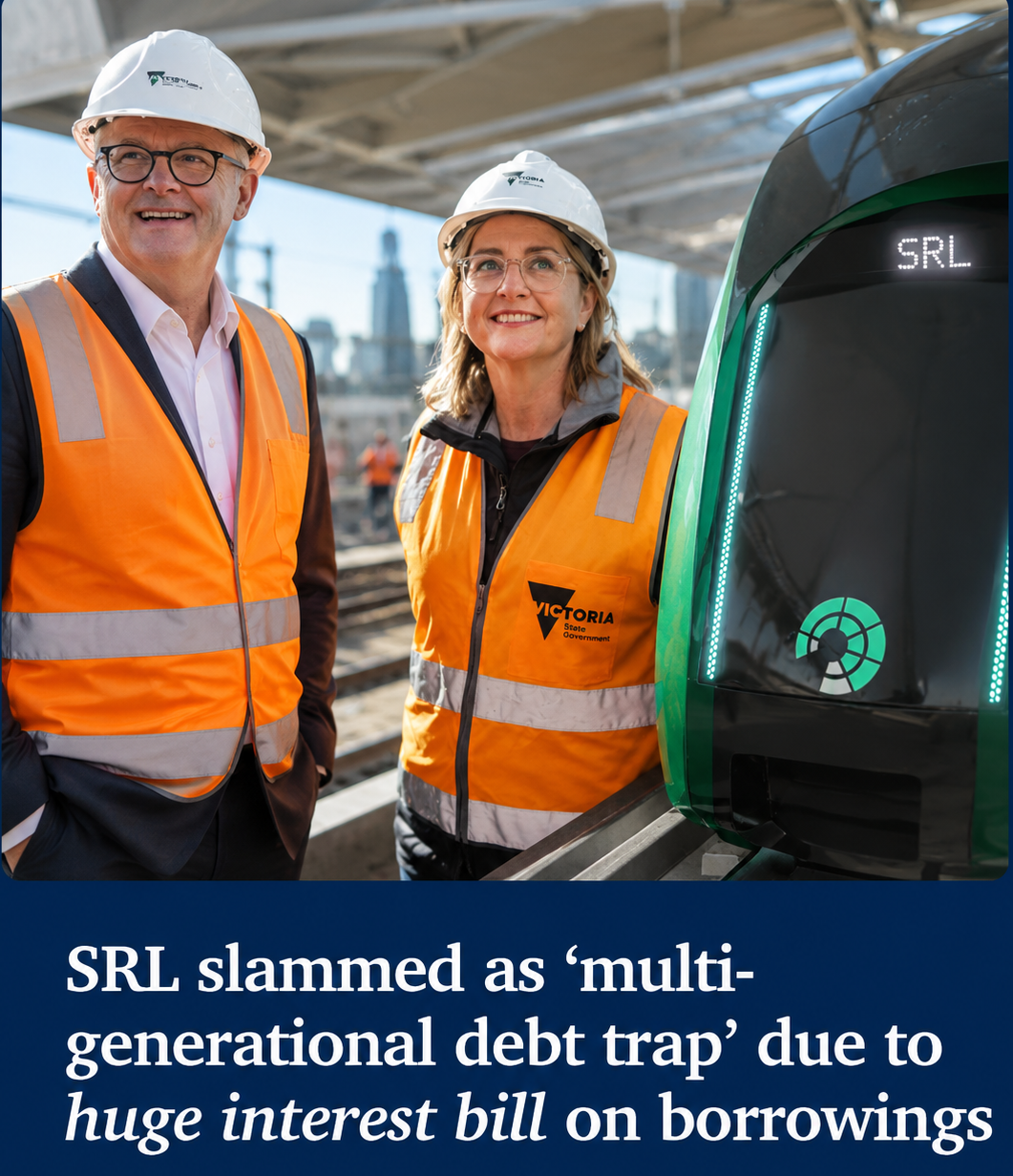
The Allan Government rejects those criticisms, maintaining that major transport infrastructure should be assessed over many decades rather than only by its upfront construction cost. Ministers argue that Melbourne’s growing population requires significant investment in public transport and that delaying major infrastructure projects could create higher economic and congestion costs in the future. The government also points to expected economic activity, employment opportunities and urban renewal associated with new station precincts as part of the project’s long-term value.
Independent assessments of the project have produced differing conclusions over recent years. Some reviews have questioned aspects of the project’s cost-benefit analysis and recommended greater transparency regarding long-term financial assumptions. Other transport planners have argued that orbital rail connections could reshape Melbourne’s development pattern by improving travel between suburbs without requiring passengers to travel through the CBD.
The funding debate comes at a time when Victoria continues managing elevated public debt following major infrastructure spending and pandemic-era borrowing. Economists generally note that borrowing to fund long-lived infrastructure is common practice for governments, but opinions differ on how much debt is appropriate and how future economic benefits should be weighed against long-term financing costs.
Supporters of the Suburban Rail Loop argue that projects of this scale should be evaluated over several generations because transport infrastructure often continues delivering economic and social benefits long after construction is complete. Critics counter that large interest costs can reduce governments’ financial flexibility and potentially limit future investment in other public services if debt levels continue rising.
Political debate has also focused on whether projected housing development around future stations will generate sufficient economic activity to offset part of the project’s cost over time. The government believes increased housing supply and higher-density development will strengthen Melbourne’s long-term growth, while opponents argue those projections remain uncertain and should not be relied upon to justify borrowing decisions.
With construction continuing and additional stages of the Suburban Rail Loop still planned for future decades, discussion about funding, debt and long-term value is likely to remain a significant issue in Victorian politics. How the project is ultimately judged will depend not only on its construction cost but also on whether it delivers the transport, housing and economic outcomes anticipated over the decades ahead.






