Six months after devastating bushfires tore through Victoria’s Longwood region, destroying homes, businesses and livelihoods, frustration is mounting among survivors who say recovery has fallen well behind political promises.
Although the Victorian and Federal governments announced a combined recovery package worth around $420 million following the January disaster, a growing number of residents remain without permanent housing, while local businesses continue struggling to reopen.
The slow pace of recovery has now become a political flashpoint after Nationals MP Annabelle Cleeland accused both levels of government of failing to deliver meaningful assistance to the communities that suffered the greatest losses.
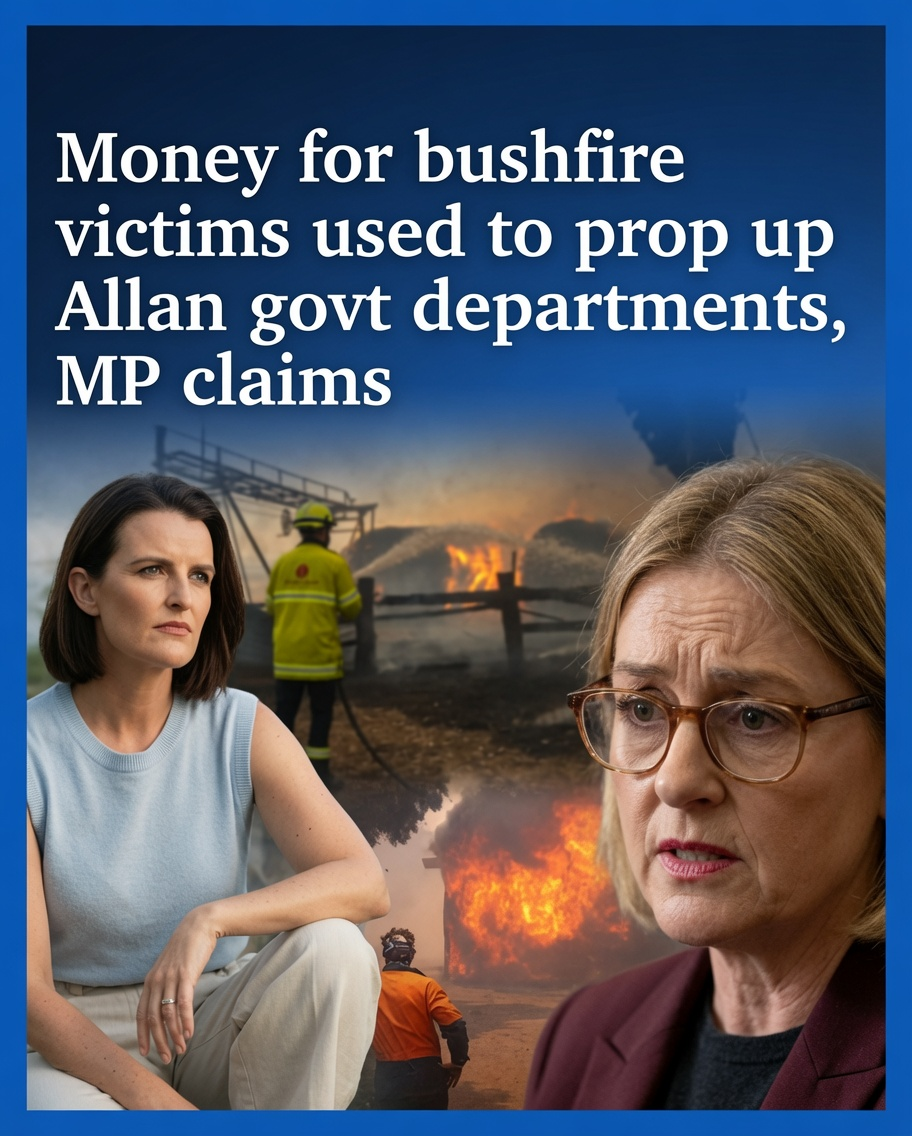
Cleeland described the response as “the worst response to a disaster Victoria has ever seen”, arguing that despite hundreds of millions of dollars being announced, many of the people most directly affected have seen little practical benefit.
“More than $400 million has been allocated, yet we have families that are homeless and businesses that are broken because they have been destroyed in the disaster,” she said.
Among the most serious allegations is the claim that substantial portions of the recovery funding have been directed towards broader state government programs rather than flowing directly into fire-affected communities.
Cleeland argued that money intended to help devastated towns rebuild was instead being used to support existing government operations, leaving heavily impacted regions underfunded.
At the time of publication, the Victorian Government has not publicly accepted the allegation that recovery funds are being diverted away from bushfire victims. The claim remains a political accusation made by opposition figures rather than an established finding.
The Longwood bushfires were among the most destructive events of Victoria’s 2025–26 bushfire season.
Igniting in early January during extreme heat and catastrophic fire conditions, the fires rapidly spread across parts of Strathbogie and neighbouring districts, destroying hundreds of homes, farms and other structures while forcing widespread evacuations.
The Victorian Government subsequently declared a State of Disaster across multiple municipalities as emergency crews battled the rapidly expanding fire fronts.
Recovery, however, has proven significantly more difficult than the emergency response.
Many residents whose insurance covered temporary accommodation are now approaching the end of those arrangements, creating fears that regional Victoria could experience a growing homelessness problem if rebuilding continues to lag.
Cleeland warned that some families may never fully recover financially if assistance does not accelerate.
“We will have businesses, livelihoods and family homes that will never recover because of the disgraceful response from this government,” she said.
Local government leaders have also expressed concern that available funding falls well short of what is required for a recovery expected to take several years.
Strathbogie Shire Mayor Scott Jeffery said the municipality had received only a small share of funding allocated for Community Recovery Officers despite being among the hardest-hit areas.
According to the council, recovery operations are likely to face a significant funding shortfall as communities continue rebuilding damaged infrastructure, supporting displaced residents and restoring local economies.
The recovery challenge extends well beyond rebuilding houses.
Many farming businesses lost livestock, fencing, machinery and years of investment. Tourism operators across fire-affected regions have also reported reduced visitor numbers long after emergency warnings ended, creating additional economic pressure on already struggling communities.
Mental health support has emerged as another major concern.
Community leaders have argued that repeated changes in recovery personnel have forced survivors to continually retell traumatic experiences to new case managers, slowing both administrative support and emotional recovery.
The Longwood fires formed part of one of Victoria’s most destructive bushfire seasons in recent memory.
Across the broader emergency, hundreds of homes and more than 700 structures were destroyed, prompting substantial financial assistance packages from both state and federal governments. These included emergency relief payments, concessional loans for farmers, clean-up grants, waste disposal funding and dedicated recovery hubs for affected communities.
While emergency assistance was delivered relatively quickly, long-term reconstruction has proven far more complex.
Rebuilding in regional Australia often faces shortages of qualified tradespeople, rising construction costs, insurance disputes, planning approvals and limited availability of temporary accommodation.
Industry groups have previously warned that these challenges can leave disaster recovery stretching over several years, even after significant government funding has been announced.
The controversy also highlights a broader issue frequently raised after major natural disasters: the difference between funds being announced and money reaching affected individuals.
Large recovery packages commonly include administration costs, infrastructure rebuilding, local government support, environmental restoration, community services and economic recovery initiatives alongside direct household assistance.
As a result, headline funding figures do not necessarily translate into equivalent cash payments for individual families.
Opposition MPs argue this distinction has become particularly important in Longwood because residents continue seeing limited progress despite repeated announcements of government support.
Government representatives have previously defended their overall disaster response, pointing to increased funding for emergency recovery services, financial assistance programs and ongoing investment in rebuilding affected communities following the January fires.
Nevertheless, political pressure is likely to intensify as the first anniversary of the fires approaches.
For many residents, the central question is no longer how much money has been announced, but how quickly permanent housing, functioning businesses and stable communities can be restored.
Six months after flames swept through Longwood and surrounding districts, the physical scars remain visible across much of the region. For dozens of families still waiting to return home, recovery is measured less by government funding commitments than by whether rebuilding finally begins to match the promises made in the immediate aftermath of the disaster.






