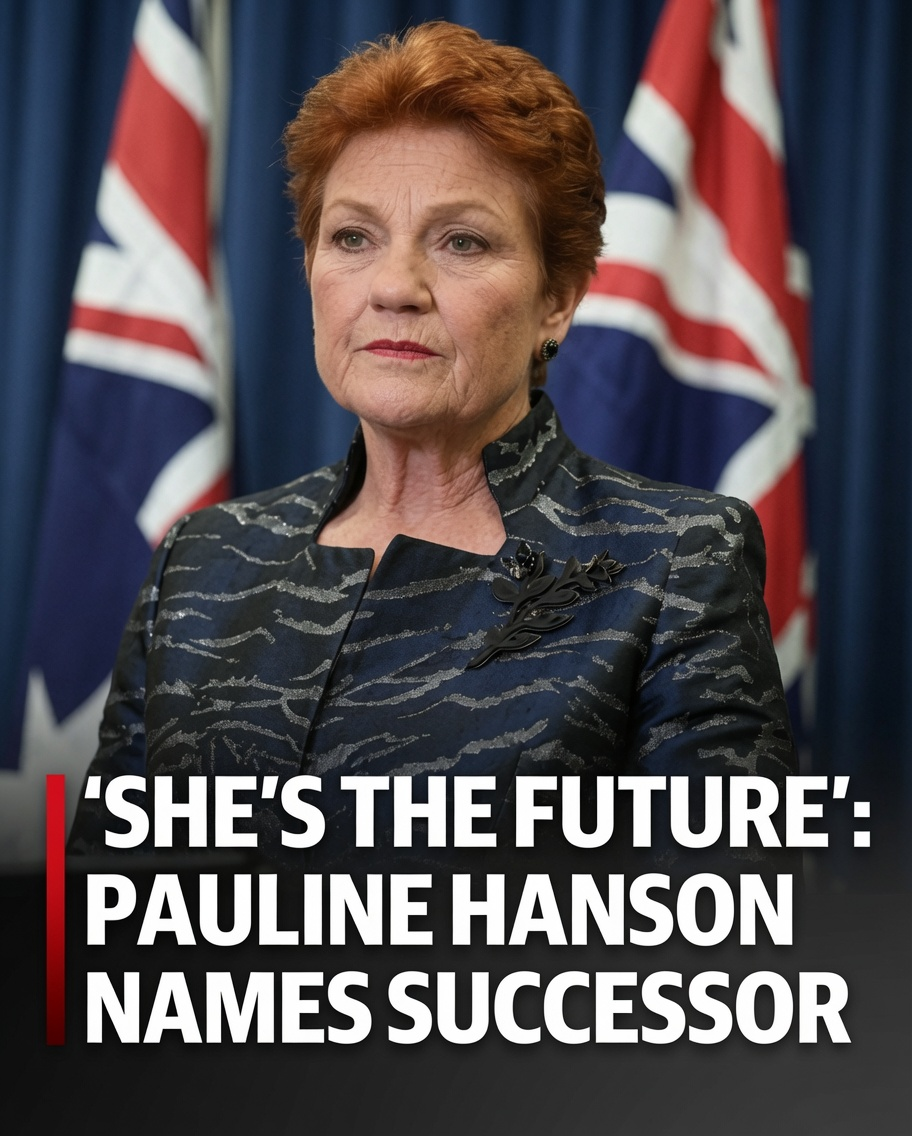
One Nation leader Pauline Hanson has publicly identified her daughter, Lee Hanson, as a potential future leader of the party, saying she has the ability to eventually take over the movement—but insisting any succession would have to be earned on merit rather than family ties.
The comments were made during a podcast interview recorded in the United Kingdom while Hanson was attending the inaugural Conservative Political Action Conference (CPAC) Great Britain as part of her European speaking tour.
Asked about the future leadership of One Nation, Hanson surprised many observers by nominating her 42-year-old daughter instead of recently recruited federal MP Barnaby Joyce, whose arrival in the party has fuelled speculation that he could eventually succeed her.
“She’s the future,” Hanson said of Lee.
However, the veteran Queensland senator stressed that family connections alone would never be enough.
“She has to earn it. She won’t get it because she’s my daughter,” Hanson said, adding that leadership should always be determined by the support of party members and demonstrated ability rather than nepotism.
Lee Hanson is already closely involved in Australian politics.
She currently works as an adviser to One Nation NSW senator Sean Bell and previously contested a Senate seat for the party, giving her experience in both campaigning and parliamentary operations.
Pauline Hanson described her daughter as intelligent, hardworking and deeply committed to the party’s long-term future, saying she had watched Lee develop a detailed understanding of public policy and grassroots campaigning over several years.
The comments come during an important period for One Nation.
The party has enjoyed a significant increase in national polling throughout 2026, becoming one of Australia’s strongest minor parties and increasing pressure on both Labor and the Coalition across several conservative electorates.
At the same time, however, recent polling suggests that One Nation’s rapid momentum has softened following several weeks of controversy surrounding Hanson’s overseas trip and a series of high-profile interviews.
Much of that attention has centred on Hanson’s appearance on a podcast hosted by British political activist Tommy Robinson.
During the interview, Hanson argued that Australia’s immigration problems began after the abolition of the White Australia Policy and made controversial comments about multiculturalism and alleged fraud within the National Disability Insurance Scheme (NDIS).
Those remarks prompted criticism from senior Labor ministers, the Greens and several community organisations, while Hanson defended herself by saying she was raising issues many Australians believed were being ignored by the political establishment.
Her latest comments about party succession have also attracted attention because of ongoing speculation surrounding Barnaby Joyce.
After the former Nationals leader joined One Nation, media reports frequently suggested he could eventually become the party’s federal leader once Hanson retired.
Recent reports also speculated that tensions had emerged between Hanson and Joyce following criticism of aspects of Hanson’s European trip, although both figures have publicly denied any falling out.
Joyce recently described Hanson as a “great mate”, while Hanson has continued praising his experience and contribution to the party.
Rather than dismissing Joyce, Hanson indicated that leadership discussions should not be reduced to a choice between high-profile personalities.
She suggested One Nation’s long-term success depends on developing a new generation of leaders capable of carrying the party beyond its founder.
That objective has become increasingly important as Hanson approaches three decades at the centre of Australian politics.
Since establishing One Nation in 1997, she has remained the party’s dominant public figure and principal electoral asset.
The party’s constitution was amended in 2017 to allow Hanson to remain party president indefinitely and to nominate her eventual successor, giving her significant influence over One Nation’s future leadership arrangements.
Political succession has historically presented challenges for many personality-driven minor parties in Australia.
Unlike the major parties, which usually maintain extensive leadership pipelines, smaller parties often depend heavily on a single recognisable leader whose departure can significantly affect electoral support.
By openly discussing Lee Hanson as a possible successor, Pauline Hanson appears to be signalling that One Nation is planning for a future beyond her own parliamentary career.
Whether that future ultimately includes her daughter remains uncertain.
Lee Hanson has not been selected as deputy leader, nor has the party announced any formal succession process.
Pauline Hanson herself emphasised that leadership would only come through party support and electoral success rather than inheritance.
Political analysts note that while family succession is relatively uncommon in Australian federal politics, it is not unprecedented internationally.
Ultimately, any future leadership change within One Nation would depend on the party’s internal constitutional processes, parliamentary representation and the support of its members.
The timing of Hanson’s remarks is also significant because One Nation is seeking to consolidate its recent electoral gains while broadening its appeal beyond its traditional protest-vote base.
Preparing future leaders is therefore likely to become increasingly important if the party hopes to establish itself as a permanent force in Australian politics rather than one built solely around its founder.
For now, Pauline Hanson remains firmly in charge.
But by publicly naming Lee Hanson as someone with leadership potential, she has offered the clearest indication yet of how she believes One Nation could evolve after eventually stepping aside.






