Pauline Hanson’s attempt to give Australian authorities sweeping new powers to prevent citizens linked to overseas terrorist organisations from returning home has been defeated in the Senate, reigniting an increasingly bitter argument over national security, constitutional limits and what Australia should do with its own foreign fighters.
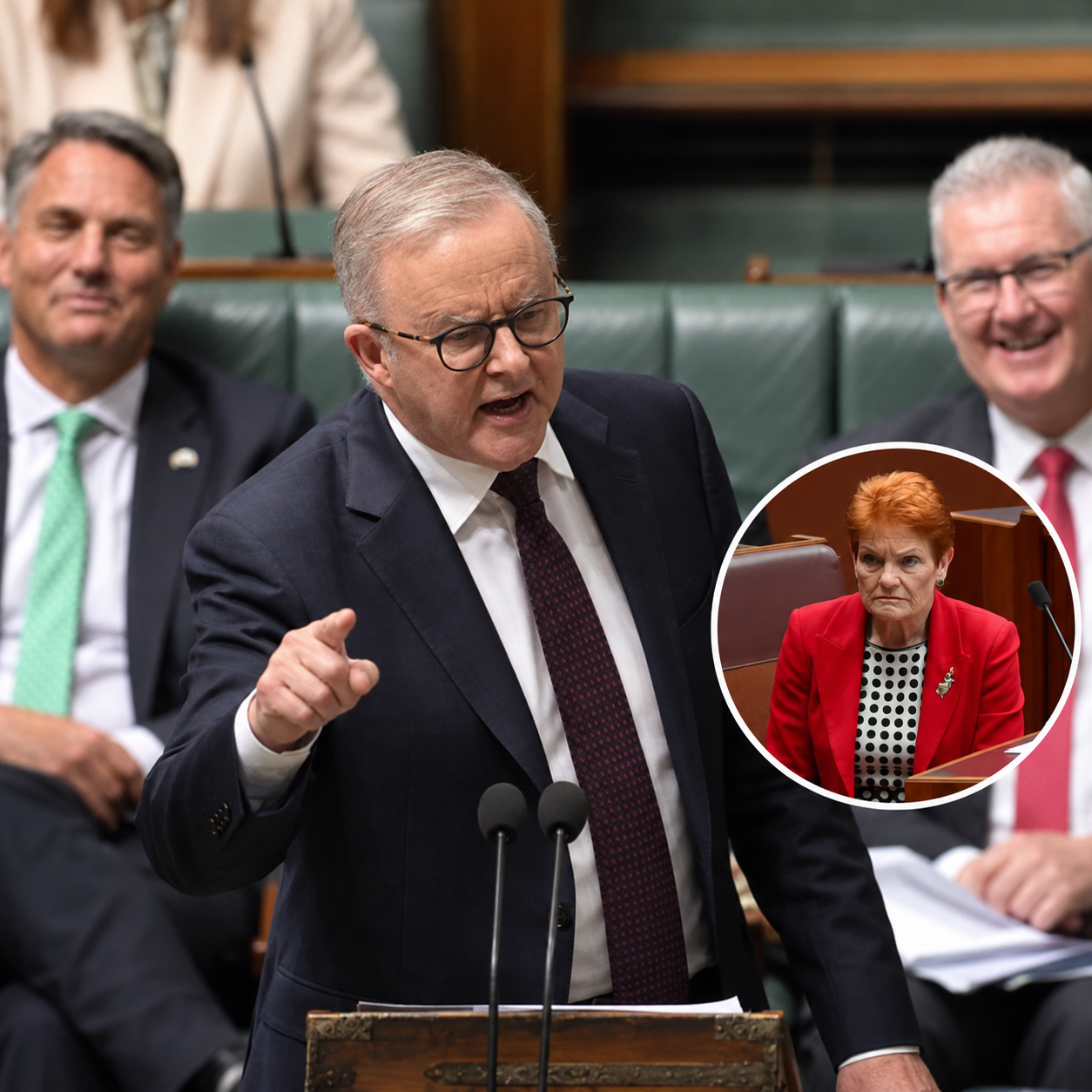
The Senate rejected One Nation’s Protecting Australians from Foreign Terrorist Fighters Bill 2026 at its second-reading stage on Thursday, September 10.
Parliament’s legislation records now list the private senator’s bill as “Not Proceeding”.
Hanson and her party have portrayed the result in stark terms, accusing the Albanese government of refusing to take every possible step to keep dangerous people out of Australia.
Labor rejects that characterisation.
The government says the central problem with One Nation’s plan is not a lack of concern about terrorism, but whether Australia can constitutionally prevent one of its own citizens from returning indefinitely.
That distinction is crucial to understanding the vote.
The bill was introduced by Hanson on August 12 amid renewed concern about Australians who travelled to territory controlled by Islamic State and who may eventually seek to return.
One Nation has repeatedly pointed to reports that 13 Australian men remained detained in Baghdad and could at some stage be released.
It has also criticised the return of women and children linked to Islamic State from camps and detention arrangements in the Middle East.
Hanson argues Australians who travelled abroad to support, participate in or materially assist listed terrorist organisations should face the strongest possible barriers to re-entry.
Her bill attempted to create those barriers through four main mechanisms.
The first was a new “foreign terrorist fighter exclusion order”.
Under the proposal, the Home Affairs Minister could apply to the Federal Court for an order against a person overseas where the statutory conditions were met.
Hanson argued the court-based process was deliberately designed to provide judicial oversight rather than simply handing permanent exclusion power to a minister.
Entering Australia in breach of such an order could attract up to 10 years’ imprisonment.
The bill would also have strengthened the government’s ability to refuse, cancel or suspend Australian travel documents in cases involving an exclusion order or terrorism charges and convictions.
A second major element concerned bail.
For people charged with or convicted of terrorism offences, One Nation wanted community safety and national security to become paramount considerations.
The bill sought to make it more difficult for ordinary personal circumstances — such as family responsibilities, accommodation arrangements or electronic monitoring — to establish the exceptional circumstances sometimes required for bail.
A third component would have made it an offence to organise or facilitate the return to Australia of a foreign terrorist fighter without prior written permission from both the Foreign Affairs Minister and the Home Affairs Minister.
The proposed maximum penalty was 10 years in prison.
The bill also sought to extend Australia’s existing “declared areas” offence through to 2030.
That offence can apply to Australians who enter or remain in an overseas area declared because a listed terrorist organisation is engaging in hostile activity there, subject to statutory exceptions.
One Nation’s position is straightforward: if existing Australian law does not allow authorities to keep a dangerous foreign fighter overseas, Parliament should change the law.
“The first responsibility of any government is to keep Australians safe,” Hanson said when introducing the legislation.
The Coalition broadly supported the objective.
Liberal senator Jonathon Duniam backed tougher action and argued the government had been too willing to facilitate the return of people connected to Islamic State.
The Coalition has separately pursued legislation targeting unauthorised assistance given to people associated with terrorist organisations seeking to enter Australia.
But Labor and the Greens strongly rejected Hanson’s proposed permanent exclusion regime.
The government’s central argument is constitutional.
Home Affairs Minister Tony Burke has said the powers Australia already possesses are close to the constitutional limit and predicted Hanson’s proposed approach would rapidly face a successful High Court challenge.
Burke has also advanced a broader international principle.
Countries, he argues, must ultimately accept responsibility for their own citizens.
That principle matters not only when an Australian accused of terrorism is overseas, but when Australia wants to deport foreign nationals convicted of serious offences here.
Australia regularly cancels visas and removes non-citizens convicted of crimes including murder, sexual offending and family violence.
Those removals depend on the offender’s country of citizenship accepting them.
If Australia asserted that states could permanently refuse their own citizens whenever they were considered undesirable or dangerous, Burke argues, Australia could weaken the same principle it relies on to deport foreign criminals.
That does not mean an Australian citizen returning from an Islamic State conflict zone simply walks through the airport without scrutiny.
Australia already has a substantial counter-terrorism framework specifically designed to control the return of citizens considered a security risk.
The Counter-Terrorism (Temporary Exclusion Orders) Act 2019, introduced under the former Coalition government, allows the Home Affairs Minister to temporarily prevent an Australian citizen overseas from entering the country.
A temporary exclusion order can last for up to two years.
The law applies where the minister reasonably suspects the order would substantially assist in preventing terrorism-related activity, or where ASIO has assessed the person as a security risk for reasons connected to politically motivated violence.
The system also provides for return permits.
When a person subject to an exclusion order applies to return, or is being deported or extradited to Australia, the minister must ultimately issue a permit allowing entry.
That permit can control when and how the person returns and can impose conditions after arrival.
The regime is therefore designed to manage and delay a dangerous person’s return rather than permanently strip an Australian citizen of the practical ability to enter their own country.
It was precisely that limitation One Nation wanted to push beyond.
Hanson argued temporary exclusion was inadequate if authorities had evidence a person who had supported a terrorist organisation continued to present an unacceptable risk.
Labor argues that moving from temporary management to potentially indefinite exclusion raises much harder constitutional questions.
The dispute became especially heated after Hanson tried to have the bill considered urgently in August.
The Senate initially rejected an attempt to suspend standing orders for immediate debate but later agreed to send the legislation to the Legal and Constitutional Affairs Legislation Committee.
The committee’s inquiry reported on September 7, allowing the full Senate debate to resume three days later.
Greens senator David Shoebridge argued during the debate that Australia should focus on bringing alleged foreign fighters within a system capable of prosecuting and holding them accountable rather than simply leaving them overseas.
He said those who fought Islamic State in Syria wanted suspected members and supporters to face justice through domestic or international legal institutions.
That approach reflects a difficult practical problem.
Leaving an Australian citizen overseas does not necessarily neutralise the threat they may pose.
A detainee released in Iraq or Syria could disappear, enter another jurisdiction or continue extremist activity outside Australian surveillance.
Returning the person creates a different risk: Australian agencies must then monitor, prosecute or otherwise manage someone who may have been involved with one of the world’s most brutal terrorist organisations.
Neither option is without danger.
Prosecution can also be difficult.
Conduct in conflict zones is often years old, witnesses may be scattered across countries, documentary evidence can be incomplete and intelligence information is not always usable in an ordinary criminal trial.
That gap between what security agencies may strongly suspect and what prosecutors can prove beyond reasonable doubt is one reason successive Australian governments have developed preventative counter-terrorism powers alongside conventional criminal offences.
The Albanese government is currently pursuing its own national-security legislation.
Its Counter-Terrorism Legislation Amendment Bill 2026, introduced on the same day as Hanson’s bill, would extend several existing counter-terrorism regimes for another three years.
Those include control orders, preventative detention orders, terrorism-related stop, search and seizure powers and the post-sentence framework used for serious terrorist offenders.
The government bill also seeks to strengthen the use of control orders for offenders approaching the end of a terrorism sentence.
It passed the House of Representatives in August and is now before the Senate.
The existence of that legislation complicates One Nation’s claim that Labor simply voted against measures designed to protect Australians from terrorism.
The argument is instead over which powers are lawful, effective and proportionate.
Hanson says the government is hiding behind constitutional caution when Australians expect Parliament to test the limits of its power to protect the community.
Labor says deliberately passing legislation it believes will be struck down by the High Court is not a national-security strategy.
Those positions reflect a deeper disagreement over citizenship.
An Australian passport can be cancelled. Travel can be restricted. People can be charged with terrorism offences, placed under control orders and subjected to extraordinary surveillance and supervision powers.
In limited circumstances involving dual nationals, citizenship law has also allowed serious consequences for terrorism-related conduct, although previous citizenship-stripping regimes have faced major constitutional challenges.
But an Australian who possesses only Australian citizenship presents the hardest case.
Preventing that person from ever entering Australia risks effectively exiling a citizen without transferring them to another nationality.
The High Court has repeatedly scrutinised laws that attempt to use executive power to impose consequences traditionally associated with punishment, citizenship and exclusion.
One Nation argues its bill was drafted specifically to navigate those problems by involving the Federal Court.
The government remains unconvinced.
The political argument is likely to survive the bill itself.
One Nation has made national security, immigration and the treatment of Australians linked to Islamic State central to its attack on both Labor and the Coalition establishment.
The Coalition, under pressure from Hanson’s growing support on the political right, has increasingly backed tougher measures while emphasising that legislation must be workable.
Labor is trying to occupy a different position: refusing permanent exclusion while pointing to existing exclusion orders, criminal prosecutions, intelligence monitoring and its own counter-terrorism reforms.
For voters, the key question is therefore not as simple as whether Parliament wants terrorists in Australia.
No major party argues that Australians who fought for or materially supported Islamic State should be treated as ordinary returning travellers.
The disagreement is over what can lawfully be done to an Australian citizen, whether permanent exclusion would survive constitutional challenge, and whether dangerous citizens are safer being left overseas or brought back under Australian law-enforcement control.
Hanson’s bill offered one of the toughest answers available: build a new legal mechanism intended to keep some people out entirely.
The Senate has now rejected that approach.
But with Australian foreign fighters still detained overseas, the existing temporary exclusion regime under scrutiny and both government and opposition pursuing alternative counter-terrorism measures, the underlying question has not gone away.
Australia still has to decide how far a democratic state can — and should — go when one of its own citizens joins an organisation committed to destroying the values that citizenship is supposed to protect.