Russia has accused Australian Defence Force personnel of engaging in “hate speech” after comments made by Australian soldiers involved in training Ukrainian troops were published, escalating diplomatic tensions over Canberra’s continuing military support for Ukraine.
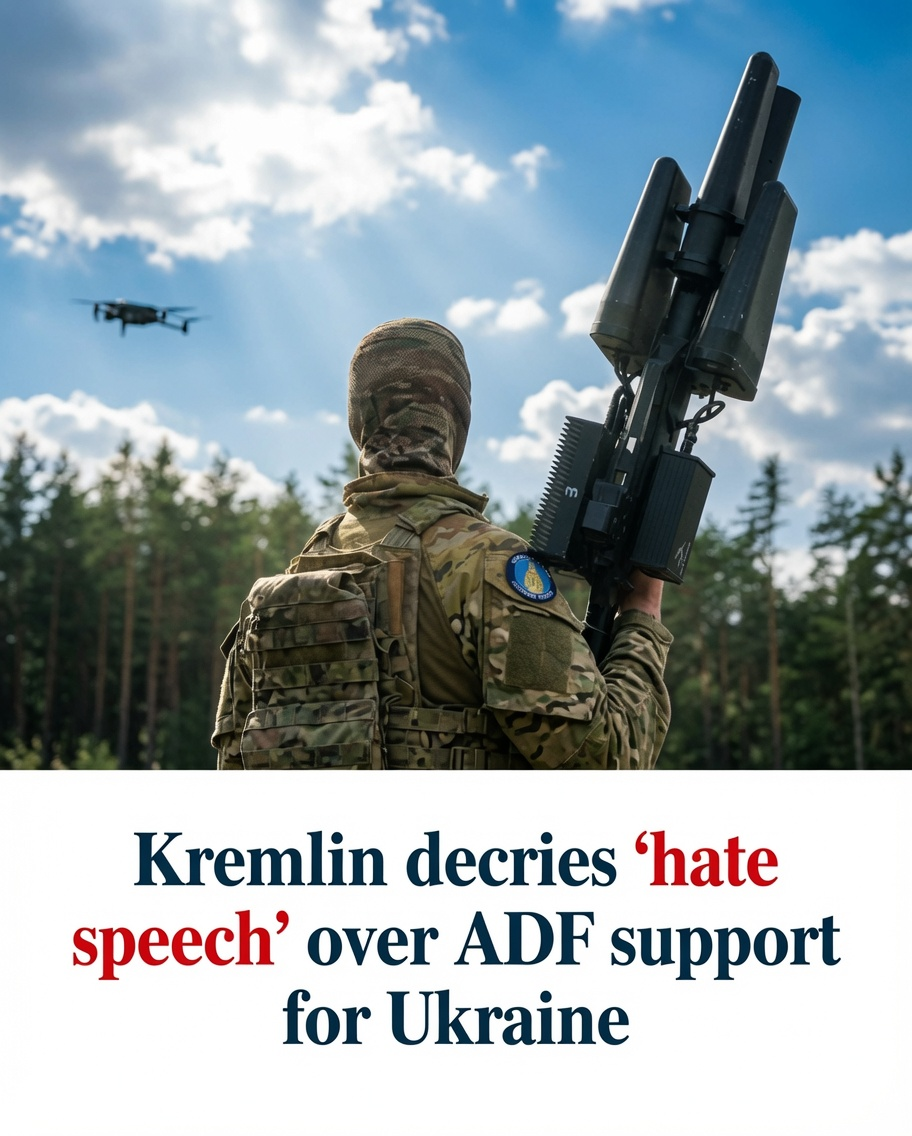
The dispute emerged after Australian troops deployed to a multinational military training mission in Poland described their objective as helping Ukrainian forces become more effective on the battlefield against invading Russian troops.
Moscow’s criticism centred on comments attributed to Australian instructors involved in the Norwegian-led Operation Legio training program, where soldiers from several allied nations are teaching Ukrainian personnel leadership, battlefield tactics and combat decision-making.
According to reports, one Australian instructor said the training was designed to help Ukrainian squad leaders “adapt faster than the Russians” and enable Ukrainian forces to become “better at killing Russians”—language the Russian Embassy in Australia later described as evidence of anti-Russian hatred rather than legitimate military training.
The Russian Embassy issued a strongly worded statement accusing Australian military personnel and sections of the Australian media of promoting hatred against Russians as an ethnic group.
“They describe their objective as making their trainees ‘better at killing Russians’,” the embassy said, arguing that such language represented dangerous rhetoric that encouraged hostility towards Russians generally rather than focusing solely on combat operations.
The statement also repeated Moscow’s long-standing claims that Ukraine is governed by a “neo-Nazi regime”—an assertion that has been consistently rejected by Australia, Ukraine and Western governments since Russia launched its full-scale invasion in February 2022.
The diplomatic criticism followed recent Australian media coverage of Camp Jomsborg in Poland, where more than 40 Australian Defence Force personnel have joined military instructors from Norway, Poland, New Zealand, the United States and several Baltic and Nordic countries.
The multinational training effort focuses on preparing Ukrainian squad and platoon leaders for modern combat by improving tactical planning, battlefield leadership, drone awareness, casualty management and decision-making under pressure.
Australian personnel have also spoken publicly about shortages of military equipment that they believe could help Ukrainian forces, including surplus Australian Defence Force assets that could be transferred more quickly to Kyiv.
Operation Legio represents the latest stage of Australia’s military assistance to Ukraine.
In June 2026, the Albanese Government announced Australian troops would begin participating in the Norway-led mission in Poland, continuing Australia’s training support after the conclusion of Operation Kudu, which had previously seen Australian personnel train Ukrainian recruits in the United Kingdom.
The Defence Department said the deployment reflects Australia’s ongoing commitment to supporting Ukraine’s defence against what Canberra continues to describe as Russia’s “illegal and immoral invasion”.
Australia’s assistance extends well beyond troop training.
Since Russia’s full-scale invasion began, Canberra has committed approximately $1.8 billion in support for Ukraine, including military aid, humanitarian assistance, sanctions against Russian individuals and entities, and the transfer of defence equipment ranging from Bushmaster protected mobility vehicles to drones and other battlefield capabilities.
Government officials have repeatedly argued that helping Ukraine defend its sovereignty is consistent with Australia’s broader commitment to the international rules-based order.
The Kremlin, however, continues to portray such assistance as direct participation in the conflict.
Russian officials argue that countries supplying weapons, intelligence or military training are prolonging the war and contributing to attacks against Russian forces and civilians.
The latest statement from Moscow forms part of a broader information campaign that has frequently criticised Western governments providing military assistance to Kyiv.
The embassy’s statement also criticised Australian politicians who have publicly defended the training mission.
Opposition defence spokesman James Paterson rejected Moscow’s accusations, saying Russia should be more concerned about accountability for its actions in Ukraine than complaints about language used by Australian soldiers.
Paterson argued that Australia’s support for Ukraine would continue unless Russia ended what he described as its unlawful invasion of a sovereign nation.
The exchange highlights the increasingly sharp diplomatic rhetoric that has accompanied the military conflict.
Since 2022, Australia has imposed multiple rounds of sanctions targeting Russian officials, military figures, financial institutions and businesses linked to the invasion.
Russia, in turn, has sanctioned numerous Australian politicians and officials while repeatedly condemning Canberra’s military assistance to Ukraine.
Although Australia is geographically distant from Eastern Europe, successive Australian governments have argued that the outcome of the conflict carries broader implications for international security, territorial sovereignty and the enforcement of international law.
Military analysts note that the language used by soldiers operating in wartime environments often differs significantly from diplomatic terminology.
Training missions are designed to improve the battlefield effectiveness and survivability of partner forces, and military instructors commonly speak in direct operational language when discussing combat objectives.
Supporters of Australia’s mission argue that statements about helping Ukrainian troops defeat Russian forces should be understood within the context of an active war rather than as expressions of hatred towards Russian people.
Critics, however, say public messaging from military personnel should remain carefully calibrated given the heightened geopolitical sensitivities surrounding the conflict.
The multinational camp itself reflects the growing international coordination behind Ukraine’s defence.
Instructors from numerous NATO members and partner countries work together to train Ukrainian personnel using lessons drawn directly from the evolving battlefield.
The curriculum is regularly updated as intelligence from the front line reveals new Russian tactics, drone technologies and battlefield adaptations.
Australian instructors have described this real-time learning process as essential because the character of the war continues to evolve rapidly.
Russia’s latest accusations also underscore the parallel information war that has accompanied the military conflict since its earliest days.
Alongside conventional fighting, both sides have invested heavily in shaping international narratives through diplomatic statements, media engagement and online campaigns aimed at influencing public opinion.
Statements by foreign governments, military officials and political leaders are frequently amplified across social media and state-backed media outlets as part of broader strategic communications efforts.
For Australia, the dispute is unlikely to alter government policy.
Prime Minister Anthony Albanese’s government has consistently reaffirmed bipartisan support for assisting Ukraine, while Defence Minister Richard Marles has maintained that Australia’s contribution complements broader international efforts led by European allies and NATO partners.
The deployment of Australian personnel to Poland marked an expansion—not a departure—from Australia’s existing commitment to Ukraine, with Canberra emphasising that Australian troops are not participating directly in combat operations inside Ukraine itself.
Military training has become one of the most significant forms of international support provided to Ukraine as the war enters another year.
By improving leadership, tactical decision-making and battlefield coordination, allied governments hope Ukrainian units will be better prepared to defend territory and reduce casualties during future operations.
Whether viewed as legitimate military assistance or as evidence of deeper Western involvement, the mission has become another flashpoint in the increasingly hostile diplomatic exchanges between Moscow and countries backing Kyiv.
For now, Australia’s training mission continues, while Russia’s criticism serves as another reminder that the conflict extends well beyond the battlefield—into diplomacy, information campaigns and the contest over international public opinion.






