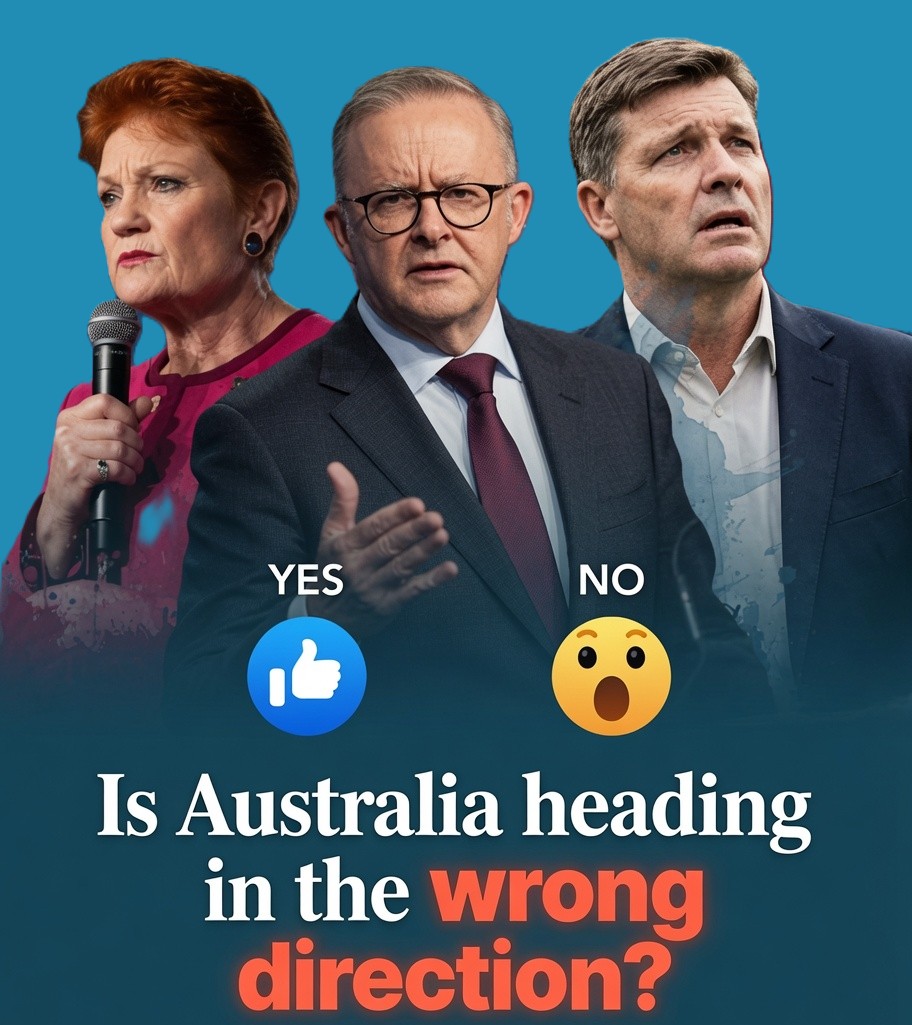
Australians are becoming more pessimistic about the country’s future than at any time in recent years, with soaring living costs, housing affordability and immigration emerging as the dominant concerns shaping public opinion.
A new nationwide Mood of the Nation survey paints a bleak picture of public sentiment, finding that almost seven in ten Australians believe the country is heading in the wrong direction.
The research found that 68 per cent of respondents believe Australia is on the wrong track, representing one of the highest levels of pessimism recorded by the long-running survey. Financial pressure continues to dominate household concerns, with rising grocery prices, mortgage repayments, rents and electricity bills all contributing to growing dissatisfaction.
Immigration has emerged as another defining issue.
According to the survey, 62 per cent of Australians believe current immigration levels are too high, reflecting growing concern that rapid population growth is placing additional pressure on housing, infrastructure and public services.
The findings help explain why Pauline Hanson’s One Nation continues attracting increased support despite Australia’s economy avoiding recession.
While headline economic indicators remain relatively resilient, many households say they are experiencing a very different reality, with wages struggling to keep pace with living expenses and home ownership becoming increasingly difficult for younger Australians.
Political analysts argue this disconnect between macroeconomic performance and personal financial experience is creating fertile ground for protest voting.
Rather than rewarding governments for broader economic statistics, many voters are responding to what they experience every week when paying rent, shopping for groceries or meeting mortgage repayments.
One Nation has positioned itself squarely within that frustration.
The party has consistently argued that reducing immigration, increasing domestic energy production and lowering living costs should become the nation’s highest priorities.
Its message has resonated particularly strongly among regional communities and outer suburban voters who feel economic growth has not translated into improved living standards.
Recent polling suggests One Nation has become one of the strongest-performing minor parties on questions relating to cost-of-living management, highlighting the extent to which economic anxiety is reshaping Australia’s political landscape.
Housing affordability remains one of the central drivers of public dissatisfaction.
Australians continue to face limited housing supply, historically high property prices in many cities and intense competition in rental markets.
Many economists acknowledge immigration contributes to housing demand, although they also emphasise that planning constraints, construction costs, interest rates and years of underbuilding are significant factors behind the shortage.
The interaction between those forces has made immigration one of the most politically sensitive issues confronting governments.
For supporters of lower migration, reducing population growth is viewed as an immediate way to ease pressure on housing and infrastructure.
Others argue that Australia continues to depend on migration to address labour shortages, support economic growth and offset demographic ageing, warning that reducing migration too sharply could create different economic challenges.
The debate illustrates how complex policy issues can become highly emotional when households are under financial stress.
Beyond economics, confidence in political leadership has also weakened.
The latest polling shows declining satisfaction with the federal government’s handling of living costs, while support for several recent policy initiatives has softened as voters increasingly prioritise immediate household finances over longer-term reform agendas.
Political observers note that public pessimism has historically benefited parties positioned outside the traditional Labor–Coalition contest.
When voters believe neither major party is adequately addressing their concerns, support often shifts toward independents or minor parties offering more direct—and sometimes simpler—solutions to complex problems.
That pattern appears increasingly evident in Australia’s current political climate.
Analysts describe the phenomenon as a “stagflation impulse”, where slowing household confidence, weak productivity growth and persistent inflation combine to encourage anti-establishment voting behaviour.
Under these conditions, parties promising decisive action on immigration, energy prices or government spending often gain attention regardless of whether voters agree with every aspect of their broader platform.
The trend is not unique to Australia.
Across many developed democracies, prolonged cost-of-living pressures have strengthened support for populist and anti-establishment movements.
Economic insecurity has increasingly become a more powerful political motivator than traditional ideological divisions, particularly among middle-income households experiencing declining purchasing power.
Nevertheless, polling experts caution against assuming current sentiment will automatically translate into election outcomes.
Public opinion can shift quickly as economic conditions improve or deteriorate, and Australia’s preferential voting system often produces different parliamentary outcomes from primary vote polling alone.
The latest Roy Morgan figures continue to show Labor leading on a two-party-preferred basis despite stronger support for One Nation and other minor parties, illustrating the complexity of Australia’s electoral system.
Even so, the survey sends a clear message about the national mood.
Australians are increasingly anxious about their financial future, concerned about housing affordability and questioning whether current policy settings are delivering the outcomes they expect.
For the major parties, those concerns represent a significant political challenge.
For One Nation, they provide an opportunity to continue expanding support among voters seeking alternatives to Australia’s traditional political establishment.
Whether that growing frustration ultimately reshapes the next federal election remains uncertain.
What appears far less uncertain is that cost-of-living pressures, housing affordability and immigration have become the defining issues shaping Australia’s political conversation—and the country’s record level of pessimism suggests voters will expect far more than reassuring slogans in the months ahead.






