The NSW government says all 100 public preschools promised for the start of 2027 will be ready to accept children, but questions raised on Monday about the difference between completing buildings and opening places for families have placed the timetable under scrutiny. Education Minister Prue Car was repeatedly asked how many new centres would actually have students on the first day of Term 1. She initially declined to provide a number before issuing a statement later in the day saying all 100 would be ready to accept students.
The exchange came as Premier Chris Minns and Ms Car visited a new public preschool at Yagoona in Sydney’s south-west. The centre is part of a statewide plan to build 100 new preschools alongside public primary schools, a flagship commitment intended to expand fee-free early learning. It is an important investment for families who cannot easily find or afford a suitable place. The question now is how parents can judge whether a promised place will be operational when the school year begins.
On Monday morning, the minister said the 100 preschools would be finished by day one of Term 1 in 2027. Asked directly whether every site would accept children from that date, she maintained that they would be open but did not supply the requested estimate. The distinction between construction being finished and actual attendance became the centre of questioning. The later written statement was more explicit, saying all 100 would be delivered and ready to accept students by the deadline. Both parts of her response need to appear for a fair record of the day’s events.
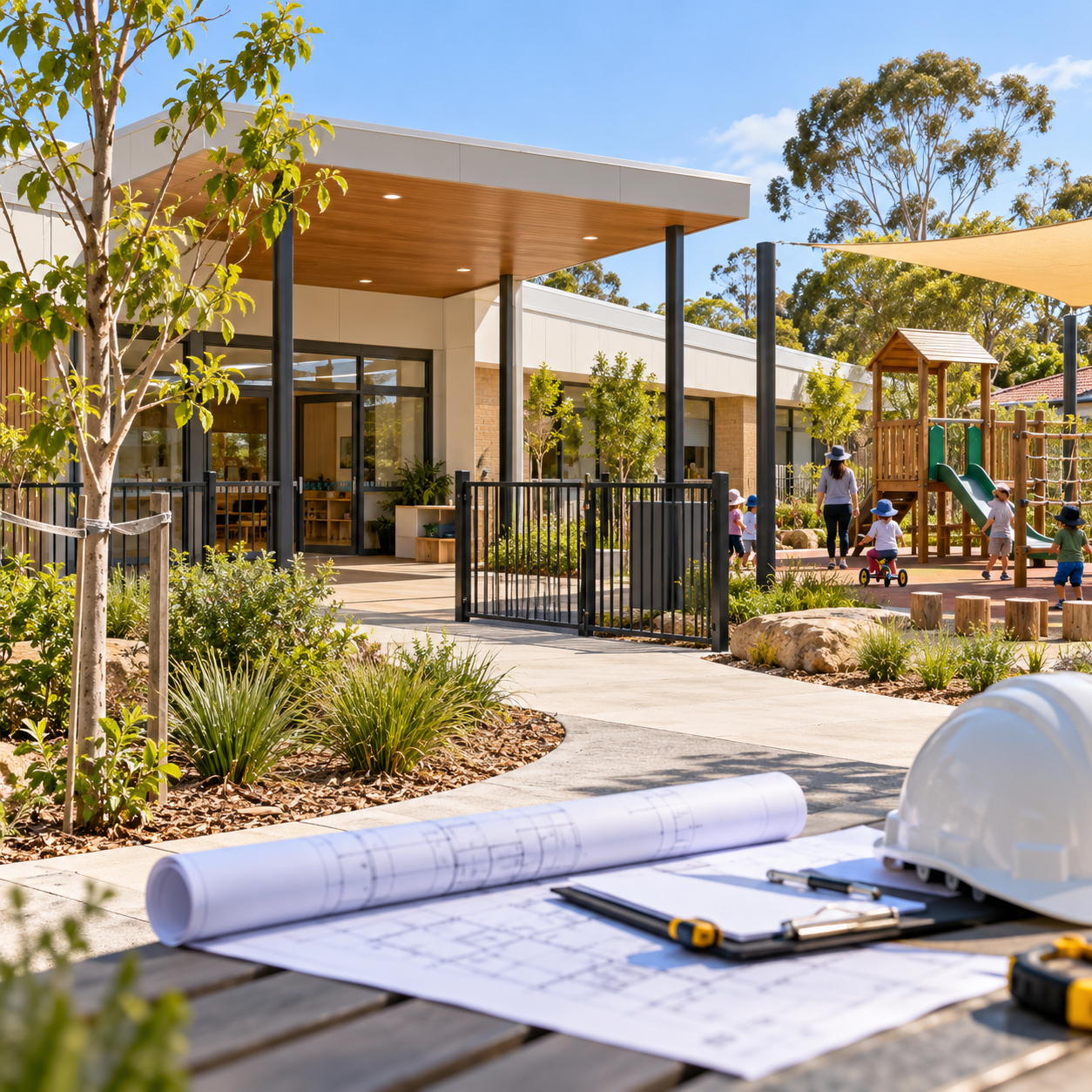
The government’s own education department explains that opening dates depend on building and regulatory approvals. Every new service must meet the applicable requirements, including approval by the independent NSW Early Learning Commission. This requirement does not mean a particular school will be delayed, but it does mean construction completion alone is not the whole process. A centre needs the legal authorisation and operational arrangements necessary to receive children before families can rely on it for education and care.
The NSW Department of Education lists 100 selected public-school sites for the program and says the rollout is intended to double the number of public preschools. Many are in parts of western and south-western Sydney and regional New South Wales where demand and social need helped inform the selection. The department describes the site assessment process as involving education officials, independent input and probity oversight. These details show that the initiative is a substantial statewide project rather than one new classroom opening on a single campus.
The government announced on 12 October that 14 new preschools were opening in Term 4, adding to seven already built and operating. Taken together, that brings the reported operational total to 21 during the final term of 2026. The remaining sites are intended to follow by the start of 2027. The fact that the first 21 are operating is evidence of progress, not proof that the others will miss the deadline. Equally, the fact that all 100 remain the government’s stated target is not evidence that every remaining approval is complete.
The education department said the 14 Term 4 openings would give more than 1,000 children an opportunity to access early learning. Once all 100 centres are delivered, the government’s estimate is that about 9,000 additional children across NSW will benefit. Those are program-level forecasts, not guarantees that any individual child will receive a place at a particular school. The number of places at each preschool varies according to local circumstances and the type of attendance offered.
Families’ concerns go beyond a political dispute about a date. Parents planning work, transport and childcare arrangements may need to know where their child can attend, when enrolment can begin and whether the preschool’s operating days match their needs. A centre that has been physically finished but cannot yet enrol students would not solve those immediate problems. The government says that will not be the case by the deadline, while the opposition argues parents deserve clear details rather than assurances alone.
Opposition early education spokesperson Felicity Wilson told the ABC families needed certainty about where children would be enrolled. Her criticism is a political position that should be weighed against the government’s factual progress and timetable, not treated as a finding that its promise has failed. The first day of Term 1 in 2027 remains in the future as of this reporting. Claims that all 100 sites are already operational or that the government has already broken the pledge would both misrepresent the current evidence.
The design of the program has practical attractions for some parents. Public preschools are co-located with primary schools, potentially simplifying school drop-off and helping children become familiar with the environment they will enter for kindergarten. The department says these centres operate during public-school hours and terms, generally offering play-based learning in the year before school. That is different from long day care, which may have extended opening hours; parents must consider the actual attendance pattern when deciding whether a place suits their family.
NSW public preschools typically provide 20, 40 or 60 places a day, according to departmental guidance, with patterns determined locally. The government says families must be offered an annual program of 600 hours, often expressed as an average of 15 hours per week. Some services provide attendance on alternate days or weeks to cater for different groups. That means a headline figure of 9,000 children is not the same as 9,000 full-time daily places, and such distinctions matter when parents compare early childhood options.
The new public preschools are intended to be fee-free. The department says priority enrolment is available for certain families, including Aboriginal and Torres Strait Islander children, those from low socioeconomic circumstances and those facing financial hardship that limits their ability to access other early childhood services. The public nature of the program and its placement within existing school sites are intended to improve access. Even so, families need local information about eligibility, timing and the specific application arrangements rather than relying on a statewide promise alone.
The project was announced with a budget commitment of $769 million and locations selected across metropolitan and regional NSW. The government has previously said 51 of the new centres are in greater Sydney and 49 are in regional locations. That geographical spread is significant in a state where families’ access to early learning can vary sharply between communities. The program’s long-term success will be judged partly on whether centres serve areas of genuine demand, as well as on whether buildings reach their target completion dates.
Some individual centres have already been publicised during construction or as enrolments approach. Departmental announcements about Bomaderry, Blackett and other locations show the staged nature of delivery. Schools have been expected to tell their communities when expressions of interest can be lodged and when attendance can begin. The existence of some early openings is encouraging, but a parent in a suburb where a centre is still under construction needs a site-specific date and approval status, not merely examples from other towns.
The independent regulatory process is a central part of this story. Early childhood services must meet requirements intended to protect children and maintain education standards. Regulatory approval is therefore not a technical nuisance that should be ignored to hit a political deadline. The relevant question is whether the government has planned and sequenced its building works, staffing, approvals and enrolment processes well enough for a compliant opening across all promised sites. The answer will become clearer as the first school term approaches.
A further complication is the difference between an open service and full enrolment. A centre might be legally able to accept children before every available place is filled, depending on local applications, staffing and family choices. Conversely, a site could be ready for enrolment in principle while an individual family has not yet received an offer. Government statements and political scrutiny should distinguish these scenarios. The promise under discussion concerns whether the 100 services are ready to accept students by the first day of the term, not whether all potential places are occupied at that instant.
The NSW government maintains its promise and describes the program as the largest expansion of public preschools in state history. Critics want evidence that the operational detail matches the ambition. These positions can coexist while implementation proceeds: it is possible to acknowledge a major investment and completed sites while still asking precise questions about unfinished or not-yet-approved centres. Fair scrutiny requires both the progress reports and the outstanding steps to be made visible to the public.
For parents, the most useful information will come from the specific primary school chosen for a new preschool, its stated opening date and the NSW Department of Education’s official guidance on expressions of interest and enrolments. Families should not assume that being in the catchment area automatically guarantees a place, or that a new preschool has the same hours as an all-day childcare centre. Service-level details will determine whether the scheme meets families’ needs when the 2027 school year begins.
As of Monday, 12 October 2026, the government had 21 centres operating or opening during Term 4, continued to promise all 100 for day one of 2027 and acknowledged that approval is part of the delivery process. The minister’s morning answers led to questions about readiness, while her later statement expressly said every new preschool would be able to accept children at the deadline. The story is about a promise being tested, not one already proved broken. The decisive evidence will be the opening and approval status of each service as families prepare for the first term of 2027.






