A 27-year-old Queensland woman has been charged with fraud after police alleged she spent years accepting other motorists’ traffic infringements and demerit points in exchange for money.
Detectives from Queensland Police’s Financial and Cyber Crime Group allege the woman advertised the service on social media and allowed drivers to nominate her as the person responsible for offences they had committed.
Police say that between 2022 and June 2026, 1,266 traffic infringement notices were transferred into her name. Those notices allegedly resulted in about 1,150 demerit points and fines worth approximately $620,000.
The woman was arrested in Woodridge and charged with one count of fraud. She appeared in Brisbane Magistrates Court and was remanded in custody, with her next appearance expected on 28 September.
The allegations are remarkable because the ordinary Queensland demerit-point system is designed to suspend or disqualify drivers who repeatedly commit traffic offences. Police say the alleged scheme enabled some people who should have lost their licences to remain on the road.
Detective Superintendent Craig McGrath, commander of the Financial and Cyber Crime Group, said investigators regarded the matter as a road-safety issue as well as an alleged fraud. Police believe the scheme operated for at least four years and say enquiries are continuing into people who may have paid to have offences transferred.
Traffic-camera systems often identify a vehicle rather than the person driving it. Where an infringement is issued to a registered operator, the law provides a process for nominating the person who was actually responsible. That mechanism is necessary because cars are routinely driven by family members, employees or other authorised drivers.
The system depends on truthful declarations. Deliberately nominating someone who was not driving can amount to serious offending because it interferes with both the financial penalty and the demerit-point consequences attached to the offence.
In the alleged Queensland scheme, police say motorists were able to avoid those consequences by paying another person to accept responsibility. If proven, that would undermine the purpose of demerit points: identifying repeat offenders and removing driving privileges when a threshold is reached.
The scale alleged by investigators is unusually large. More than 1,200 infringements over four years would mean a steady flow of nominations rather than an isolated arrangement between acquaintances. Police say social media was used to promote the service, suggesting investigators may have a substantial digital trail to examine.
That evidence could include advertisements, private messages, payment records, infringement documents and account information showing how customers were recruited and how transactions were arranged. Investigators may also compare the timing and location of offences with other data to test whether the nominated person could realistically have been the driver.
The case may therefore expand beyond the single fraud charge already laid. Queensland Police have warned that people who allegedly used the service can expect to be identified and investigated. Whether further charges are laid will depend on the evidence relating to each transaction and each participant.
The headline figure of about $620,000 reflects the value of the fines allegedly transferred into one name, but police have emphasised that the wider concern is public safety.
Demerit points are intended to change behaviour by imposing escalating consequences on drivers who repeatedly speed, use mobile phones illegally, run red lights or commit other prescribed offences. A driver who accumulates too many points can have their licence suspended.
If an offender falsely transfers those points, the administrative record no longer reflects their actual driving history. Someone who has repeatedly broken road rules may continue driving because the system appears to show the offences belong to somebody else.
McGrath said many people allegedly using the service should have had their licences suspended. Police argue that allowing those drivers to remain on the road increases risk for other motorists, cyclists and pedestrians.
The allegations also illustrate a broader challenge for automated enforcement systems. Cameras can detect offences efficiently, but authorities still need reliable identity and nomination processes to connect the offence to the correct driver. Fraud in that part of the system can weaken the deterrent effect even when the original infringement was captured accurately.
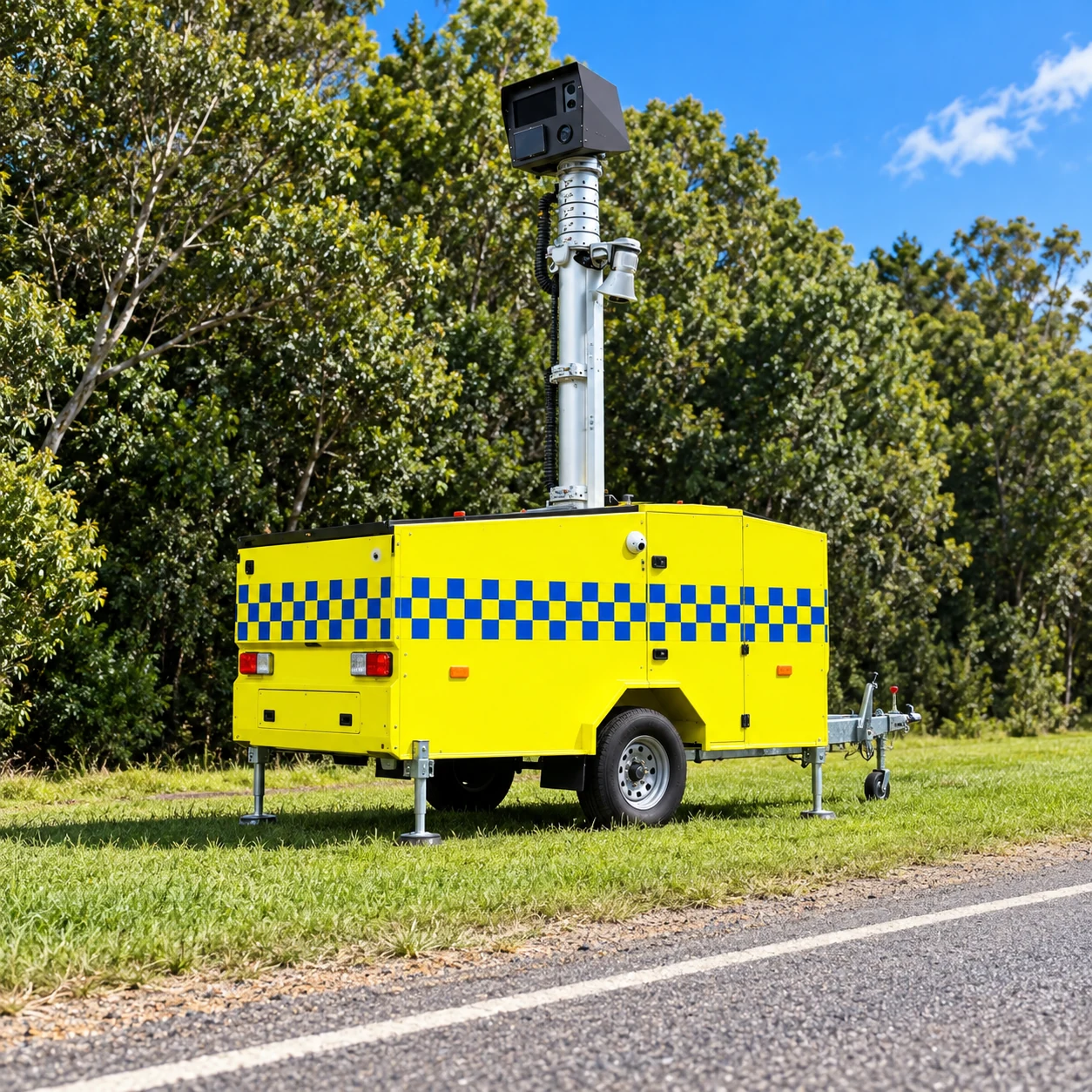
Queensland has expanded the use of speed and red-light cameras, mobile phone and seatbelt detection cameras and mobile enforcement units. Those systems generate large volumes of infringement data, making integrity controls around nominations increasingly important.
Police have not alleged that camera equipment itself was manipulated in this case. The alleged conduct concerns what happened after infringements were issued: the transfer of liability and demerit points to a person who police say was accepting them for payment.
The woman charged is entitled to the presumption of innocence. The allegations have not yet been tested in court, and the prosecution will have to prove the elements of the fraud charge beyond reasonable doubt if the case proceeds to trial.
There are also unresolved questions about how the alleged scheme was able to continue for several years despite the extraordinary number of points and fines recorded against one licence. The investigation may prompt scrutiny of whether automated systems should flag unusually high volumes of nominations or demerit accumulation earlier.
Any reform would need to distinguish legitimate high-volume circumstances from suspicious activity, but the numbers in this case are likely to attract attention from transport and enforcement agencies.
For drivers, the case is also a reminder that transferring an infringement is not simply a paperwork exercise. A nomination is a legal declaration about who committed an offence. Knowingly providing false information can expose both the original driver and the person accepting liability to criminal consequences.
Police say their investigation is continuing, meaning the current charge may be only the first stage of the case. Detectives will now work through records linked to the alleged scheme to determine who used it, how much money changed hands and whether additional offences can be established.
The next major procedural step is the woman’s return to court on 28 September. Until then, the allegations remain unproven, but the scale described by police has already made the case one of the most unusual demerit-point investigations seen in Queensland.
The alleged scheme may also expose weaknesses in anomaly detection. A single licence accumulating more than a thousand transferred infringements is far outside ordinary driving behaviour. Authorities may examine whether existing systems generated warnings, whether those warnings were acted on and whether additional automated checks should be introduced for extreme nomination patterns.
Such checks could include requiring additional evidence when one person is nominated for an unusually large number of offences, comparing offence locations and times, or reviewing payment and account patterns where fraud is suspected. Any new controls would need to avoid burdening legitimate nominations, particularly in commercial fleets where many drivers may use the same vehicles.
There is a broader deterrence issue as well. If drivers believe demerit points can be cheaply transferred to another person, the behavioural effect of camera enforcement is weakened. The financial penalty becomes a transaction cost rather than a consequence linked to the driver’s record.
That is why police have signalled interest in the people who allegedly paid for the service, not just the woman accused of operating it. A customer who knowingly makes or supports a false nomination may have their own exposure under fraud or false-declaration laws, depending on the evidence and the way the transaction was carried out.
The investigation may take time because detectives could be dealing with hundreds of separate infringements and many alleged customers. Each transaction can require its own evidentiary chain, from the original offence and nomination form to communications and payments. The large headline numbers do not remove the need to prove individual conduct carefully.