A man has died after being bitten by a shark while swimming off Sorrento Beach in Perth’s northern suburbs, prompting a major emergency response and temporary beach closures as authorities investigate the incident.
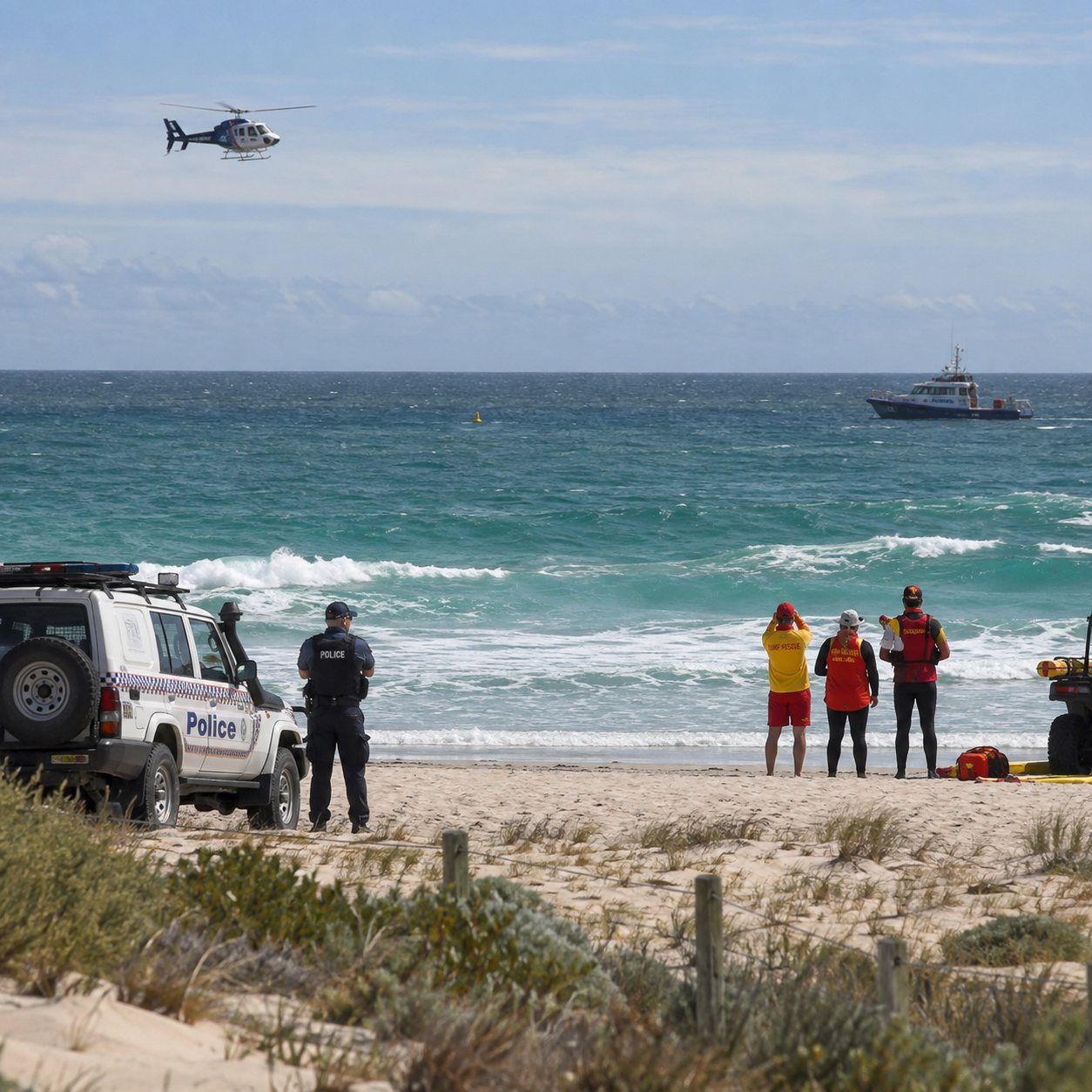
Western Australian authorities received the first reports at about 10:15am on Friday. St John WA sent multiple crews to the area, while Water Police, surf lifesaving resources and aerial support were involved in the response.
WA Police later confirmed the swimmer had suffered fatal injuries. The man’s identity had not been publicly released in the initial reporting, and authorities have asked people to respect those affected by the death.
The Department of Primary Industries and Regional Development issued a SharkSmart incident alert for Sorrento Beach, saying it was investigating the reported shark incident and working with local authorities.
The official alert urged people to take additional caution in the Sorrento area and follow any beach closures announced by local government rangers, Parks and Wildlife officers or Surf Life Saving WA.
The City of Wanneroo also closed beaches along its coastline until noon on Saturday as a precaution following the incident. Beach users should check current local advice before entering the water because closures and warnings can change as authorities reassess conditions.
The response included activity on the water and from the air. The Perth metropolitan lifesaving helicopter patrol had recently resumed for the warmer season, with weekend patrols operating through September before daily flights begin later in the month.
Aerial patrols are one part of Western Australia’s broader shark hazard strategy. The state also uses tagged-shark detection receivers, warning systems, beach patrols, public alerts and local closures when there is information suggesting an increased risk.
Sorrento is one of the beaches linked into that monitoring network. SharkSmart information is designed to give water users near-real-time reports of tagged detections, sightings and incident alerts, although no monitoring system can detect every shark in the ocean.
That limitation is important after a fatal event. The presence or absence of a tagged-shark alert should not be treated as a guarantee that an area is safe, and authorities advise swimmers to consider conditions, patrol information and current warnings.
Current official information has not established every detail of the incident publicly, including the species of shark involved. Until investigators release further information, it would be premature to identify a species or make claims about why the encounter occurred.
Shark incidents attract intense attention because they are dramatic and frightening, particularly at popular metropolitan beaches. But individual events should be reported without implying that every nearby beach is unsafe indefinitely or that authorities can remove all risk from open water.
Western Australia’s shark-safety approach is built around risk reduction rather than complete prevention. Helicopter surveillance can spot some sharks, tagged-animal receivers can provide alerts, and local authorities can close beaches after an incident or sighting.
The metropolitan helicopter patrol covers a large stretch of coastline between Mandurah and Yanchep as well as Rottnest Island. When a shark is sighted, crews can warn beach users and communicate with emergency services.
Local shark warning infrastructure also includes detection receivers and onshore warning systems along parts of the Joondalup coast. These systems are intended to speed up public warnings when tagged sharks are detected near monitored beaches.
For beachgoers, the immediate advice after Friday’s incident is simple: follow closure notices, check SharkSmart or Surf Life Saving WA updates and stay out of the water where authorities have asked people to do so.
People who see a shark are encouraged to report the sighting to Water Police so the information can be passed to land managers and public warning systems.
The fatality will also renew discussion about shark mitigation in Western Australia, including aerial patrols, monitoring technology, beach enclosures and how governments communicate risk to swimmers.
Those debates often become more intense after a death, but any policy response needs to distinguish between measures that detect sharks, measures that physically separate swimmers from marine life and measures that help people make safer choices.
Sorrento has long been a popular family and recreational beach in Perth’s northern suburbs. That familiarity can make a fatal incident feel especially confronting for the local community because the location is part of ordinary daily life rather than a remote or rarely used stretch of coast.
Authorities are expected to continue reviewing the circumstances and any available evidence from witnesses, emergency responders and surveillance systems. Further official information may clarify the species involved and the sequence of events.
Until then, the confirmed position should remain narrow. A swimmer was bitten by a shark at Sorrento Beach on Friday morning and died from his injuries. Emergency services responded, authorities opened an investigation and local beach closures were put in place as a safety precaution.
The incident is a tragedy for the man’s family and those who witnessed or responded to it. Public-safety updates remain important, but speculation about the victim, the shark species or the cause of the encounter should wait for verified information from authorities.