Noel Pearson’s criticism of Nationals leader David Littleproud over an Indigenous Voice to Parliament combined a blistering personal insult with a much larger argument about constitutional recognition. Pearson accused Littleproud of abandoning support for the proposal and called him a “kindergarten kid”. Jacinta Nampijinpa Price, a Nationals senator who opposed the proposed Voice, responded by rejecting what she characterised as bullying and defending her focus on practical outcomes for Aboriginal people.
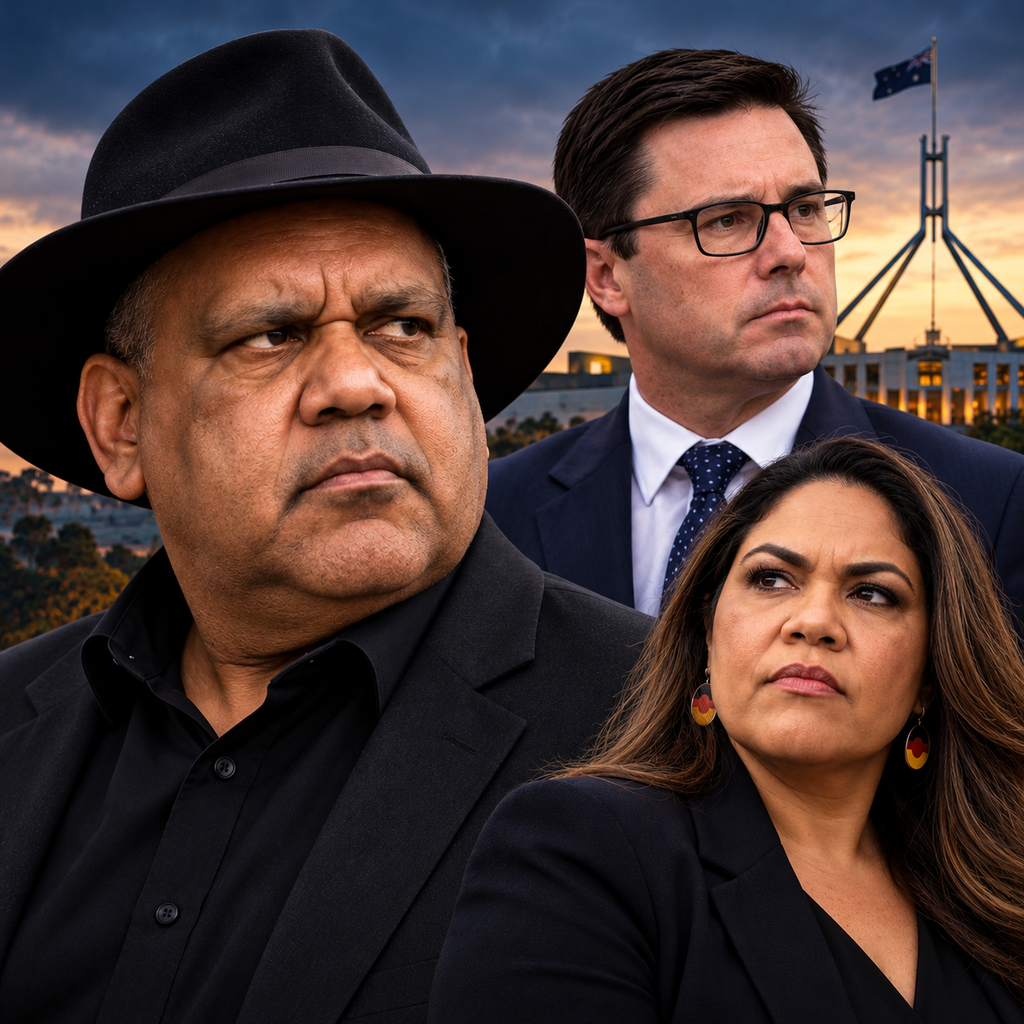
The dispute is a documented chapter in the national debate that culminated in voters rejecting the proposed constitutional alteration. It should be read as a disagreement between identifiable public figures over a contested policy, rather than proof that one person speaks for all Indigenous Australians or that any participant’s motives have been independently established.
Pearson, a prominent Cape York Indigenous leader and advocate for constitutional recognition, said his previous discussions had left him with the impression that many Nationals parliamentarians were sympathetic to the proposal. The party’s decision to oppose a constitutionally enshrined Voice therefore struck him as a significant change. He suggested the arrival of senator Price, a determined critic of the proposal, had helped transform the party’s position.
His criticism targeted both the decision and Littleproud’s leadership. Pearson accused the Nationals leader of capitulating, portraying him as unable to hold a position he had previously entertained. The insult made news because it was vivid and personal. But the policy question behind it was more substantial: whether recognition of Aboriginal and Torres Strait Islander peoples should take the form of an advisory body recognised in the Constitution.
Littleproud’s argument, as reported by the ABC, was that embedding the Voice in the Constitution carried risks if the proposed institution did not work as intended. That was a concern about institutional design and permanence. Supporters of the model argued that constitutional recognition would give the advisory mechanism durability while leaving its composition and powers to be determined by Parliament. Opponents questioned what it would achieve and whether the constitutional wording provided enough clarity.
These were not simply arguments about whether governments should hear from Indigenous communities. Australia already had many different consultation and service-delivery arrangements. The contested issue was the form, authority and permanence of a particular national representative body. A supporter could see constitutional status as necessary for stable consultation; an opponent could fear unintended consequences from entrenchment. Explaining the difference is essential to understanding why political figures who talked about improving Indigenous outcomes nevertheless disagreed strongly.
Price’s response added another dimension. She said she was accustomed to attacks from men claiming to speak on behalf of Aboriginal Australia and rejected the language of bullies. She also referred to threatening and abusive communications received by women in her office. Her remarks should be attributed to her; they are part of her public account of the controversy, not a finding that Pearson directed or encouraged threats against staff.
Her response also challenged the idea that there was one unified Indigenous position on the Voice. Aboriginal and Torres Strait Islander Australians, like any other group, hold different views about institutions, economic opportunity, service delivery and political representation. Pearson and Price approached the question from different perspectives. Reporting their dispute accurately means recognising that disagreement without treating either individual as a substitute for the views of every community.
The arguments were sharpened by an electoral and constitutional reality. A federal referendum requires a national majority of votes and majorities in at least four states. The Australian Electoral Commission’s final results show that the Voice proposal was not carried: 39.94 per cent voted Yes and 60.06 per cent voted No nationally, and no state recorded a Yes majority. Those are official voting results. They establish the outcome of the referendum, not the precise reasons every voter made their choice.
Some people opposed the wording while supporting a different form of recognition; others opposed the idea of a constitutionally recognised body altogether. Supporters of the proposal also differed in what they hoped it would achieve. Treating the result as an unambiguous endorsement of every argument put forward by one campaign would overstate what a ballot can reveal. A vote determines the legal and political result, but individual motivations need separate evidence.
The policy challenge highlighted by the dispute does not disappear with the constitutional outcome. Indigenous communities continue to face practical debates about education, housing, health care, remote services, employment and the quality of public administration. Effective programs require clear objectives, accountable spending, trustworthy local relationships and ways to measure results. These are important questions whether or not people agree on a national advisory institution.
There is also an economic dimension. Poor service coordination can impose direct costs on families and communities, including longer travel to essential services, greater difficulty remaining in employment and weaker access to education. Governments can spend more without achieving proportionate improvements if programs are poorly designed or disconnected from community needs. But none of those general mechanisms proves that a particular constitutional proposal would necessarily have succeeded or failed in addressing them.
The words used in the Pearson–Littleproud–Price confrontation revealed a second problem: public debate about institutional design can quickly become an argument about who has the moral authority to speak. Pearson’s criticism addressed perceived political inconsistency. Price’s reply addressed the treatment of dissenting Indigenous voices. Both concerns can be reported without adopting the harshest allegations of either side as verified facts.
For voters trying to evaluate such disputes, it is useful to separate three questions. One is whether Indigenous recognition is desirable. Another is what institutional model would work best. A third is whether the people advocating or opposing it are using fair and accurate arguments. A person can have a firm answer to one question while remaining uncertain about another. Personal insults tend to collapse all three into a single contest over loyalty and legitimacy.
That collapse may help generate attention, but it can make serious policy evaluation harder. Voters need clarity about what an institution would do, who would appoint its members, how it would interact with Parliament and how its outcomes could be assessed. The constitutional debate also called for an honest account of which details would be fixed in the Constitution and which would be left to legislation. Those are questions of democratic design, not merely personal confidence in competing leaders.
The dispute therefore has two enduring dimensions: a political fight over a proposed Voice and a disagreement about the treatment of opposing views within Indigenous policy debates. Pearson’s criticism, Littleproud’s stated concerns and Price’s rejection of bullying all belong in the record. The referendum outcome completes the constitutional part of the story, while the broader challenge of improving outcomes and public trust remains a policy question rather than a matter settled by rhetoric.
A useful way to understand the competing positions is to separate constitutional wording from the services that citizens ultimately receive. A national advisory body would not by itself build a house, staff a health clinic or employ a teacher. Its supporters argued it could improve the way national decisions were informed by the people affected. Critics questioned whether another institution would provide a measurable improvement. Both positions are hypotheses about governance and performance, which would require evidence in operation. The referendum was a vote on the constitutional proposal, not a controlled experiment in public administration.
The official referendum count provides another reason to avoid reading the outcome as a verdict on the personalities involved. The AEC reported that no state voted Yes and that the national No share was 60.06 per cent. That establishes that the proposal did not meet the required double majority. It does not establish whether individuals were primarily concerned about legal interpretation, institutional effectiveness, social division, lack of information or another question. Political campaigns often attribute a vote to their strongest argument, but such explanations require independent research.
The ABC also reported disagreement within the Nationals themselves. Andrew Gee publicly broke with his party’s opposition and continued to back the Voice proposal. His position is important because it undercuts any simple assertion that every member of a party or region held an identical view. The party made a collective decision, while individual parliamentarians could maintain a different position. Reporting both facts gives readers a more accurate picture of the deliberation than treating the party decision as a universal personal belief.
Finally, policy evaluation requires clarity about accountability. When governments fund programs to reduce disadvantage, the public should be able to ask who sets objectives, which department or organisation is responsible for delivery, what outcomes are measured and how communities participate in decisions. These questions remain vital whether a person favoured or opposed constitutional entrenchment. The confrontation became memorable because of the language used; the consequences of Indigenous policy are measured more soberly in the quality and accessibility of real services.
The disagreement was not simply between Pearson and the Nationals leadership. The ABC recorded Labor’s criticism of the party’s decision, including an argument that opposition had been declared before public discussion had fully developed. Littleproud, by contrast, said the Nationals had consulted widely and reached a difficult decision about practical outcomes. These positions reveal a genuine argument about consultation and policy confidence. Neither should be rephrased as an independently established account of all the party’s deliberations.






