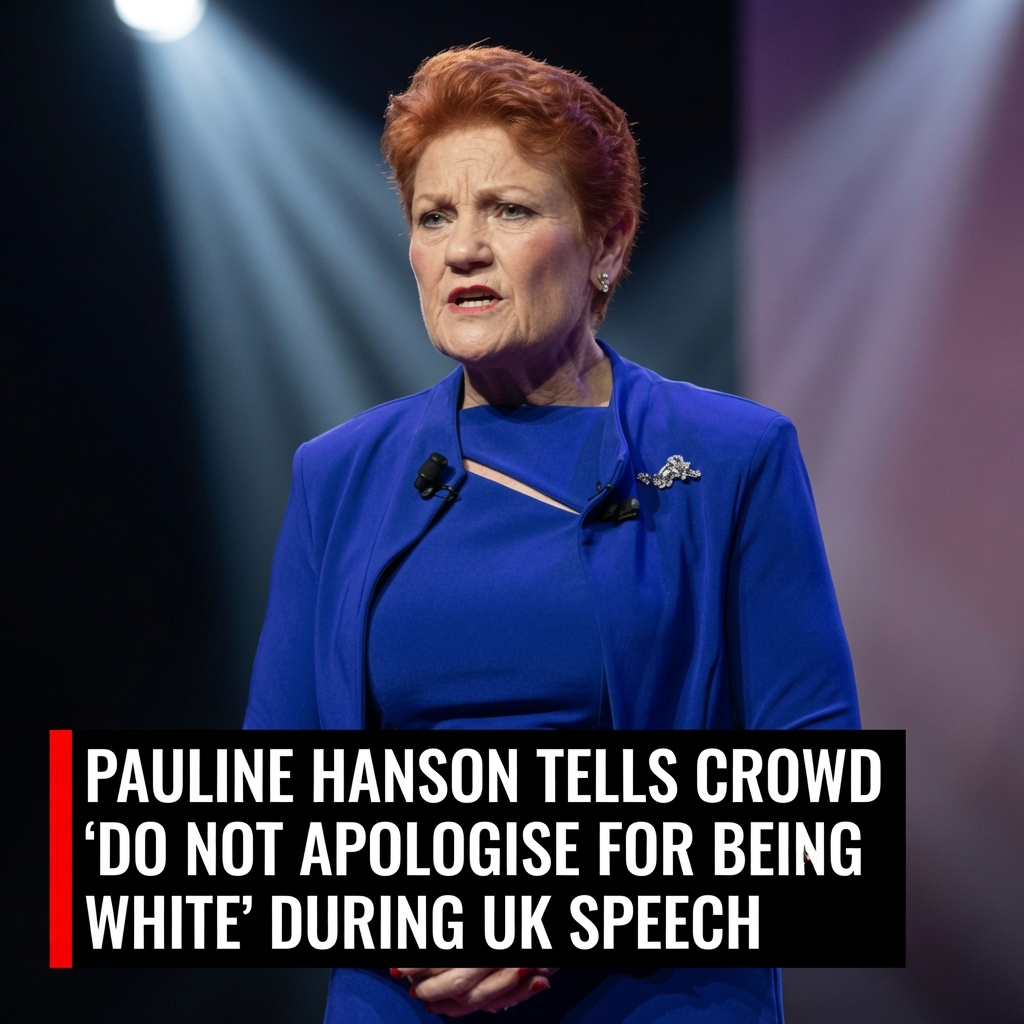
One Nation leader Pauline Hanson has delivered another highly controversial speech during her visit to Britain, telling supporters gathered at the Conservative Political Action Conference (CPAC) in London that Australians should “not apologise for being White” while arguing the country has become “completely woke”.
The address formed part of Hanson’s 10-day European tour, during which she met a number of conservative political figures and attended several events focused on immigration, national identity and cultural issues. The speech largely reflected themes that have long been central to One Nation’s political platform, including opposition to high migration, criticism of multiculturalism and calls for what Hanson describes as a return to traditional Australian values.
Speaking to delegates in London, Hanson criticised the concept of “white privilege” and argued that people should not feel guilty because of their race.
“Do not apologise for being White. I’m sick of hearing about White privilege,” she told the audience, receiving applause from supporters attending the conference. Hanson said Australia should acknowledge mistakes from the past without creating what she described as new forms of discrimination in the opposite direction.
The senator also repeated her criticism of the Albanese Government’s immigration policies, claiming Australia had experienced unsustainably high migration levels in recent years.
According to Hanson, rapid population growth has placed increasing pressure on housing, infrastructure, public services and national identity. She argued Australia is now only “five to ten years behind England” in experiencing what she considers the social consequences of large-scale migration.
Immigration has become one of the defining issues of Hanson’s overseas visit.
Before addressing CPAC, she toured London’s Tower Hamlets borough and the town of Luton with British anti-immigration activist Tommy Robinson, whose real name is Stephen Yaxley-Lennon. Hanson later described parts of those communities as evidence of what she believes can occur when immigration outpaces integration, comments that generated significant criticism in both Britain and Australia.
Her speech extended beyond immigration to broader cultural debates.
Hanson argued that Australia had embraced what she described as “woke” politics and criticised policies relating to gender identity. She reiterated her long-held position that there are only two biological sexes and opposed the participation of transgender women in female sporting competitions.
These views mirror policies One Nation has promoted in recent years concerning gender recognition, women’s sport and education, although they remain strongly contested within Australian politics and the broader community.
CPAC itself has become an increasingly prominent international forum for conservative and populist political movements.
Originally established in the United States, the conference now attracts politicians and commentators from several countries who frequently discuss migration, national sovereignty, free speech, energy policy and cultural issues. The London event was organised with support from former British Prime Minister Liz Truss and featured a range of right-leaning speakers from Britain, Europe and Australia.
While Hanson received a standing ovation from those attending her address, media reports noted that the conference room was only partially filled during the speech.
ABC News reported that roughly 120 people were present when Hanson addressed delegates, with fewer than one-quarter of the available seats occupied. The speech nevertheless attracted substantial media coverage because of both Hanson’s profile in Australian politics and the controversial nature of her remarks.
Supporters argue Hanson continues to voice concerns shared by many Australians about migration, housing affordability, community cohesion and freedom of expression.
They contend that major political parties have been reluctant to openly discuss these issues and view One Nation as providing an alternative perspective on Australia’s future direction.
Critics, however, argue that Hanson’s language risks increasing social division by framing complex economic and demographic challenges primarily through the lens of race, migration and cultural identity.
Several community organisations and political figures condemned comments Hanson made during her UK tour, particularly those concerning migrants, Muslims and the historical White Australia Policy. The Australian Council of Social Service (ACOSS), for example, described some of her public statements as racist and divisive, urging political leaders to promote social cohesion rather than fear.
Political debate over migration has intensified across Australia during the past two years.
While both major parties acknowledge housing affordability, infrastructure capacity and public services have come under increasing pressure following the post-pandemic rebound in overseas migration, they differ on the scale and pace of future migration settings.
The Albanese Government has maintained that immigration remains important for addressing workforce shortages and supporting economic growth while also implementing measures aimed at reducing net overseas migration from its post-pandemic peak.
Questions surrounding multiculturalism have likewise become a recurring theme in Australian political debate.
Australia has officially pursued multicultural policies for several decades and successive governments have generally described multiculturalism as a national strength. Hanson, however, has consistently argued that Australia should instead prioritise stronger cultural integration and shared national values.
These competing visions have been central to One Nation’s political identity since the party was founded in the late 1990s.
For Hanson, the London speech represented another opportunity to present those views before an international conservative audience.
For her opponents, it reinforced concerns that her rhetoric risks polarising public debate at a time when Australia is already grappling with difficult questions surrounding migration, housing, social cohesion and national identity.
Whether the speech broadens One Nation’s electoral appeal or further entrenches existing political divisions is likely to remain a subject of debate as Australia moves closer to the next federal election.






