One Nation leader Pauline Hanson has used her appearance at the inaugural Conservative Political Action Conference (CPAC) Great Britain in London to reinforce her party’s growing ties with conservative and populist movements overseas, describing the event as an opportunity to learn from countries confronting many of the same political challenges as Australia.
During the conference, Hanson delivered one of the event’s keynote speeches before meeting Reform UK leader Nigel Farage, whom she described as a friend. According to One Nation, the pair discussed immigration, national sovereignty, economic pressures and what they see as common policy challenges facing both Australia and the United Kingdom.
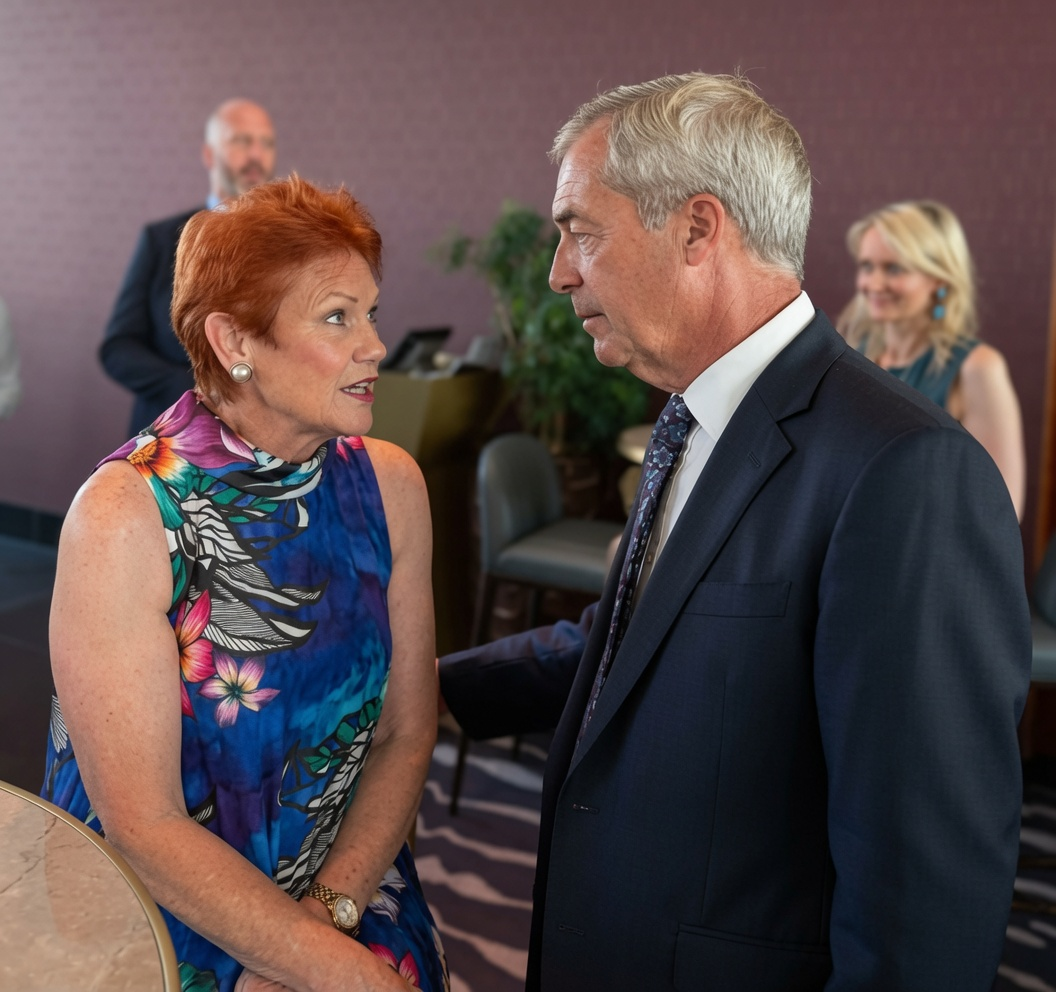
In a statement following the meeting, Hanson said the visit had been “hugely valuable” and argued that Australia could learn lessons from countries that have already experienced many of the social and political issues now emerging domestically.
“Many countries face the same struggles we do, and there is a fightback going on across a number of countries, not just Australia,” the statement said.
It added that parties such as One Nation and Reform UK were “fighting the same fight for the same values”, reflecting an increasing willingness by both parties to publicly identify with a broader international conservative movement.
The meeting with Farage came during CPAC Great Britain, the first British edition of the influential Conservative Political Action Conference, an event that has traditionally brought together conservative politicians, activists and commentators from around the world. The London conference featured speakers from Britain, the United States, Europe and Australia, with immigration, national identity, free speech, energy policy and economic growth dominating the agenda.
Farage, who leads Reform UK, has become one of Britain’s most recognisable political figures over the past two decades. After playing a central role in the Brexit campaign, he has repositioned Reform UK as one of the country’s fastest-growing political parties, campaigning heavily on reducing immigration, lowering taxes and challenging what he describes as Britain’s political establishment.
Although Hanson and Farage have known each other for several years through international conservative conferences, their latest meeting comes at a politically significant time for both leaders.
In Australia, One Nation has enjoyed a substantial rise in opinion polling during 2026, emerging as one of the country’s strongest minor parties and increasing pressure on the Coalition across several conservative electorates.
Meanwhile, Reform UK has continued expanding its influence in British politics, positioning itself as a significant challenger to both Labour and the Conservatives.
For Hanson, the UK visit forms part of what One Nation has described as a broader fact-finding mission examining how other countries are responding to issues such as migration, border security, housing affordability and the cost of living.
However, the overseas trip has also attracted significant controversy.
Before speaking at CPAC, Hanson appeared on a podcast hosted by British political activist Tommy Robinson, where she made several remarks about immigration, multiculturalism and the former White Australia Policy that prompted criticism from political opponents and community groups in Australia. Those comments drew condemnation from Labor ministers and the Greens, while some figures within the broader conservative movement also distanced themselves from aspects of the interview.
Questions have also been raised about other parts of Hanson’s European itinerary, including a visit to Sicily and whether taxpayers contributed to any aspect of the overseas travel. Hanson has denied that Australian taxpayers funded her private travel, saying the trip “cost taxpayers not $1” and insisting she has complied with parliamentary requirements.
Despite those controversies, Hanson proceeded with her scheduled CPAC appearance, where she argued that Western democracies increasingly face similar political pressures and that conservative parties benefit from exchanging ideas internationally.
While full details of her speech have not been released publicly, reporting from the conference indicates Hanson focused heavily on immigration policy, national sovereignty and preserving cultural identity—issues that have long formed the core of One Nation’s political platform.
Farage has likewise built much of Reform UK’s electoral strategy around tighter immigration controls and criticism of Britain’s existing political establishment. Although the two parties operate in different political systems, both frequently campaign on reducing migration, opposing what they describe as excessive government intervention and promoting stronger national borders.
Those similarities have led to increasing interaction between conservative movements in Australia, Britain, Europe and the United States through events such as CPAC.
Supporters argue these conferences provide an opportunity for politicians to exchange policy ideas, discuss electoral strategies and build relationships with like-minded parties overseas.
Critics, however, argue that such gatherings can also amplify divisive political rhetoric and strengthen networks between populist movements whose approaches to immigration and multiculturalism remain highly contentious.
For One Nation, the London visit also carries domestic political significance.
The party has sought to present itself as part of a broader international movement responding to concerns over migration, inflation, housing shortages and national identity. Hanson has repeatedly argued that Australia should pay close attention to policy developments overseas rather than waiting until similar challenges become more difficult to address.
Political opponents reject that argument, saying Australia’s economic, demographic and constitutional circumstances differ substantially from those of Britain and warning against importing overseas culture-war politics into Australian public debate.
The meeting between Hanson and Farage is therefore likely to reinforce both the enthusiasm of One Nation supporters and the concerns of its critics.
As Australia’s next federal election approaches, One Nation continues positioning itself as a party willing to challenge both Labor and the Coalition while drawing inspiration from conservative movements abroad.
Whether that international strategy ultimately broadens the party’s appeal or further polarises public opinion remains to be seen. What is clear is that Hanson’s appearance at CPAC Great Britain has again placed One Nation at the centre of Australia’s ongoing debate over immigration, national identity and the influence of global conservative politics.






