One Nation leader Pauline Hanson has vowed to continue one of Australia’s most closely watched legal battles after losing her appeal against a landmark Federal Court ruling that found she unlawfully racially discriminated against Greens Senator Mehreen Faruqi.
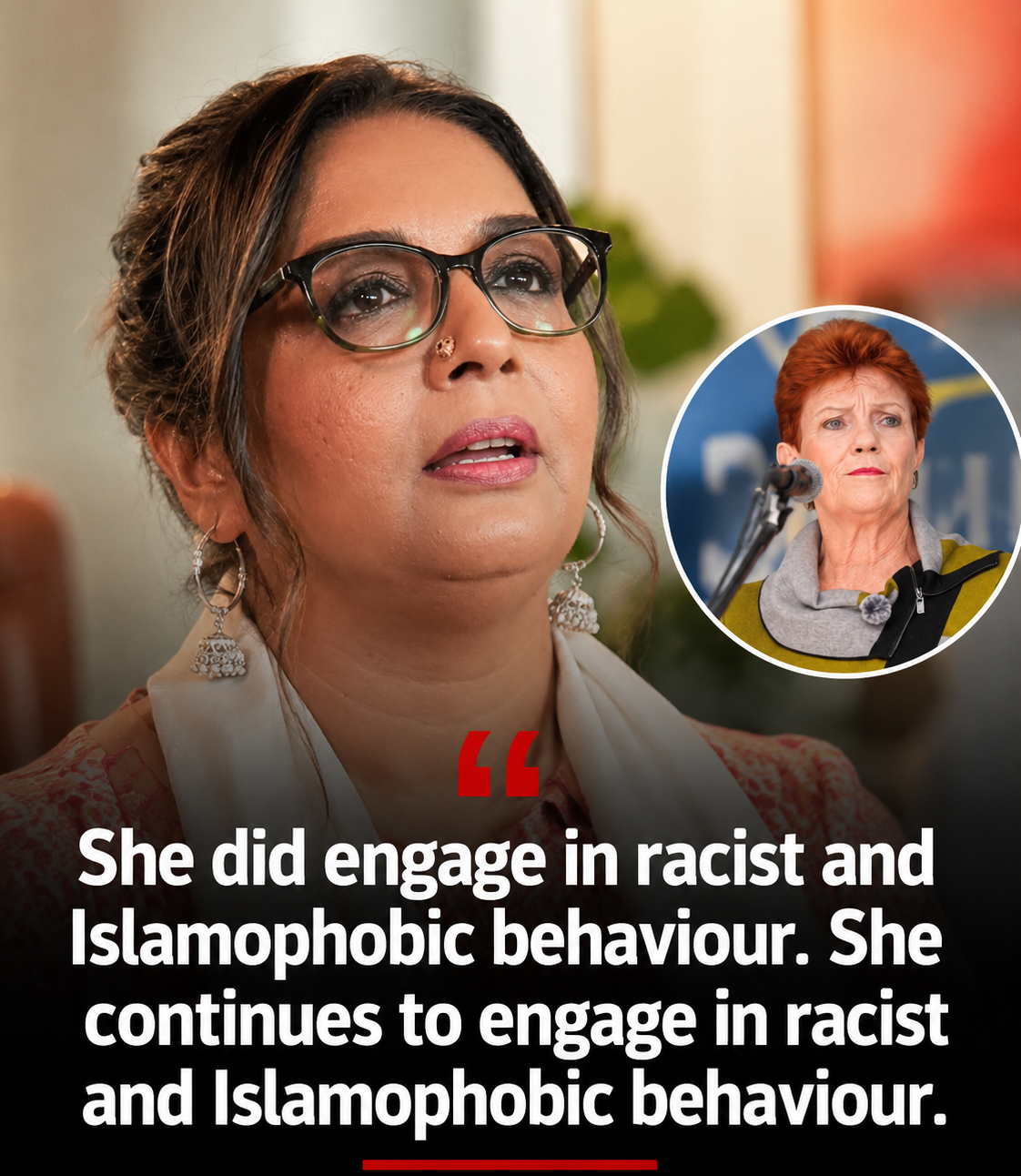
In a unanimous decision, the Full Federal Court dismissed every ground of Hanson’s appeal, leaving in place a 2024 judgment that concluded she breached section 18C of the Racial Discrimination Act 1975 through a social media post directed at Senator Faruqi.
The dispute arose from an exchange on Twitter, now known as X, in September 2022 following the death of Queen Elizabeth II.
After Senator Faruqi criticised the legacy of the British Empire and colonialism, Hanson responded with a post telling the Greens senator to “pack your bags and piss off back to Pakistan”. Faruqi subsequently commenced Federal Court proceedings, arguing the comment was unlawful racial discrimination because it targeted her race, colour and national or ethnic origin.
In November 2024, Justice Angus Stewart ruled in Faruqi’s favour.
He found Hanson’s post amounted to an “angry personal attack” that relied upon a well-known racist trope suggesting Australians from migrant backgrounds do not truly belong in the country.
The judge ordered Hanson to delete the post and pay Faruqi’s legal costs.
Hanson challenged that decision before the Full Federal Court, arguing the trial judge had incorrectly interpreted section 18C and had failed to properly recognise the implied constitutional freedom of political communication.
Her legal team also argued the comments formed part of legitimate political debate concerning Australia’s constitutional future and the legacy of British colonisation.
The three appeal judges rejected those submissions.
In a unanimous judgment, the court held that none of Hanson’s appeal grounds had been established and confirmed that the original ruling correctly applied Australia’s racial discrimination laws.
The judges concluded the comments were reasonably likely to offend, insult, humiliate or intimidate because of Senator Faruqi’s race or ethnic origin and therefore fell outside the protection Hanson sought under arguments about political communication.
Following the decision, Hanson said she was disappointed with the outcome but insisted the legal fight was not over.
She confirmed she intended to seek special leave to appeal to the High Court of Australia, arguing the case raised broader questions about freedom of expression in political debate.
Whether the High Court agrees to hear the matter will depend on whether it considers the case raises questions of legal significance beyond the interests of the parties themselves.
Senator Faruqi welcomed the appeal judgment, describing it as an important victory not only for herself but also for Australians who experience racism.
She argued the decision reaffirmed that public figures cannot rely on political debate as justification for racially discriminatory conduct and said the ruling sent a strong message that hate speech has legal limits under Australian law.
The case has become one of the most significant modern tests of section 18C of the Racial Discrimination Act.
The provision makes it unlawful to engage in public conduct that is reasonably likely to offend, insult, humiliate or intimidate another person because of their race, colour or national or ethnic origin, although separate exemptions exist for certain artistic, academic and fair public interest discussion undertaken reasonably and in good faith.
Successive governments have debated possible reforms to the legislation, but section 18C has remained substantially unchanged despite repeated political controversy.
Hanson has long been one of the provision’s strongest critics.
Throughout her political career she has argued Australia’s anti-discrimination laws impose unacceptable limits on free speech and political discussion.
Following the latest judgment, she again maintained that Australians should be able to express controversial political opinions without fear of legal action, particularly where debates concern immigration, multiculturalism or national identity. Those comments reflect Hanson’s publicly stated position.
Supporters of the existing legislation take a different view.
The Australian Human Rights Commission’s Race Discrimination Commissioner welcomed the Full Federal Court’s decision, describing it as an important affirmation of legal protections against racial discrimination and noting that freedom of expression does not extend to unlawful racial vilification.
The appeal has also attracted significant political attention because both Hanson and Faruqi remain serving senators representing parties with sharply contrasting views on immigration, multiculturalism and Indigenous affairs.
Their disagreements have frequently extended beyond Parliament into public debate over Australia’s identity, constitutional recognition and race relations.
As a result, the legal proceedings have become emblematic of broader national arguments about where the boundary lies between robust political speech and unlawful racial discrimination.
Constitutional law experts note that obtaining special leave to appeal to the High Court is not automatic.
The High Court hears only a relatively small number of appeals each year, generally where cases involve issues of broad legal importance, conflicting appellate authority or significant questions affecting Australian law.
If special leave is refused, the Full Federal Court’s judgment will remain the final determination of the case.
The proceedings will also have financial consequences.
With Hanson unsuccessful in her appeal, the issue of legal costs will return before the courts, where orders may require her to pay additional costs incurred by Senator Faruqi in defending the appeal. The precise amount has yet to be determined.
For One Nation, the judgment comes at a politically significant time as the party seeks to build support ahead of future elections through campaigns focused on immigration, cost of living and national identity.
For the Greens, the outcome reinforces longstanding arguments that Australia’s anti-discrimination laws remain an essential safeguard against racism in public life.
Whatever the eventual outcome of any High Court application, the case has already established one of the most important modern precedents concerning the relationship between political communication and Australia’s racial discrimination laws.
The litigation has highlighted the continuing tension between protecting vigorous political debate and ensuring that public discourse remains consistent with legal protections against racial discrimination—a balance that will likely continue to shape Australian law and politics well beyond this case.






