One Nation leader Pauline Hanson has come under intense criticism after describing domestic violence as “a two-way street” during a radio interview, prompting condemnation from women’s advocate Brittany Higgins, family violence organisations and several senior politicians who say her comments risk blaming victims and oversimplifying one of Australia’s most serious social issues.
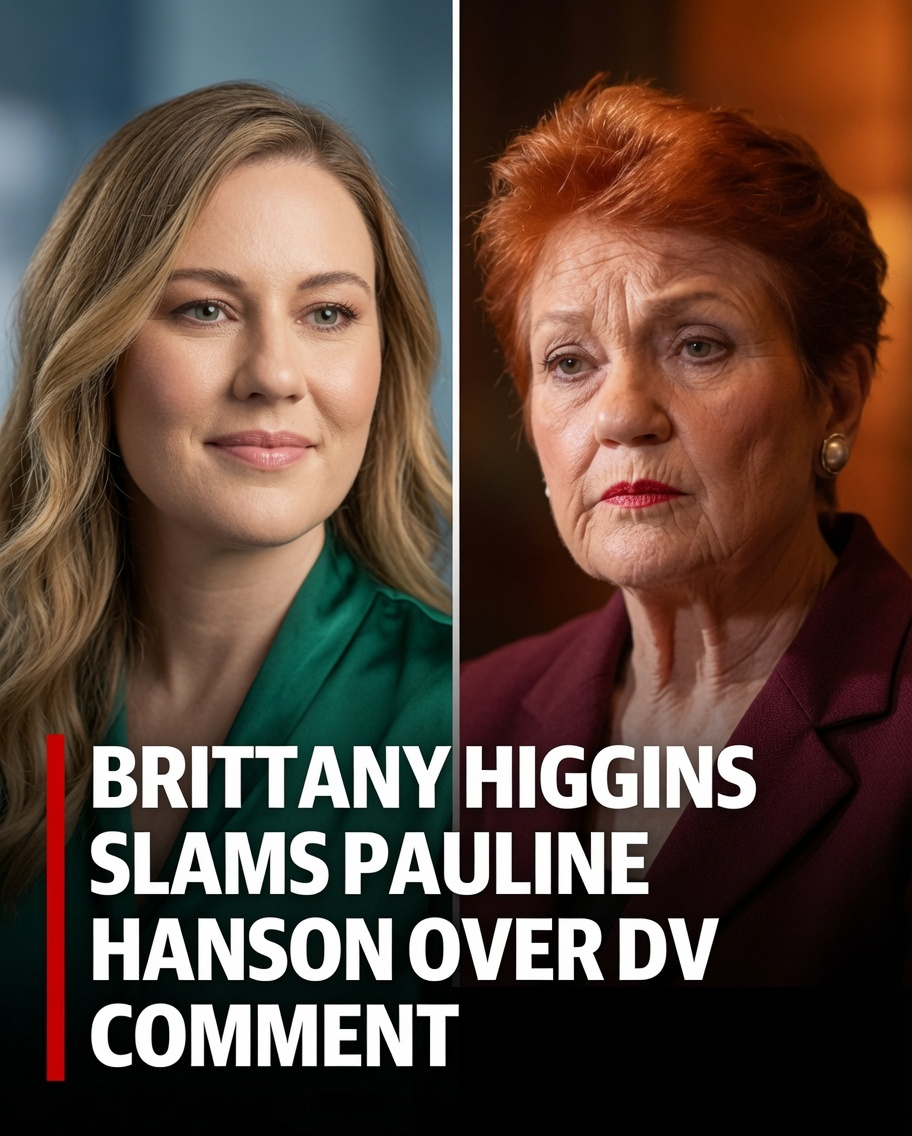
The controversy began during an interview on Brisbane radio station 4BC, where Senator Hanson was asked about domestic and family violence amid renewed national concern following several recent killings of women allegedly linked to intimate partner violence.
During the interview, Hanson said domestic violence was “wrong, but it’s also a two-way street”, adding that both men and women could become perpetrators under pressure.
“It is wrong, but it’s also a two-way street. I’m not saying that it’s just men, women can lose their cool as well,” Hanson said.
She also suggested that women experiencing abuse should leave unsafe relationships.
“If these women are getting abused by men out there, then don’t put up with it,” she said, while revealing that she had personally experienced domestic violence earlier in her own life.
Hanson described domestic violence as “a scourge” and said her own experiences shaped her belief that nobody should remain in a home where they do not feel safe.
She did not provide further details about her personal experience but said it had occurred when she was a young mother.
Those remarks, however, immediately drew criticism from Brittany Higgins.
Posting on social media, Higgins argued that several phrases used during the interview—including “mutual abuse”, “two-way street” and “just leave”—reinforced harmful misconceptions about domestic violence.
She described the comments as “atrocious”, arguing they normalised victim-blaming rhetoric at a time when Australia continues to confront high levels of violence against women.
Higgins referenced the number of Australian women killed this year in alleged acts of gender-based violence, saying public figures should avoid language that shifts responsibility away from perpetrators.
Family violence organisations echoed those concerns.
Nicole Yade, chief executive of the Women’s and Girls’ Emergency Centre (WAGEC), said describing domestic violence as a “two-way street” misunderstood the dynamics of coercive control and abusive relationships.
She argued that family violence is fundamentally about patterns of power, intimidation and control rather than isolated arguments between partners.
Yade also criticised suggestions that victims can simply leave abusive relationships, noting that separation is frequently one of the most dangerous periods for those experiencing domestic violence.
Several federal ministers also criticised Hanson’s comments.
Social Services Minister Tanya Plibersek said telling women to “just leave” failed to recognise the significant barriers many victims face, including financial dependence, fear of retaliation, concern for children and the heightened risk of serious violence immediately after separation.
Education Minister Jason Clare likewise argued that describing domestic violence as a shared responsibility overlooked the criminal behaviour of perpetrators and the unequal power dynamics that often characterise abusive relationships.
Domestic and family violence experts have long warned that leaving an abusive relationship is often not a simple decision.
Research consistently shows victims may remain with abusive partners because of fear, financial insecurity, emotional manipulation, threats involving children, cultural pressures, disability, immigration status or limited access to safe accommodation.
Australian support organisations also note that the period immediately before and after separation can be when the risk of serious assault or homicide is greatest, making careful safety planning critically important.
Although Hanson acknowledged that domestic violence is a serious problem, her broader comments reignited debate over how public figures should discuss the issue.
Advocates argue that while men can also experience domestic violence, Australian data consistently show women are disproportionately affected by severe physical violence, coercive control and intimate partner homicide.
According to the Australian Institute of Health and Welfare, family, domestic and sexual violence affects people of all genders, but women experience significantly higher rates of serious harm, hospitalisation and death arising from intimate partner violence.
The latest controversy also revived scrutiny of Hanson’s previous comments on domestic violence.
In earlier years she attracted criticism after raising concerns about false allegations during family law proceedings, comments that domestic violence experts said were not supported by available evidence.
Those remarks similarly generated widespread opposition from women’s organisations and legal experts.
Supporters of Hanson have argued that her latest comments have been taken out of context.
They point to the fact that she explicitly condemned domestic violence during the interview and disclosed her own experience as a survivor, saying her intention was to encourage victims to seek safety rather than excuse abusive behaviour.
Following the backlash, Hanson defended her remarks publicly, saying sections of the media and political opponents had misrepresented what she said.
She maintained that recognising male victims and acknowledging that women can also commit acts of violence should not be interpreted as diminishing the seriousness of violence against women.
The debate comes at a time when domestic and family violence remains a major national policy issue.
Federal and state governments have invested billions of dollars in prevention programs, frontline services, crisis accommodation and legal reforms as Australia seeks to reduce violence against women and children.
Recent high-profile killings have intensified calls for stronger prevention strategies, improved early intervention and greater public awareness about coercive control and gender-based violence.
Advocacy groups argue that public messaging plays an important role in shaping community understanding of domestic violence.
They say language suggesting abuse is simply a mutual conflict or that victims can “just leave” risks overlooking the complex realities faced by many survivors and may discourage some people from seeking help.
Others maintain that acknowledging male victims and encouraging people to leave unsafe relationships are legitimate parts of broader conversations about family violence, provided they do not minimise responsibility for abusive behaviour.
The strong reaction to Hanson’s interview illustrates how sensitive the issue has become within Australian public life.
While there is broad agreement across the political spectrum that domestic violence is unacceptable, significant disagreement remains over how it should be discussed publicly and how best to support victims while holding perpetrators accountable.
As Australia continues confronting persistently high rates of family and domestic violence, the latest controversy has renewed attention on the importance of evidence-based public messaging, survivor safety and the challenges many victims face when attempting to escape abusive relationships.






