One Nation leader Pauline Hanson has come under mounting criticism after excluding journalists from the ABC, The Guardian and The Age from a Melbourne press conference announcing her party’s first wave of candidates for November’s Victorian state election.
The move immediately sparked debate about press freedom, political accountability and the relationship between elected representatives and the media, with critics accusing Hanson of attempting to avoid scrutiny by shutting out news organisations she believes have treated her party unfairly.
Among the strongest critics was Greens senator Sarah Hanson-Young, who described the decision as evidence that Hanson was “running scared of scrutiny” and labelled the One Nation leader a “political coward” for refusing to face questions from journalists whose reporting she disliked. She argued that politicians seeking public office should be prepared to answer questions from all accredited media outlets rather than selecting only those they consider favourable.
The controversy erupted during One Nation’s official Victorian campaign launch in Melbourne, where Hanson unveiled the party’s initial group of election candidates and confirmed Warren Pickering would lead the campaign in the key lower house seat of Pakenham after a late strategic reshuffle.
The party also introduced candidates for several Legislative Council regions as it prepares to contest seats across Victoria in an election that One Nation believes presents its strongest opportunity in years to expand its presence in state politics.
However, journalists from the ABC, The Guardian and The Age were not invited to the media event after being excluded from the invitation list.
Instead, Hanson welcomed a smaller group of media organisations, including Rebel News, while making clear that the three excluded outlets would not be granted access to the event.
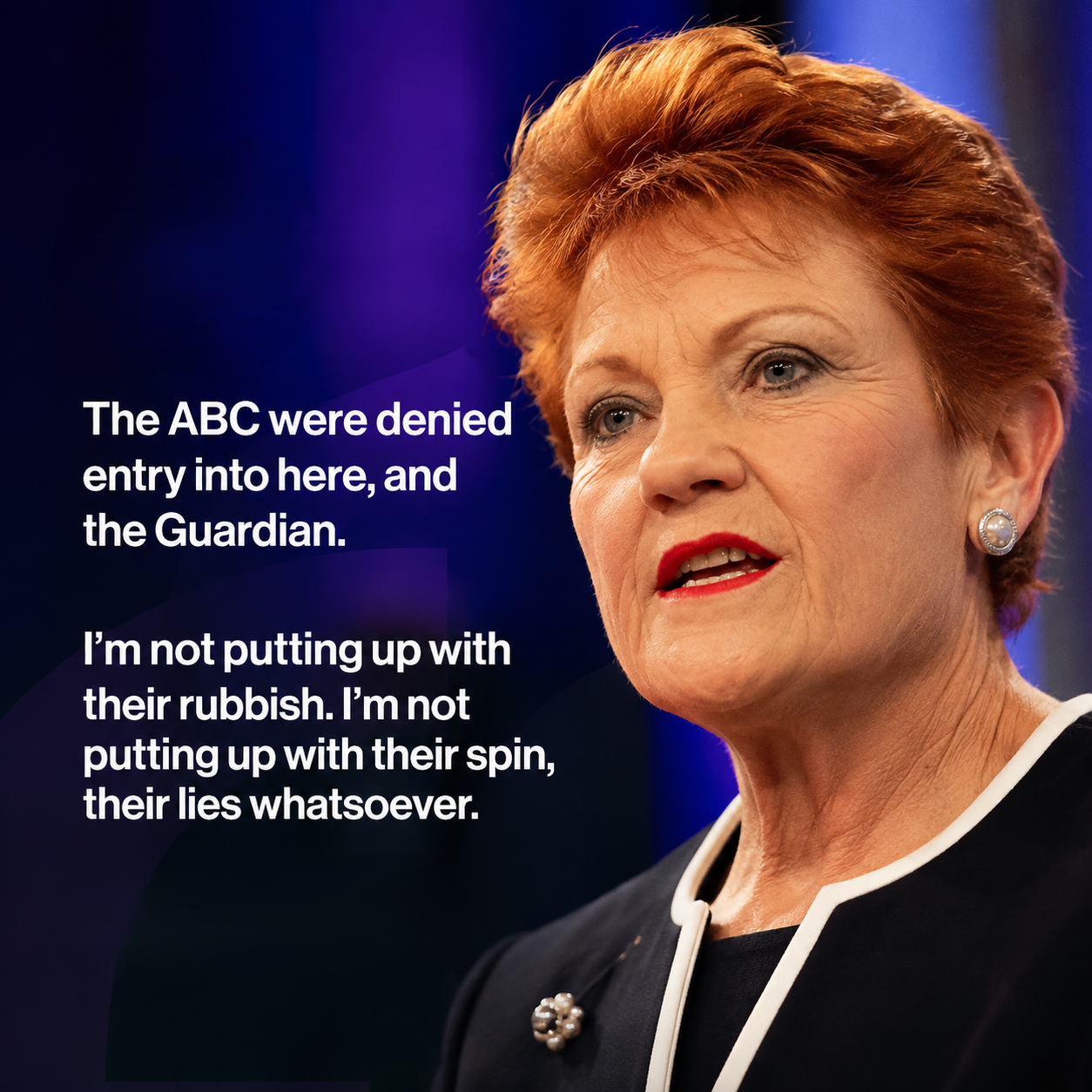
Speaking after the criticism intensified, Hanson defended her decision by arguing that the three organisations had consistently produced what she described as unfair and politically motivated coverage of One Nation.
She said she was “sick of” what she viewed as biased reporting and maintained that the temporary ban was intended to send a message that her party would no longer reward media outlets she believes deliberately misrepresent its policies and positions. Hanson also pointed out that she had previously refused interviews with the ABC dating back to the 1990s, arguing the dispute was not a new development.
The explanation did little to satisfy opponents.
Sarah Hanson-Young argued that accountability is a fundamental part of Australia’s democratic system and that politicians cannot selectively avoid difficult questions simply because they disagree with a publication’s editorial stance.
She said voters deserve to hear politicians challenged by a wide range of journalists rather than only by media organisations considered sympathetic.
Federal Employment Minister Amanda Rishworth also questioned the decision, saying public representatives should expect robust questioning regardless of which media organisation asks it.
She argued that facing uncomfortable questions is part of holding elected officials accountable and contributes to public confidence in democratic institutions.
The media ban quickly became one of the dominant talking points surrounding One Nation’s Victorian campaign launch, overshadowing parts of the party’s policy agenda.
During the event Hanson outlined priorities including tackling youth crime, strengthening support for regional communities, backing small businesses and farmers, reforming Victoria’s education system and increasing scrutiny of major government infrastructure spending.
She also renewed criticism of the Victorian Labor Government, arguing the state had suffered from years of poor economic management, rising crime and declining public confidence in government services.
The campaign launch also confirmed significant changes to One Nation’s Victorian strategy.
Warren Pickering, who had initially been expected to contest an upper house position, will instead run in the lower house electorate of Pakenham while serving as the party’s Victorian leader.
Other candidates announced included Rikkie-Lee Tyrrell, Colleen Harkin, Chris Burson, Mark Nicholson, Aaron Sandford, Fiona Lopez and Natalie Adams, with further candidates expected to be announced as the election campaign progresses.
The launch took place against the backdrop of improving polling for One Nation, with the party seeking to capitalise on voter dissatisfaction over cost-of-living pressures, crime, housing affordability and frustration with the major political parties.
Opinion polling over recent months has suggested growing support for minor parties across Australia, providing One Nation with optimism that it can expand beyond its traditional Queensland base and make gains in Victoria.
The dispute over media access has nevertheless reignited broader debate about the relationship between politicians and journalists.
Supporters of Hanson argue political leaders are under no obligation to provide unlimited access to media organisations they believe consistently report unfairly or inaccurately. They contend that parties are entitled to decide who attends campaign events, particularly when alternative media remain present.
Critics, however, argue that excluding established news organisations risks limiting transparency and reducing opportunities for public scrutiny.
Media analysts have noted that while political parties control invitations to campaign events, attempts to blacklist particular outlets are relatively uncommon in Australian federal and state politics and almost always generate significant controversy because of the expectation that elected representatives should answer questions from a broad cross-section of the press.
Outside the Melbourne venue, Hanson also faced vocal protests from demonstrators opposed to One Nation’s policies, prompting a significant police presence as officers maintained separation between supporters, protesters and campaign attendees.
Despite the demonstrations, Hanson insisted the campaign would continue expanding across Victoria and said One Nation intended to contest seats throughout the state ahead of the November election.
The controversy is unlikely to fade quickly.
With the Victorian election campaign gathering momentum, questions over media access, political transparency and the role of press scrutiny are expected to remain part of the public debate alongside One Nation’s policy platform and electoral ambitions.






