The Albanese Government is preparing to unveil a fresh package of migration reforms aimed at further reducing net overseas migration, marking one of Labor’s most significant shifts on immigration policy since returning to office.
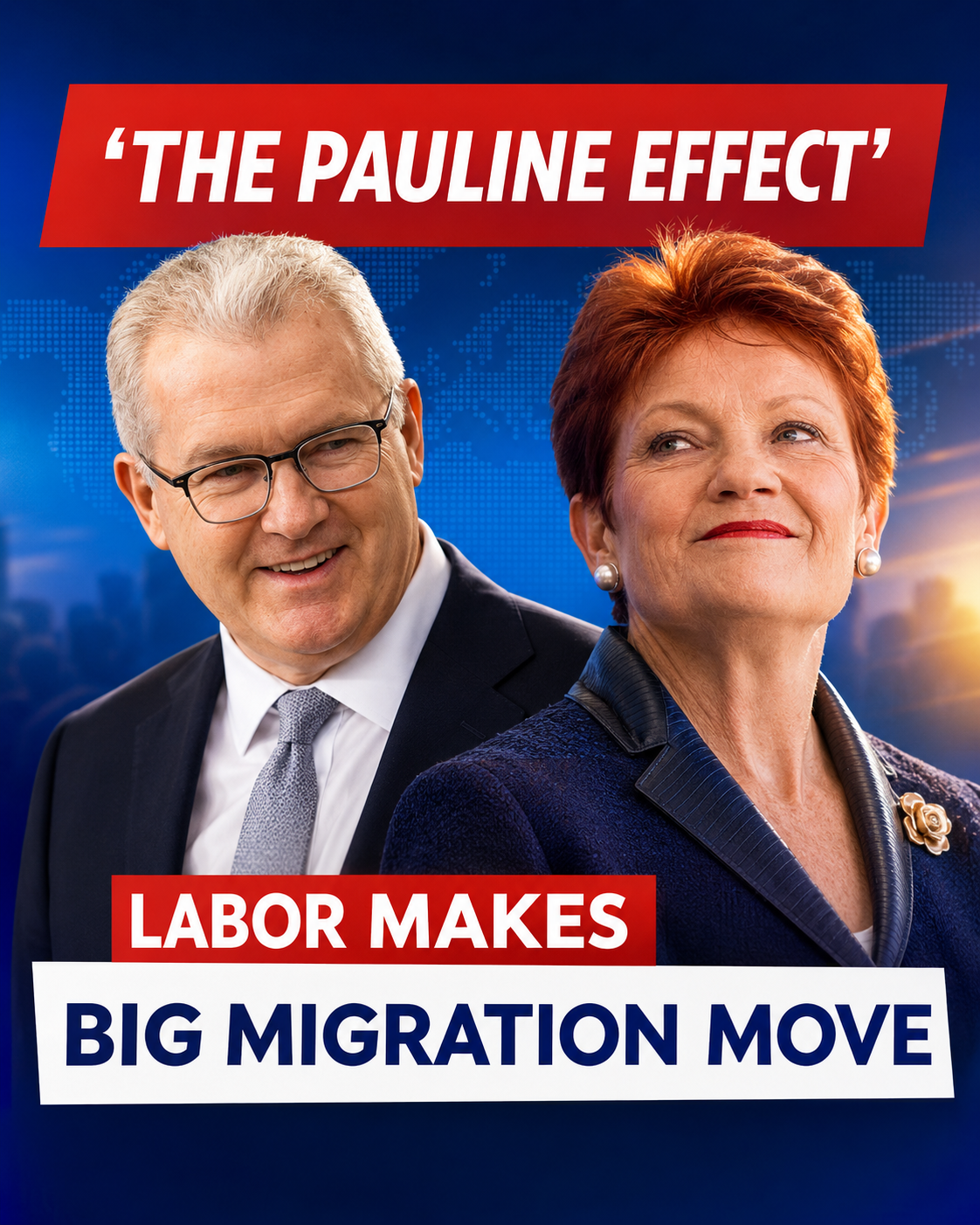
The announcement comes after months of mounting political pressure over migration levels, housing affordability and population growth, with One Nation leader Pauline Hanson repeatedly arguing that Australia’s migration intake should be dramatically reduced.
While Labor rejects suggestions it is simply adopting One Nation’s agenda, the timing of the government’s tougher approach has fuelled claims that Hanson’s sustained campaign has shifted the national political conversation.
Home Affairs Minister Tony Burke is expected to outline a series of measures designed to lower net overseas migration by tightening aspects of Australia’s visa system, strengthening enforcement against abuse of migration rules and encouraging more temporary visa holders to leave Australia when their visas expire.
The reforms are expected to focus on administrative and regulatory changes rather than a reduction in Australia’s permanent migration program, which remains planned at 185,000 places annually.
The policy shift follows a dramatic post-pandemic surge in migration.
Net overseas migration reached record levels after Australia’s borders reopened following COVID-19, peaking at more than 550,000 before beginning to decline. Government projections indicate migration has already fallen substantially from those highs, but Labor has continued facing criticism that population growth remains too rapid while housing construction struggles to keep pace.
Housing has become central to the political debate.
Economists, industry groups and politicians from across the political spectrum increasingly acknowledge that rapid population growth has added pressure to an already constrained housing market, although most also point to years of underbuilding, planning delays and infrastructure bottlenecks as major contributors to Australia’s housing shortage.
One Nation has consistently argued that migration should be reduced until housing supply catches up.
Pauline Hanson has proposed cutting Australia’s permanent migration intake to around 130,000 people each year, substantially below the government’s current planning level. She has also argued that lower-skilled migration should be reduced and that immigration should better reflect Australia’s infrastructure capacity and labour market needs.
Labor’s proposed reforms do not go nearly that far.
Instead, ministers have indicated they intend to tighten visa integrity measures, address perceived loopholes in the migration system and ensure temporary migration better aligns with Australia’s long-term workforce requirements. The government has also emphasised that skilled migration remains essential in sectors facing persistent labour shortages.
The political context has become increasingly significant.
Recent opinion polling has shown growing support for One Nation while immigration has emerged as one of the issues receiving increased public attention. Political analysts say that shift has increased pressure on both Labor and the Coalition to demonstrate stronger control over Australia’s migration system.
Some commentators have labelled Labor’s tougher rhetoric the “Pauline Hanson effect”, arguing that One Nation has succeeded in moving migration higher up the national political agenda even without being in government. The government itself has not used that description.
Not everyone supports a more restrictive approach.
Major business organisations, including the Australian Chamber of Commerce and Industry and the Minerals Council of Australia, have warned that broad reductions in skilled migration could worsen existing workforce shortages.
Industries including mining, construction, healthcare, aged care, engineering and advanced manufacturing continue relying heavily on overseas workers to fill specialised positions that employers say cannot currently be met through the domestic labour market alone.
Some Labor MPs have also urged caution.
According to reports, several government backbenchers believe any migration reforms should remain targeted and evidence-based rather than being driven by short-term political pressure. They argue Australia still benefits economically from well-managed skilled migration and should avoid measures that could damage productivity or long-term economic growth.
The migration debate extends beyond economics.
Supporters of lower migration argue Australia’s infrastructure, transport systems, rental market and public services require time to absorb recent population growth. They contend that reducing migration temporarily could ease pressure on housing affordability and essential services.
Others counter that migration alone cannot explain Australia’s housing challenges.
Housing economists frequently point to planning restrictions, labour shortages, rising construction costs and years of insufficient home building as structural issues that must also be addressed if affordability is to improve.
The Albanese Government has maintained that migration settings should support Australia’s economic needs while remaining sustainable.
Ministers argue net overseas migration is already declining from its post-pandemic peak and that policy adjustments should focus on improving the integrity of the migration system rather than abandoning Australia’s long-standing reliance on skilled migration.
Labor has also continued pursuing broader housing initiatives, including measures intended to accelerate home construction and improve affordability for first-home buyers, although critics argue housing supply has not expanded quickly enough to offset recent population growth.
For Pauline Hanson, the renewed focus on migration represents an issue she has campaigned on for decades.
Since entering federal politics in the 1990s, Hanson has consistently advocated lower immigration levels, stricter border controls and stronger assimilation policies. While many of her proposals remain controversial, observers note that migration has increasingly become a mainstream political issue as housing affordability and cost-of-living pressures have intensified.
Whether Labor’s latest reforms will significantly reduce migration remains to be seen.
Much will depend on the final details of the government’s package, how quickly new administrative measures take effect and whether they materially change visa approvals and departures over coming years.
What appears increasingly clear, however, is that immigration has become one of the defining political issues ahead of the next federal election.
As the government attempts to balance economic needs, labour shortages and community concerns about housing and infrastructure, the debate over migration levels is likely to remain at the centre of Australian politics for months to come.






