One Nation leader Pauline Hanson has rejected speculation that her relationship with fellow One Nation MP Barnaby Joyce has deteriorated following a week of political controversy, insisting the pair remain close despite mounting scrutiny over her recent European tour.
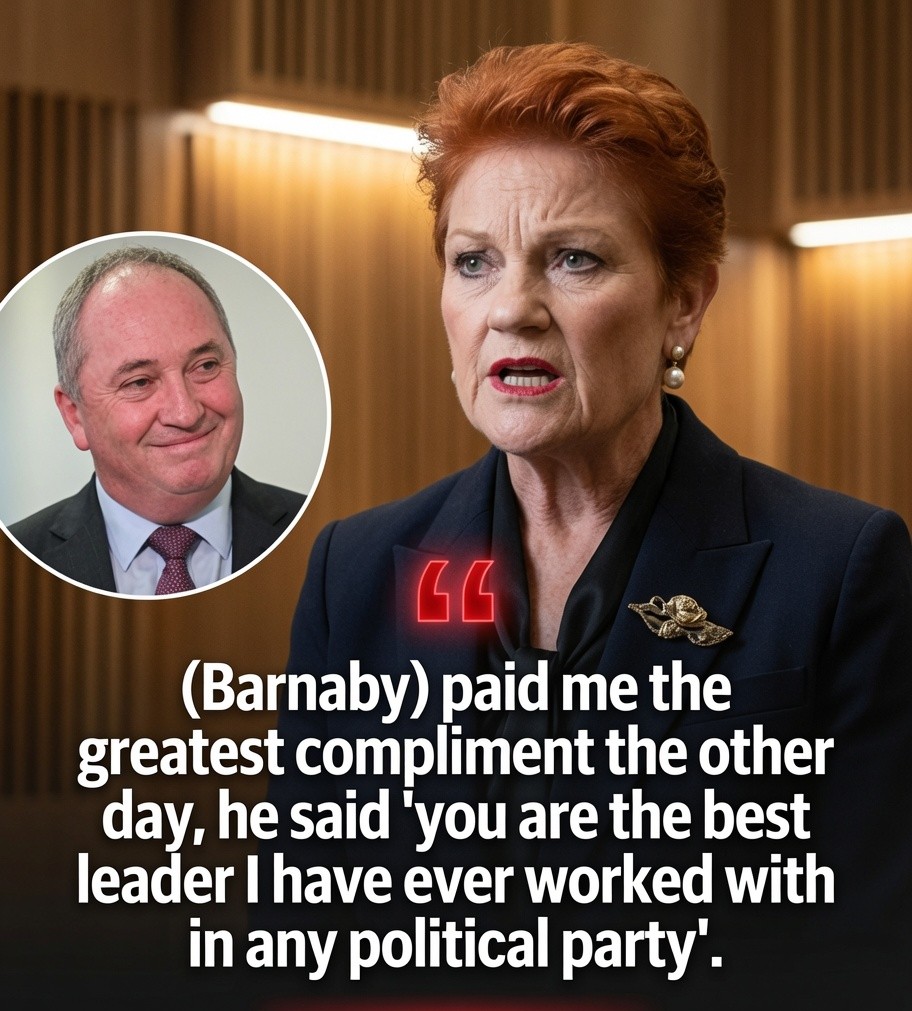
The rumours emerged after Joyce spent much of the past week publicly responding to questions about Hanson’s overseas appearances, including her interview with British anti-immigration activist Tommy Robinson and subsequent criticism over comments relating to Australia’s former White Australia policy.
Reports suggested the controversies had fuelled tensions within One Nation, particularly as Joyce repeatedly sought to clarify that neither he nor the party supported reinstating the White Australia policy.
Hanson, however, dismissed suggestions of any disagreement.
“Barnaby and I get on so well together,” she said while responding to questions about the speculation.
She added that Joyce was “having the time of his life” working with One Nation and denied there was any internal conflict between the pair.
The comments came after an eventful European trip that attracted widespread attention in Australia.
During the visit, Hanson appeared on a podcast hosted by Tommy Robinson, whose real name is Stephen Yaxley-Lennon. In the interview she argued that Australia’s migration problems began after the Whitlam Government abolished the White Australia policy in 1973 and made a series of controversial claims about immigration and multiculturalism. Those remarks were widely criticised by political opponents and prompted Hanson to later clarify that she did not support reintroducing the policy.
Following the backlash, Hanson released a video insisting she had “never, ever” advocated bringing back the White Australia policy.
Instead, she said she supported a controlled immigration program focused on bringing “the right people” to Australia in a measured way and encouraging newcomers to integrate into Australian society.
Joyce became one of Hanson’s most prominent defenders throughout the controversy.
Appearing in several television and radio interviews, the former deputy prime minister argued that Hanson had been misunderstood and was discussing changes to Australia’s immigration system rather than advocating racial exclusion.
He repeatedly stated that neither he nor Hanson supported the White Australia policy, while maintaining that concerns about immigration levels and social integration were legitimate areas of public debate.
The defence, however, placed Joyce under sustained questioning as interviewers pressed him to explain Hanson’s remarks and her decision to appear alongside Robinson, one of Britain’s most controversial far-right figures.
Political opponents argued the association with Robinson was itself damaging, regardless of Hanson’s subsequent clarification.
Robinson has a lengthy criminal record in the United Kingdom and has become internationally known for his anti-immigration activism. Australian governments have previously indicated he would not be granted a visa because of concerns surrounding social cohesion.
Hanson’s overseas itinerary also attracted attention after she attended a Dolce & Gabbana fashion event in Italy alongside mining billionaire Gina Rinehart.
Questions were raised about who funded elements of the trip, although Hanson has denied that Australian taxpayers paid for her attendance at private events during the visit.
Compounding the pressure on One Nation, Senator Malcolm Roberts also found himself under renewed scrutiny after older interviews resurfaced in which he spoke with American conspiracy theorist Alex Jones.
Roberts has previously faced criticism over comments linked to conspiracy theories, including some with antisemitic origins. The renewed attention added to what became a difficult week for the party as multiple controversies unfolded simultaneously.
Joyce publicly distanced himself from some of Roberts’ past statements while continuing to defend Hanson personally, highlighting the challenge of responding to separate controversies involving different members of the party.
Despite the intense media attention, Hanson has sought to portray the week’s events as evidence that One Nation remains influential in national political debate.
She argued that criticism from major parties and sections of the media reflected discomfort with her willingness to discuss immigration, border security and national identity.
The Albanese Government has taken a sharply different view.
Home Affairs Minister Tony Burke accused Hanson of invoking one of Australia’s most divisive historical policies, while Prime Minister Anthony Albanese said elected representatives should celebrate Australia’s multicultural success rather than undermine social cohesion.
The Coalition has likewise sought to distance itself from Hanson’s comments.
Deputy Liberal leader Jane Hume described references to the White Australia policy as “unnecessary”, “divisive” and “totally un-Australian”, arguing that Australians were more concerned with inflation, energy prices and economic management than debates over historical immigration policies.
The episode illustrates the increasingly complex political relationship between Hanson and Joyce.
Since Joyce joined One Nation after leaving the Nationals, the pair have frequently appeared together to promote the party’s platform on issues including regional Australia, agriculture, energy and immigration.
Their partnership has also attracted close scrutiny because Joyce, as a former deputy prime minister, brings mainstream parliamentary experience to a party traditionally viewed as operating outside Australia’s major political blocs.
Speculation about internal tensions intensified after anonymous reports suggested disagreements over strategy during Hanson’s European trip. Both politicians have firmly rejected those claims, insisting they remain united and continue to communicate regularly.
Whether the controversies will have any lasting political impact remains uncertain.
One Nation has consistently campaigned for lower migration, stronger border controls and stricter expectations that migrants integrate into Australian society, positions that continue to resonate with sections of the electorate while drawing criticism from opponents who argue the party’s rhetoric risks deepening social division.
For Hanson, the immediate priority has been containing the fallout from her overseas appearances while reinforcing that she does not advocate restoring the White Australia policy.
For Joyce, the past week has demonstrated the balancing act involved in defending a political ally while attempting to reassure voters that One Nation’s policies remain focused on contemporary immigration and economic issues rather than the discriminatory policies of Australia’s past.






