One Nation leader Pauline Hanson has intensified pressure on the Albanese government, calling on Prime Minister Anthony Albanese and senior Labor ministers to intervene directly and demand the ABC remove a controversial segment depicting mining magnate Gina Rinehart in a violent satirical sequence.
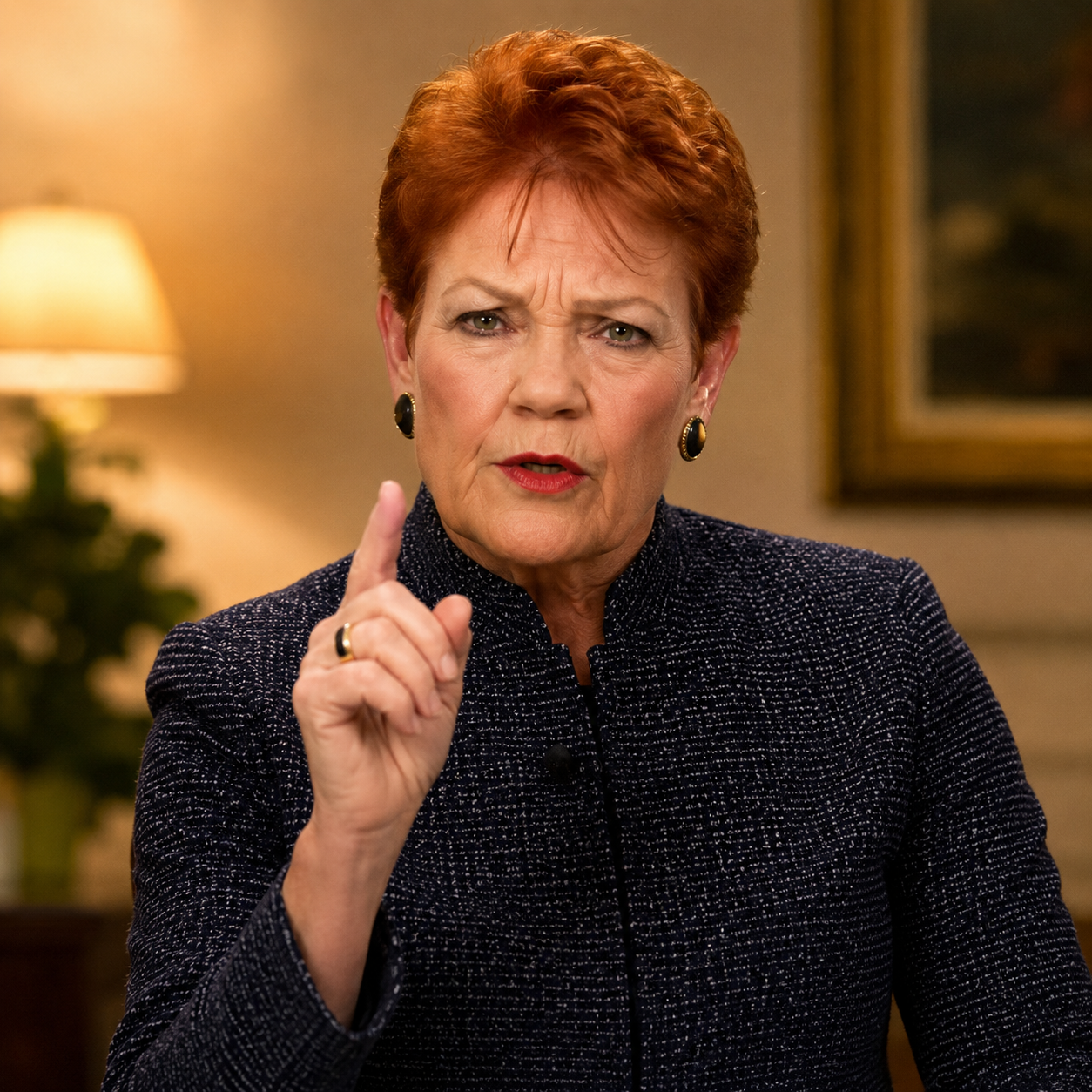
Speaking on Thursday, Senator Hanson said she was “disgusted” by what she viewed as the government’s reluctance to publicly condemn the taxpayer-funded broadcaster following the release of the four-minute segment.
She urged ministers to contact ABC Chair Kim Williams directly and insist the content be removed from the broadcaster’s online platforms.
“They need to get rid of that rubbish,” Hanson said, arguing the ABC had crossed the line between satire and material she considered unacceptable for a publicly funded broadcaster.
Hanson also renewed longstanding criticism of the national broadcaster’s public funding, claiming Australians should not be paying more than $1.3 billion each year for content she believes demonstrates political bias.
According to Hanson, the broadcaster should issue an immediate public apology to Gina Rinehart and remove the segment entirely.
The controversy centres on an episode of the ABC’s Race Around the World, which included an animated sequence portraying graphic fictional violence involving Australia’s richest woman.
The segment prompted Hancock Prospecting, Rinehart’s company, to launch legal action against the ABC after demanding the material be removed and a formal apology be issued.
While Hanson acknowledged political satire has an important place in democratic debate, she argued there remains a clear distinction between satire and content that appears to celebrate or depict extreme violence.
She referenced One Nation’s own animated political series Pauline Hanson’s Please Explain, saying its creators understood where to draw the line.
“There’s a fine line,” Hanson said, arguing the ABC had gone well beyond acceptable political humour.
The dispute has rapidly expanded beyond One Nation, becoming one of the most significant political controversies facing the ABC in recent weeks.
Several politicians from different sides of politics have criticised the broadcaster’s handling of the matter, although opinions differ on whether government ministers should intervene directly in editorial decisions.
Energy Minister Chris Bowen became one of the most senior government figures to publicly criticise the broadcast, describing it as inappropriate and saying he believed an apology would be warranted.
Bowen said Australians should be able to disagree strongly with public figures without resorting to commentary involving graphic violence.
However, he also acknowledged that ministers do not control ABC editorial decisions, reflecting Australia’s longstanding principle that the national broadcaster operates independently of government.
Communications Minister Anika Wells similarly described the content as unacceptable but maintained that editorial complaints should be handled through the ABC’s internal processes rather than direct political intervention.
The matter was referred to the ABC Ombudsman, who investigated whether the program breached the broadcaster’s editorial standards.
The Ombudsman ultimately found the program did not breach those standards, but the controversy continued to intensify as political criticism mounted and Hancock Prospecting pursued legal action.
Following sustained public and political pressure, ABC Managing Director Hugh Marks later acknowledged the segment had fallen short of community expectations, apologised to Gina Rinehart and confirmed the material had been removed from ABC platforms. The broadcaster also committed to reviewing aspects of its editorial guidance relating to depictions of violence.
The incident has sparked a broader national debate about where satire ends and unacceptable content begins, particularly when produced by Australia’s publicly funded broadcaster.
Supporters of the ABC argue satire has historically challenged powerful political and business figures and should be protected as a form of artistic and political expression.
Critics, however, contend that portraying graphic violence against identifiable individuals risks normalising abusive political discourse and undermines expectations of impartiality and professionalism.
The controversy has also renewed debate over the ABC’s editorial culture, with conservative politicians arguing the broadcaster frequently applies different standards depending on the political views of those targeted.
ABC executives have consistently rejected claims of institutional political bias, maintaining that editorial decisions are governed by established standards and independent review processes.
The dispute nevertheless arrives during a period of heightened political scrutiny of the national broadcaster, with funding, impartiality and accountability remaining recurring issues in federal politics.
For Hanson, the episode has become another example of what she argues is a broader problem within the ABC.
Her call for direct intervention goes significantly further than those made by several government ministers, who have criticised the content while stopping short of demanding editorial action themselves.
Whether the issue continues to dominate the political agenda may depend on the outcome of Hancock Prospecting’s legal action and any further changes the ABC makes to its editorial policies following its internal review.
Although the broadcaster has now apologised and removed the controversial material, the political fallout continues, with critics arguing the response came only after weeks of mounting public pressure and legal threats.






