One Nation leader Pauline Hanson has vowed to return to Victoria repeatedly during the state election campaign despite being confronted by protesters at her Melbourne campaign launch and facing criticism over her decision to exclude several major media organisations from a party press conference.
The campaign launch at the Tower Hotel in Hawthorn East quickly became one of the most closely watched political events of the opening week of Victoria’s election campaign, with significant police resources deployed to manage demonstrations outside the venue.
Victoria Police officers, including members of the Public Order Response Team and mounted police, established security barriers around the hotel after approximately 100 protesters gathered before Hanson arrived.
According to reports, several demonstrators breached the initial police cordon and reached supporters waiting to enter the function before officers restored separation between the groups. Protesters chanted slogans opposing One Nation while displaying placards criticising the party’s policies.
Despite the disruption, the event proceeded as planned.
Inside the venue, Hanson formally introduced One Nation’s Victorian candidates and outlined the party’s intention to campaign aggressively across the state ahead of the 28 November election.
Rather than being deterred by the demonstrations, Hanson said the protest strengthened her resolve to return.
She indicated that Victoria would remain a major focus for the party and said she intended to undertake multiple campaign visits throughout the state in the months leading to polling day.
“We’ll be back,” Hanson told supporters, arguing that public protests would not prevent One Nation from presenting its policies directly to Victorian voters.
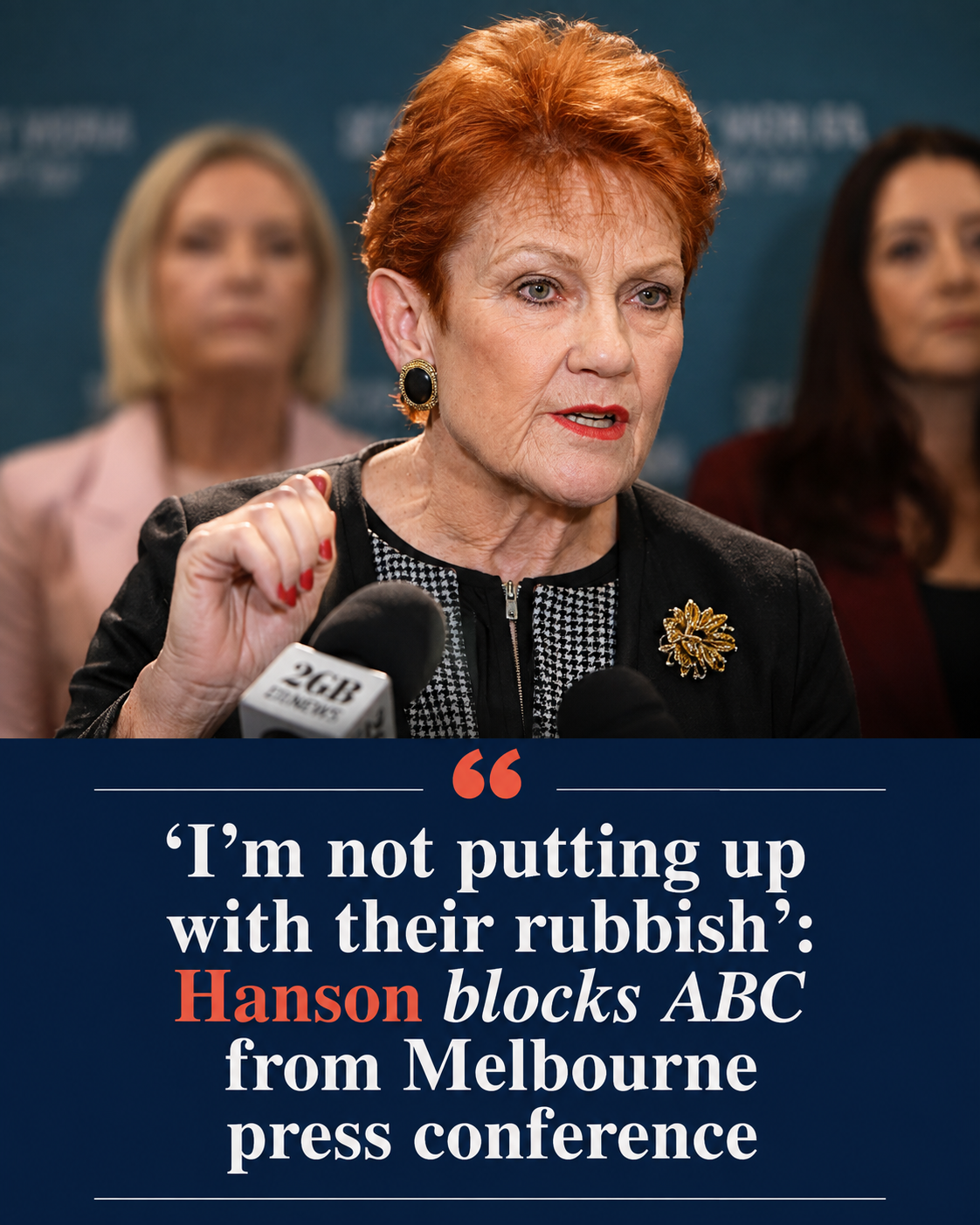
The demonstrations occurred only hours after Hanson made another controversial decision by excluding journalists from the ABC, The Guardian, The Age and The Sydney Morning Herald from attending One Nation’s official press conference.
Security staff prevented reporters from those organisations from entering the event after they were not provided with the location or timing of the media conference.
Defending the decision, Hanson said she had become frustrated by what she described as repeated “lies”, “spin” and “gotcha moments” from several mainstream media organisations.
“I’m not putting up with their rubbish, their spin or their lies anymore,” Hanson said, arguing that she expected the same honesty from journalists that she believed she offered the public.
According to Hanson, the decision followed a series of disputes over media coverage, including reporting relating to comments she allegedly made about the former White Australia policy and more recent coverage connected with the ABC’s Race Around the World controversy involving mining executive Gina Rinehart.
She maintained that several media organisations had repeatedly misrepresented her statements and that continuing to provide them with unrestricted access no longer served any constructive purpose.
The move immediately attracted criticism from political opponents.
Greens Senator Sarah Hanson-Young accused Hanson of attempting to avoid scrutiny, arguing that democratic accountability requires politicians to answer questions from all accredited media organisations regardless of editorial differences.
Employment and Workplace Relations Minister Amanda Rishworth similarly argued that public figures should expect challenging questions rather than selecting which journalists are permitted to attend campaign events.
One Nation rejects those criticisms.
The party argues that privately organised campaign events are not legally required to include every media organisation and that political parties are entitled to determine how they communicate with voters.
Supporters also point out that Rebel News attended the Melbourne launch and livestreamed the entire press conference, allowing members of the public to watch the event unedited from beginning to end.
They argue this provided greater transparency than edited television packages or selected quotations appearing later in news reports.
The Melbourne campaign launch also marked the formal introduction of several new Victorian candidates.
Among those announced were former Liberal Party member Colleen Harkin, cartoonist Mark Nicholson, former police officer Paul Cumming and incumbent Legislative Council member Rikkie-Lee Tyrrell.
Victorian One Nation president Warren Pickering told supporters that detailed policy announcements covering agriculture, energy, crime, corruption and cost-of-living issues would begin rolling out over coming weeks.
Outside the venue, however, the demonstrations dominated television coverage.
Some protesters shouted abuse as Hanson entered under police escort, while others carried banners opposing racism and criticising One Nation’s policies.
Victoria Police maintained a significant presence throughout the evening to minimise the risk of confrontation between protesters and party supporters.
No major injuries were reported, although the scale of the policing operation highlighted the increasingly complex security challenges associated with high-profile political events.
One Nation National Director James Ashby later claimed the security surrounding Hanson had become more extensive than that routinely provided for the Prime Minister.
He argued that ongoing safety concerns had previously forced the party to relocate its Victorian campaign launch from Parliament House to the Tower Hotel after assessing potential security risks.
Ashby said no political party should have to alter campaign plans because of threats or attempts to disrupt lawful political events.
The episode has renewed broader debate about the balance between freedom of political communication and freedom of protest.
Australia’s democratic system protects both the right of political parties to campaign and the right of citizens to engage in peaceful protest.
Police therefore face the difficult task of protecting lawful political activity while ensuring demonstrations remain peaceful and public safety is maintained.
Legal experts note that operational decisions such as establishing exclusion zones, deploying mounted police and separating opposing groups are routine crowd-management measures at politically sensitive events.
As Victoria’s election campaign gathers momentum, One Nation hopes to capitalise on growing support among some working-class and regional voters concerned about cost-of-living pressures, crime, housing affordability and immigration.
Hanson said those issues would remain central to her campaign as she continued travelling throughout Victoria.
The protests, she argued, would not discourage the party from engaging directly with voters.
Whether the demonstrations ultimately help or hinder One Nation politically remains uncertain, but they have already ensured that Hanson’s Victorian campaign has begun amid intense public attention, heightened security and renewed debate over both media access and political protest in modern Australia.






