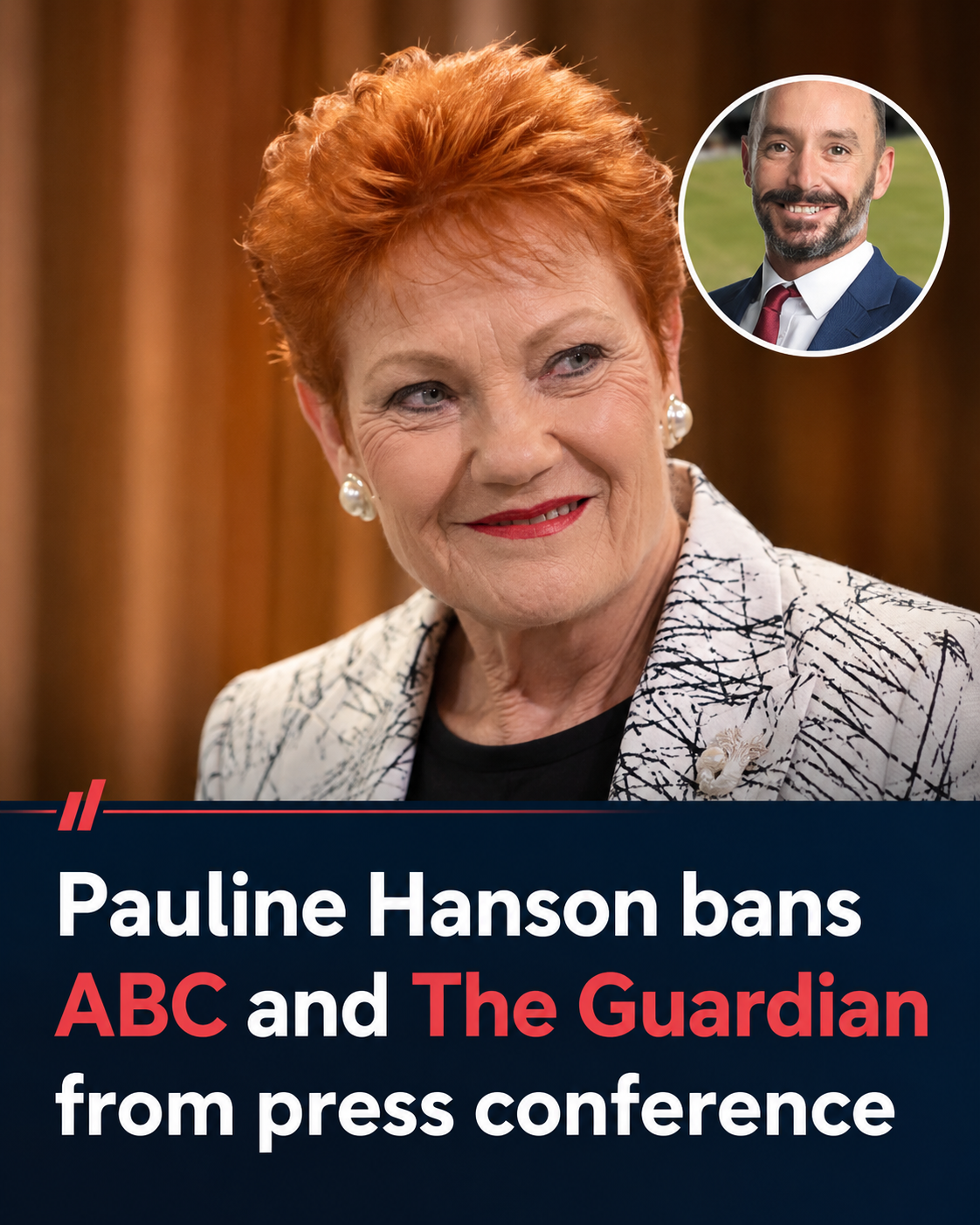
One Nation has officially launched its Victorian state election campaign by naming Army veteran Warren Pickering as the party’s Victorian leader and unveiling its first group of candidates, while Pauline Hanson simultaneously defended a controversial decision to bar journalists from the ABC and The Guardian from attending the Melbourne press conference.
The announcement marks the beginning of One Nation’s most ambitious Victorian campaign to date, with the party planning to contest a large number of lower house seats while expanding its presence in the Legislative Council ahead of the November state election.
Introducing Pickering as the party’s Victorian leader, Hanson praised his leadership during recent years as state president and said he was well positioned to guide One Nation through what the party hopes will become a breakthrough election.
“Warren has done a great job as state president of One Nation in Victoria,” Hanson said.
“He’ll be an effective leader to take the wider team to the election.”
Pickering, a former Army serviceman who previously said he left his employment over workplace COVID-19 vaccination requirements, will contest the lower house seat of Pakenham while leading the party’s statewide campaign.
Alongside Pickering, One Nation introduced a number of upper house candidates representing regions across Victoria, including incumbent Legislative Council member Rikkie-Lee Tyrrell, former Liberal Party member Colleen Harkin, cartoonist Mark Nicholson, former police officer Paul Cumming and several other candidates expected to contest seats across the state.
However, much of the attention surrounding the campaign launch centred on Hanson’s decision to deny access to journalists from the ABC and The Guardian.
The excluded media organisations were not permitted to attend the press conference after the party decided not to provide them with details of the event.
Asked to explain the decision, Hanson delivered an unequivocal response.
“I am not putting up with their rubbish. I am not putting up with their spin, their lies whatsoever,” she said.
“I want truth and honesty. You get it from me, I expect it from the media.”
Hanson argued that the decision followed years of reporting she believes has unfairly portrayed both herself and One Nation.
She has repeatedly accused sections of the mainstream media of taking comments out of context, emphasising controversy over policy and focusing on what she describes as “gotcha moments” rather than substantive political debate.
According to Hanson, the temporary exclusion is intended to challenge what she considers persistent editorial bias rather than to avoid scrutiny altogether.
The media ban follows several recent disputes involving One Nation and major news organisations.
Among them are disagreements over reporting relating to Hanson’s comments on the former White Australia policy, criticism of ABC coverage connected with the Race Around the World controversy involving mining executive Gina Rinehart, and ongoing complaints about what Hanson says is selective reporting by several newspapers.
Those disagreements have become a defining feature of the party’s relationship with sections of Australia’s mainstream media throughout the Victorian campaign launch.
Political opponents quickly criticised the exclusion.
Employment and Workplace Relations Minister Amanda Rishworth argued that politicians should remain accountable to all accredited media organisations and should not decide which journalists are permitted to ask questions.
Greens representatives similarly argued that restricting access undermines democratic accountability by limiting opportunities for independent scrutiny during election campaigns.
One Nation rejects those criticisms.
Party officials maintain that campaign events organised by the party are private functions and that political organisations have the right to determine media access.
Supporters also point out that other journalists, including representatives from alternative media outlets, attended the launch and that complete recordings of the event were made available online, allowing voters to watch Hanson’s remarks in full rather than relying solely on edited news reports.
During the launch, Pickering outlined One Nation’s ambitions for Victoria in unusually confident terms.
He said the party intended not merely to increase its parliamentary representation but ultimately to compete to govern the state.
He also confirmed that detailed policy announcements covering agriculture, energy, crime, corruption, education and cost-of-living pressures would begin rolling out over the coming weeks.
One Nation argues that Victoria requires significant policy change following years of Labor government.
The party has identified community safety, policing, housing affordability, energy prices, support for regional communities and government accountability among its principal campaign priorities.
Pickering has also indicated that One Nation would consider establishing a royal commission into major state infrastructure projects if the party were ever in a position to implement such proposals.
The Melbourne campaign launch unfolded against a backdrop of heightened security.
Later that day, Pauline Hanson attended a separate campaign function in Hawthorn, where protesters gathered outside the venue.
Victoria Police deployed Public Order Response officers and mounted police to separate demonstrators from party supporters after several protesters reportedly breached the initial police cordon.
The event proceeded without major disruption, although the images of police and protesters became one of the defining moments of the campaign’s opening day.
Political analysts note that One Nation enters the Victorian election with greater confidence than at previous state contests.
Recent opinion polling has suggested increased support for the party among some voters concerned about cost-of-living pressures, housing affordability, crime and dissatisfaction with the major parties.
Whether that support ultimately translates into additional parliamentary representation will depend on campaigning over the coming months and the operation of Victoria’s preferential voting system.
The dispute over media access nevertheless remains one of the campaign’s most prominent issues.
Supporters view Hanson’s decision as a response to years of what they believe has been unfair reporting.
Critics argue that elected representatives should remain open to questioning from all major news organisations regardless of editorial disagreements.
As the Victorian election campaign accelerates, the debate over media access is likely to continue alongside One Nation’s policy agenda, ensuring that both the party’s proposals and its relationship with Australia’s mainstream media remain firmly in the political spotlight.






