Senior One Nation figures Pauline Hanson and Barnaby Joyce have attracted widespread criticism after making separate comments about domestic violence during a period of heightened national concern over violence against women, prompting condemnation from victim advocates, government ministers and family violence experts.
The controversy comes after several women were allegedly killed by men during July, renewing calls for stronger action to address domestic and family violence across Australia. Against that backdrop, comments made by both politicians have sparked a broader discussion about how public leaders should speak about one of the country’s most serious social issues.
During a radio interview on Brisbane station 4BC, One Nation leader Pauline Hanson was asked what message she had for men who assault their partners.
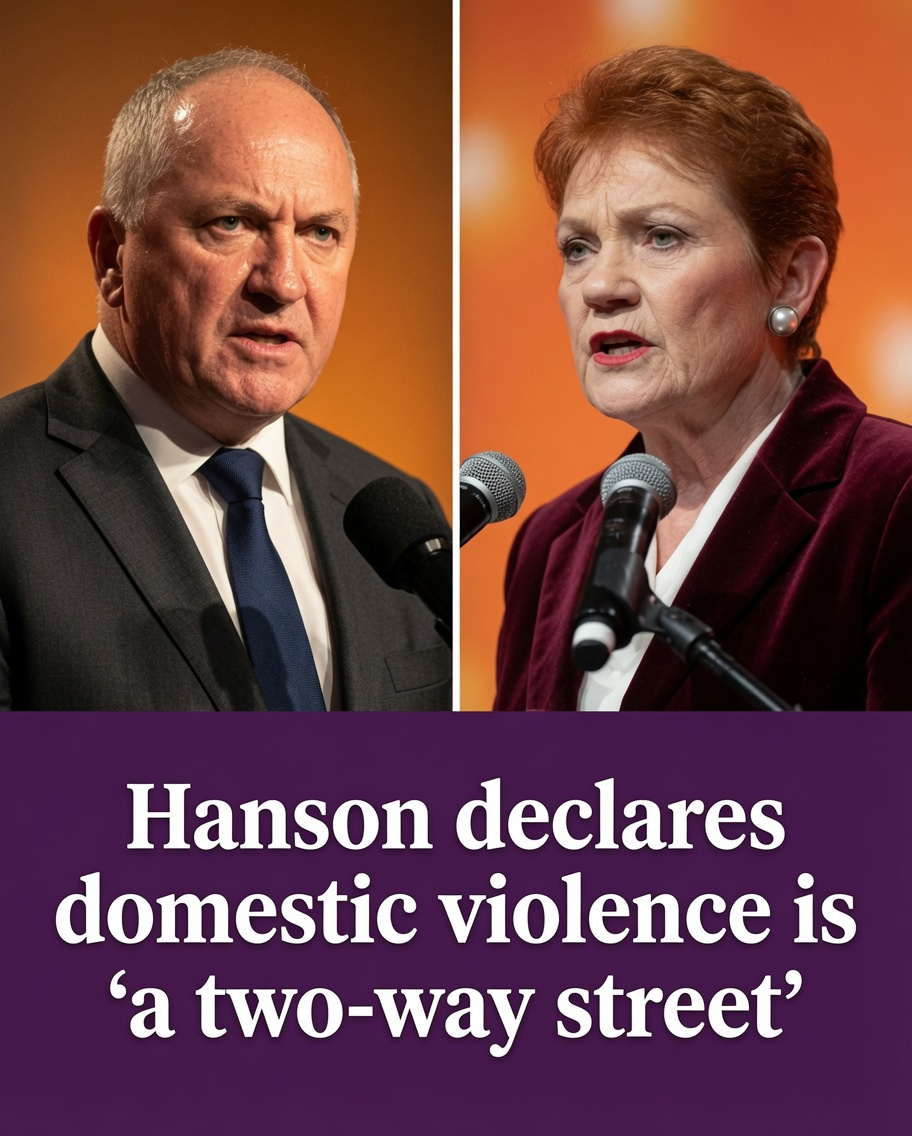
Hanson condemned domestic violence but described it as “a two-way street”, arguing that both men and women can lose control in relationships.
“It is wrong, but it’s also a two-way street. I’m not saying that it’s just men, women can lose their cool as well,” she said.
She also urged women experiencing abuse not to remain in unsafe relationships.
“If these women are getting abused by men out there, then don’t put up with it,” Hanson said, while revealing that she herself had experienced domestic violence earlier in life as a young mother.
Separately, One Nation MP Barnaby Joyce encouraged men to remain calm and avoid losing their temper, telling them to “be cool” and likening the approach to the fictional character James Bond.
Joyce’s comments were intended as advice for men to exercise self-control, but critics argued they risked oversimplifying the complex causes of domestic violence during a period of heightened public concern.
Family violence advocates responded quickly to Hanson’s remarks.
Women’s rights campaigner Brittany Higgins accused the One Nation leader of promoting victim-blaming narratives by suggesting victims should simply leave abusive relationships.
Higgins argued that phrases such as “just leave” and “two-way street” ignore the realities many victims face and risk shifting attention away from perpetrators.
She said public figures should avoid language that normalises misconceptions about domestic violence, particularly while Australia continues to grapple with a high number of women killed by intimate partners.
Domestic violence organisations expressed similar concerns.
Advocates noted that while men can also experience family violence, the overwhelming majority of severe intimate partner violence, coercive control and domestic homicide in Australia is perpetrated by men against women.
They argued that describing domestic violence as a mutual conflict risks overlooking the unequal power dynamics that frequently characterise abusive relationships.
Experts also challenged the suggestion that victims should simply leave abusive homes.
Research consistently shows that leaving an abusive relationship can be one of the most dangerous periods for victims, as perpetrators may escalate violence when they believe they are losing control.
Many victims also face significant barriers including financial dependence, concerns for children, emotional manipulation, housing insecurity and fear of retaliation, making separation considerably more complex than it may appear.
Senior members of the Federal Government also criticised the comments.
Social Services Minister Tanya Plibersek described Hanson’s remarks as irresponsible and dangerous, arguing they failed to recognise the risks women often face when attempting to leave abusive partners.
Education Minister Jason Clare similarly said domestic violence should not be framed as a shared responsibility because doing so risks diminishing the accountability of perpetrators.
Following the backlash, Hanson defended her comments on social media.
She argued that critics and sections of the media had taken her remarks out of context and insisted she was not excusing domestic violence.
Hanson said she had clearly described domestic violence as “wrong” and was encouraging victims to seek safety rather than remain in dangerous situations.
She also maintained that acknowledging male victims and recognising that women can also commit acts of violence should not be interpreted as minimising violence against women.
The debate has highlighted the importance of language when discussing domestic and family violence.
According to Australian support organisations, family violence extends beyond physical assault and can include coercive control, financial abuse, emotional manipulation, sexual violence and threats that make leaving an abusive relationship extremely difficult.
Because of these complexities, specialists say public messaging should emphasise perpetrator accountability while encouraging victims to seek professional support and develop safety plans rather than suggesting there is a simple solution.
Domestic and family violence remains one of Australia’s most significant public policy challenges.
Federal and state governments have committed substantial funding toward crisis accommodation, counselling, legal assistance and prevention programs, while reforms relating to coercive control and victim protection continue to be introduced across multiple jurisdictions.
Advocacy groups argue that reducing domestic violence requires coordinated action involving policing, education, early intervention, housing support and community awareness, alongside holding perpetrators accountable for their actions.
The latest controversy also reflects the increasingly prominent role domestic violence has assumed in Australia’s political debate.
Politicians from across the political spectrum broadly agree that family violence is unacceptable, yet disagreements remain over how the issue should be discussed publicly and what messages are most effective in supporting victims while preventing further violence.
Supporters of Hanson argue her comments have been interpreted unfairly because she explicitly condemned domestic violence and spoke openly about her own experience as a survivor.
Critics, however, contend that regardless of intent, public statements suggesting domestic violence is “a two-way street” or that victims should “just leave” risk reinforcing misconceptions that experts have spent years trying to address.
As Australia continues confronting high levels of domestic and family violence, the reaction to the comments made by Hanson and Joyce demonstrates the sensitivity of the issue and the expectation that public leaders communicate carefully when discussing the experiences of victims and the responsibilities of perpetrators.






