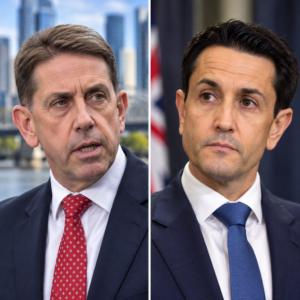
One Nation’s newly appointed Victorian leader Warren Pickering has claimed protesters who gathered outside Pauline Hanson’s Melbourne campaign event ultimately strengthened, rather than weakened, the party’s message, arguing the demonstration reinforced concerns about the state of political debate in Victoria.
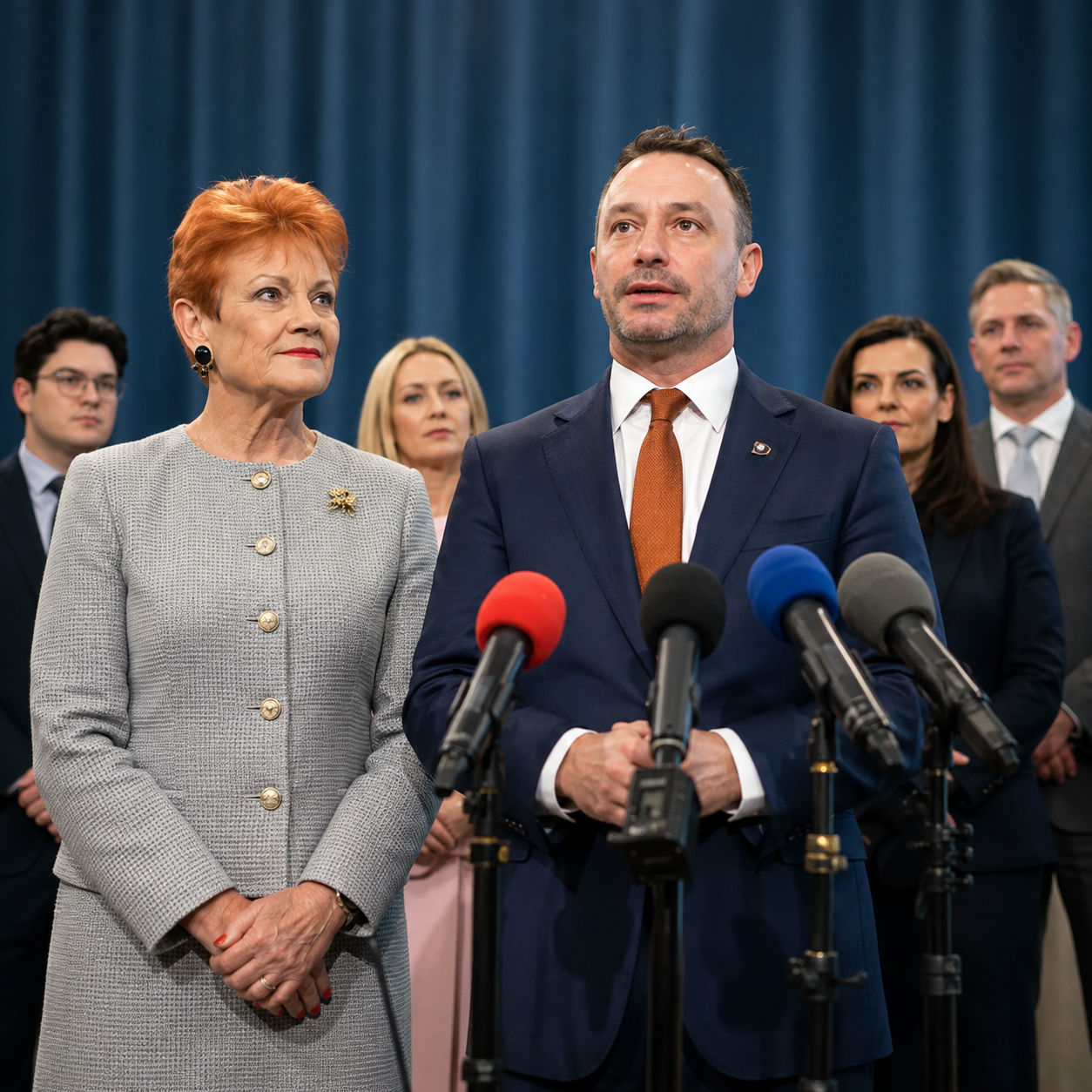
The comments followed a noisy demonstration outside the Tower Hotel in Hawthorn on Monday evening, where dozens of protesters assembled while Senator Pauline Hanson attended a One Nation function as part of the party’s Victorian election campaign.
Despite chants from demonstrators and a significant Victoria Police presence surrounding the venue, the event proceeded as planned inside, with party supporters attending a fundraising function and campaign gathering ahead of Victoria’s state election later this year.
Speaking after the event, Mr Pickering dismissed suggestions that the protest had disrupted proceedings.
Instead, he argued it had simply drawn additional public attention to One Nation.
“I think at this event specifically, we’ve had them turn up and all they did here was serve as effectively a doorbell for when the Senator herself turned up,” Mr Pickering said during an interview with News24.
According to Mr Pickering, the protesters inadvertently increased visibility for the event rather than discouraging attendance.
He went further by suggesting the demonstration reflected what he sees as a broader effort by political activists to prevent alternative viewpoints from being expressed publicly.
“You cannot express or share a value set outside of those of the raging intolerant without them turning up to try and shut down all dialogue,” he said.
The remarks continue One Nation’s increasingly prominent focus on freedom of political expression as the party expands its Victorian campaign ahead of the November election.
The Melbourne event came only hours after Pauline Hanson officially launched the party’s Victorian campaign and confirmed Warren Pickering as the party’s state leader.
One Nation also introduced its initial group of upper house candidates while signalling it intends to contest the overwhelming majority of Victorian electorates during the election campaign.
Outside the Hawthorn venue, protesters gathered carrying signs and chanting slogans directed at One Nation supporters.
Victoria Police established road closures and maintained a substantial public order presence around the hotel to separate demonstrators from attendees entering the event.
Reports indicated that while some protesters briefly breached police lines, officers prevented any major confrontation and the gathering concluded without significant disruption inside the venue. Most demonstrators dispersed later in the evening as rain moved through the area.
The protest formed part of a pattern that has accompanied several recent appearances by Pauline Hanson in Victoria.
Earlier in 2026, planned demonstrations also surrounded a One Nation fundraising event in Melbourne, prompting the original venue to withdraw from hosting before the function was ultimately relocated. Protesters later gathered outside the replacement venue, although the event proceeded under police supervision.
One Nation has consistently argued that organised attempts to disrupt its public meetings undermine democratic participation.
Senator Hanson has repeatedly maintained that Australians should be free to attend political events regardless of party affiliation without intimidation or disruption.
Supporters of the party frequently describe such protests as evidence that dissenting political opinions are becoming increasingly difficult to express openly.
Critics, however, argue that peaceful protest is itself a democratic right and forms part of legitimate political participation. Demonstrators opposing One Nation have regularly said they are exercising their own freedom of expression by publicly challenging the party’s policies and rhetoric.
The competing claims illustrate the broader national debate over where the balance should lie between free political expression and the right to protest.
The issue has become increasingly prominent as Australia’s political environment has grown more polarised across a range of issues including immigration, crime, cost of living pressures, Indigenous policy, housing and social cohesion.
Mr Pickering’s appointment as Victorian leader represents a significant organisational step for One Nation as it attempts to establish a larger presence in state politics.
A former bricklayer, soldier and coal industry worker, he has become one of the party’s leading public figures in Victoria and has argued the state faces major economic, fiscal and public safety challenges requiring substantial policy change.
During the campaign launch, Mr Pickering criticised the direction of Victoria under successive governments and said One Nation would campaign heavily on law and order, government accountability and cost-of-living concerns.
He also indicated more detailed policy announcements would be released progressively before polling day rather than unveiled all at once during the campaign launch.
Senator Hanson similarly used the Melbourne visit to argue that voters are increasingly dissatisfied with both major parties.
She said One Nation intended to contest almost every lower house electorate while also fielding candidates across the Legislative Council, describing the campaign as an opportunity to expand the party’s parliamentary representation in Victoria.
The Melbourne visit also attracted attention for another reason.
Earlier the same day, One Nation barred journalists from several media organisations from attending a campaign press conference, with Senator Hanson saying the decision reflected longstanding concerns about what she considers unfair reporting by those outlets. The move generated further political debate and criticism from media commentators, while Hanson defended it as an exercise of her own discretion over media access.
As Victoria moves closer to the state election, campaign events are expected to remain closely watched, particularly where controversial issues attract both supporters and organised opposition.
Political protests have become increasingly common across Australia during election campaigns, with parties from across the political spectrum encountering demonstrations over a wide variety of issues.
Whether such protests ultimately persuade undecided voters or simply generate additional publicity for the targeted political party remains a matter of continuing political debate.
For Mr Pickering, however, the conclusion from Monday night’s demonstration was straightforward.
Rather than distracting from One Nation’s message, he argued the protesters unintentionally helped amplify it, reinforcing what he says is the party’s warning that open political discussion is becoming increasingly difficult in parts of Australia.