One Nation’s newly appointed Victorian leader Warren Pickering is facing renewed scrutiny after previously unpublished social media posts revealed he promoted the widely debunked “15-minute city” conspiracy theory before being selected to lead the party’s campaign for November’s Victorian state election.
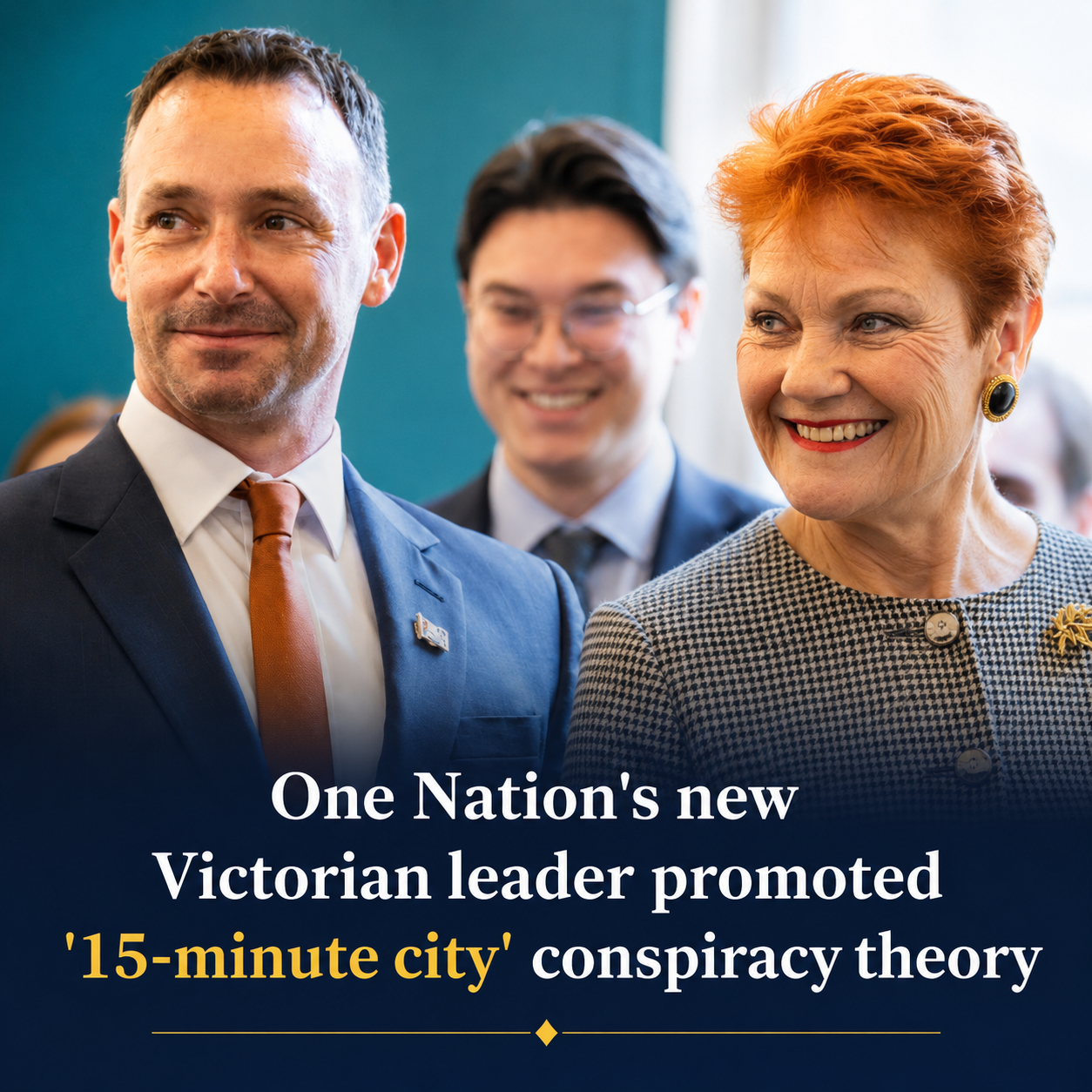
Pickering, who was officially introduced this week by Pauline Hanson as One Nation’s Victorian leader and lower house candidate for Pakenham, used a Facebook post in September 2024 to argue that urban planning initiatives were part of a broader effort by “unelected globalist bureaucrats” to control Australians’ lives and restrict their freedom of movement.
According to the post, Pickering claimed Melbourne’s expanding public transport hubs and higher-density housing developments were evidence that governments were attempting to consolidate populations into tightly managed neighbourhoods under the banner of sustainability.
He warned supporters that “the noose is tightening” around Australians and described what he believed was a coordinated effort by international organisations to influence government policy. He also linked the issue to concerns about digital identification systems, cashless payments and increasing government control over everyday life.
The comments have drawn attention because they centre on the so-called “15-minute city” theory, a claim that has circulated internationally since the COVID-19 pandemic but has repeatedly been rejected by urban planning experts and fact-checking organisations.
The original 15-minute city concept was developed by urban planning academics as a way to design neighbourhoods where residents can reach essential services—such as schools, healthcare, parks, supermarkets and public transport—within approximately 15 minutes by walking or cycling.
The model aims to reduce traffic congestion, improve access to local services, encourage active transport and create more liveable communities. It does not propose restricting where people may travel or preventing residents from leaving their neighbourhoods.
Despite that, conspiracy theories emerged internationally during and after the pandemic claiming that 15-minute cities would eventually be used by governments to confine residents, monitor movement, issue fines for travelling beyond designated zones or create what critics described as “open-air prisons”.
Researchers say those claims largely arose after separate traffic-management schemes in places such as Oxford in the United Kingdom were incorrectly conflated with the broader urban planning concept. The resulting narrative spread widely across social media and became connected to other conspiracy theories involving the World Economic Forum, digital identities and the so-called “Great Reset”.
Experts interviewed following the publication of Pickering’s comments warned that conspiracy theories can acquire greater credibility when they are repeated by prominent political figures.
Political scientists and misinformation researchers argue that public office holders often enjoy a level of authority that can amplify fringe narratives well beyond their original online audiences. Even when claims have been comprehensively debunked, repetition by recognised political leaders can increase public exposure and make misinformation appear more legitimate to undecided voters.
Pickering’s appointment comes as One Nation attempts to significantly expand its presence in Victoria ahead of the November state election.
Pauline Hanson officially unveiled the party’s first group of Victorian candidates earlier this week, naming Pickering to lead the campaign while outlining ambitions to contest a large number of lower and upper house seats across the state. The launch formed part of One Nation’s broader strategy to capitalise on growing voter dissatisfaction over cost-of-living pressures, crime, housing affordability and confidence in the major political parties.
The campaign launch itself generated widespread attention after Hanson excluded journalists from the ABC, The Guardian and The Age from attending the Melbourne press conference, arguing those organisations had consistently reported unfairly on her party.
That decision sparked criticism from political opponents and media organisations, while also increasing scrutiny of the backgrounds and public statements of One Nation’s newly announced candidates.
ABC News reported that Pickering’s Facebook comments were made while he was serving as One Nation’s Victorian state president, well before his formal elevation to the party leadership role.
The broadcaster said it contacted Pickering for comment regarding the posts after they resurfaced following his appointment. At the time of publication, no public response addressing the specific 15-minute city comments had been reported.
The renewed attention has also highlighted the increasingly prominent role conspiracy theories have played in political debate internationally over recent years.
Researchers studying misinformation note that theories surrounding 15-minute cities often overlap with claims involving digital identity systems, central bank digital currencies, climate policies and international institutions such as the World Economic Forum and the United Nations.
Although these narratives differ in detail, they generally share a common allegation that governments intend to use urban planning, technology or environmental policies to reduce personal freedoms. Multiple academic studies, urban planning experts and independent fact-checking organisations have found no evidence supporting those broader claims.
The debate nevertheless reflects wider political tensions over housing density, transport planning and the future growth of Australian cities.
Many local councils and state governments have adopted policies encouraging higher-density housing around transport hubs as part of broader efforts to accommodate population growth while limiting urban sprawl. Supporters argue such planning can reduce congestion, improve public transport usage and increase access to essential services, while critics often raise concerns about congestion, neighbourhood character and infrastructure capacity.
Those legitimate policy debates, urban planners say, should be distinguished from unsupported claims that governments intend to physically restrict residents to their local suburbs.
Pickering’s past comments have also attracted attention because they echo themes frequently used within international anti-globalisation movements.
In his 2024 post, he argued Australians were engaged in the “fight of our lives” and described digital identities and a cashless economy as the “ultimate tools of control”. Those remarks closely resembled narratives that have circulated widely across international social media platforms over recent years.
The controversy comes at a significant moment for One Nation as the party seeks to convert improved polling into electoral gains in Victoria.
While the party hopes to broaden its appeal beyond its traditional support base, renewed examination of its candidates’ previous public statements is likely to remain part of the campaign as political opponents and media organisations continue scrutinising those seeking public office.
Whether the issue affects One Nation’s electoral prospects remains uncertain, but the episode illustrates how years-old social media posts can quickly become central campaign issues once previously lesser-known political figures move into prominent leadership positions.