One Nation has officially launched its Victorian state election campaign by appointing party president Warren Pickering as its Victorian leader and unveiling a new slate of upper house candidates, declaring the party’s ambition is not merely to win seats but ultimately to govern Victoria.
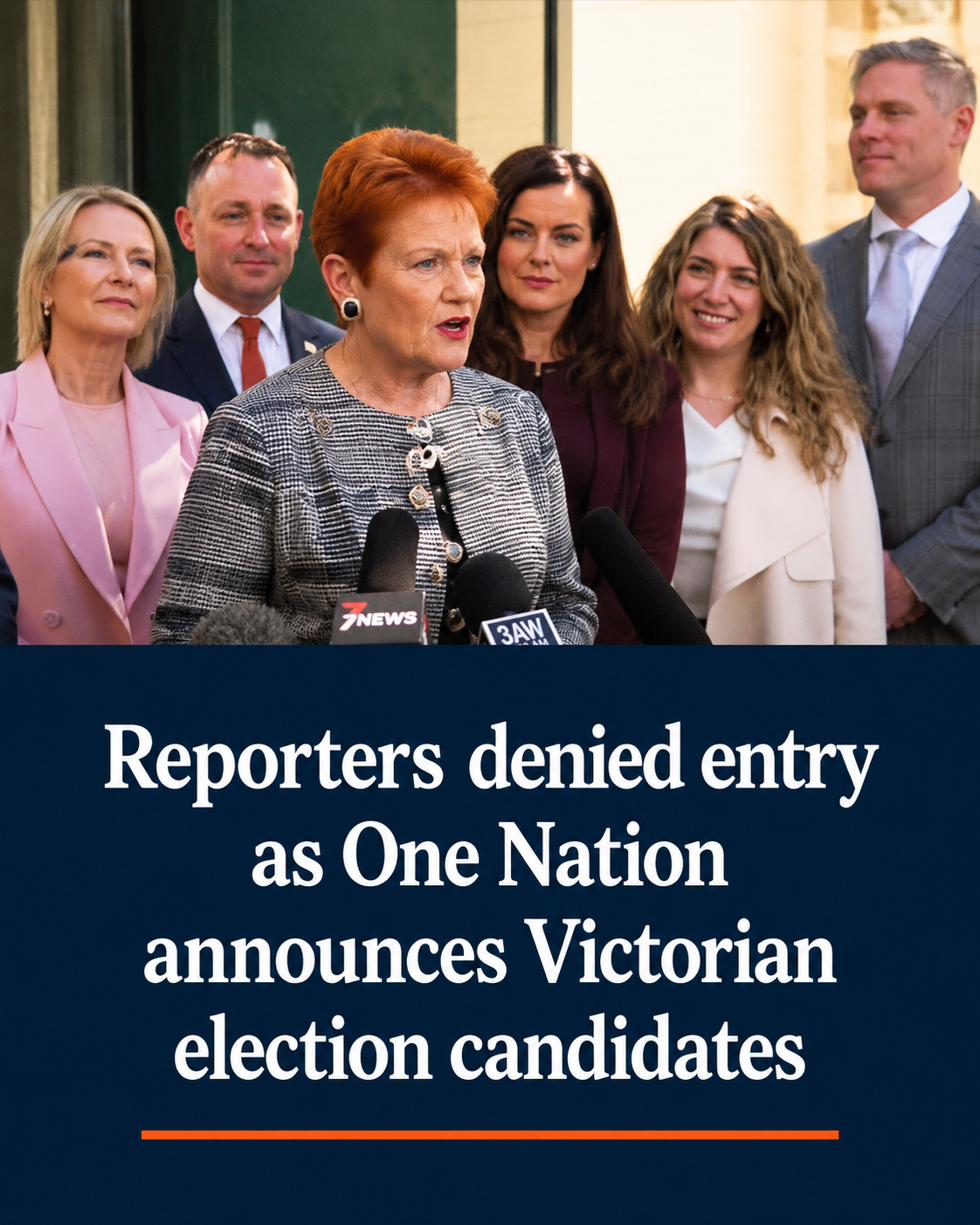
The announcement was made during a media event in Melbourne that attracted significant political attention, not only because of the candidates unveiled but also because journalists from the ABC, The Guardian, The Age and The Sydney Morning Herald were denied entry following a decision by party leader Pauline Hanson to exclude those organisations from the press conference.
Speaking at the launch, Pickering outlined One Nation’s ambitions in unusually direct terms.
“We intend for this to be a November to remember and we are contesting to govern,” he told reporters, signalling that the party intends to campaign as a serious alternative rather than merely seeking to expand its parliamentary representation.
Pickering, an Army veteran and long-serving Victorian state president of One Nation, will now lead the party’s campaign into the 2026 Victorian election while contesting the lower house seat of Pakenham.
His appointment forms part of a broader restructuring of the party’s Victorian campaign as One Nation seeks to capitalise on recent polling that has indicated growing support for the party nationally and in several state jurisdictions.
Alongside Pickering’s appointment, One Nation announced a new group of Legislative Council candidates representing regions across Victoria.
The ticket includes incumbent upper house MP Rikkie-Lee Tyrrell, former Liberal Party member Colleen Harkin, cartoonist and Please Explain creator Mark Nicholson, former police officer Paul Cumming, Geelong councillor Chris Burson and several other candidates who will contest seats across the state. The party indicated that additional candidates would be announced as the campaign progresses.
During the launch, party officials said detailed policy announcements would begin within weeks.
According to Pickering, agriculture and energy will be among the first policy areas released, followed by proposals covering crime, government integrity, education and cost-of-living pressures.
He also reiterated earlier commitments to strengthen policing, increase frontline officer numbers and pursue tougher anti-corruption measures, including a proposed royal commission into major government projects if One Nation were ever in a position to implement its platform.
One Nation argues that Victoria requires a fundamentally different political direction after years of Labor government.
At the launch, Hanson criticised the state’s economic management, public infrastructure, crime rates and cost-of-living pressures, telling supporters that many Victorians felt increasingly disconnected from the major political parties.
The party says its campaign will focus on issues including community safety, affordable energy, housing affordability, regional development and support for small businesses and farmers.
The media event itself quickly became controversial because several major news organisations were prevented from attending.
Hanson defended the exclusion by accusing the ABC and several newspapers of repeatedly publishing what she described as unfair or misleading reports about both herself and One Nation.
She said the party would no longer tolerate what she characterised as “lies”, “spin” and repeated “gotcha moments” from sections of the media.
Instead, other journalists—including representatives from independent digital media—were admitted and questioned Hanson throughout the press conference.
The decision immediately attracted criticism from political opponents.
Opponents argued that democratic accountability requires political leaders to answer questions from all accredited media organisations regardless of editorial disagreements.
Several commentators also questioned whether excluding public broadcasters and major newspapers reduced opportunities for independent scrutiny during an election campaign.
One Nation rejects that criticism.
Party representatives argue that campaign events organised by the party are private functions and that political organisations are entitled to decide which media outlets they invite.
Supporters also note that full recordings of the event were made publicly available through alternative media, allowing viewers to watch complete questions and answers rather than edited excerpts.
The campaign launch took place against a backdrop of heightened security.
Later the same day, protesters gathered outside a One Nation function in Hawthorn, prompting Victoria Police to deploy Public Order Response officers and mounted police to separate demonstrators from party supporters.
Although the launch proceeded without interruption inside the venue, the demonstrations highlighted the increasingly polarised political environment surrounding One Nation’s Victorian campaign.
Political analysts regard One Nation’s Victorian strategy as one of the party’s most ambitious state campaigns in recent years.
The party plans to contest almost every Legislative Assembly electorate while seeking to expand its representation in the Legislative Council.
Recent opinion polling has suggested growing support for One Nation among some voters concerned about cost-of-living pressures, housing affordability, crime and dissatisfaction with the major parties, although polling outcomes do not necessarily predict election results.
Whether One Nation can translate that support into significant parliamentary gains remains uncertain.
Victoria’s preferential voting system and proportional representation in the Legislative Council create opportunities for minor parties, but also present substantial electoral challenges.
Even so, Pickering’s declaration that One Nation intends “to govern” illustrates the confidence the party hopes to project as campaigning intensifies.
For supporters, the announcement signals that One Nation believes it has evolved beyond a protest movement into a party seeking executive responsibility.
Critics argue that such ambitions will ultimately be tested by the party’s detailed policy platform and its ability to convince a broader cross-section of Victorian voters.
With policy announcements scheduled over coming weeks and campaigning set to accelerate across the state, Warren Pickering’s appointment marks the beginning of One Nation’s most significant Victorian election campaign since entering the state’s Parliament in 2022.






