Pauline Hanson’s One Nation has unveiled a renewed push for coal-fired electricity generation, arguing Australia should expand rather than phase out its coal industry as the nation continues its transition towards lower-emissions energy.
The policy proposes extending the operating life of existing coal-fired power stations while constructing three new ultra-supercritical coal plants at Collinsville in Queensland, Port Augusta in South Australia and the Hunter Valley in New South Wales. One Nation says the proposal is intended to strengthen energy security, support regional employment and protect major industrial employers that rely on continuous electricity supplies.
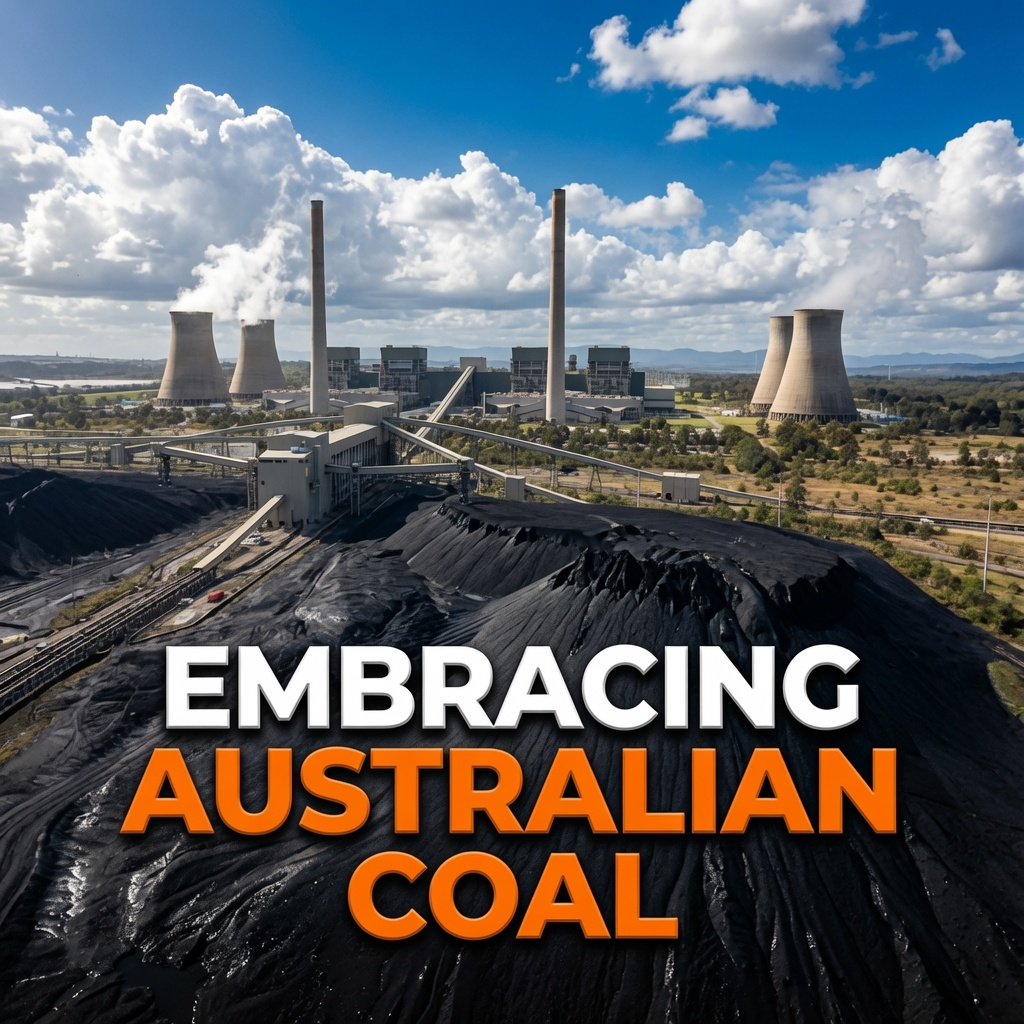
The announcement forms part of the party’s broader energy platform, which argues Australia possesses some of the world’s largest coal reserves and should continue using them to provide reliable baseload electricity for homes, hospitals, farms and heavy industry.
According to One Nation, coal-fired generation remains essential because it can produce electricity around the clock regardless of weather conditions, unlike renewable sources such as wind and solar that require complementary storage or backup generation to maintain supply.
A central element of the proposal is the construction of modern ultra-supercritical (USC) coal-fired power stations.
Ultra-supercritical technology operates at significantly higher temperatures and pressures than conventional coal plants, allowing greater thermal efficiency and lower carbon emissions per unit of electricity generated. While still producing greenhouse gas emissions, USC facilities generally consume less coal for the same electricity output than older coal-fired stations.
One Nation argues these newer plants would provide a more efficient replacement for ageing generators that are scheduled to close over the coming decade rather than relying primarily on renewable generation backed by batteries and transmission upgrades.
The Hunter Valley proposal has attracted particular attention because of concerns surrounding the future of the Tomago aluminium smelter near Newcastle.
Tomago is Australia’s largest aluminium smelter and one of the country’s biggest single electricity users. The facility contributes billions of dollars to the Australian economy each year and supports thousands of direct and indirect jobs across the Hunter region. One Nation argues maintaining reliable, competitively priced electricity is critical to the plant’s long-term viability.
Energy-intensive industries such as aluminium production require uninterrupted electricity supplies throughout the day. Even relatively short power interruptions can damage equipment, disrupt production and impose substantial financial costs.
Supporters of additional dispatchable generation argue this makes baseload or firm generation especially important for sectors including mining, metals processing, manufacturing and chemical production.
The proposal also highlights Port Augusta, a community whose experience has become symbolic within Australia’s energy transition debate.
South Australia’s last coal-fired power station closed in 2016, bringing an end to decades of coal generation in the region. While renewable energy investment has expanded significantly since then, many former workers and local residents have described the closure as economically and socially disruptive.
An ABC News feature marking the tenth anniversary of the closure documented the lasting impact on Port Augusta, including the loss of hundreds of jobs, declining business activity and long-running community debate over whether the transition received sufficient government support. At the same time, the report also noted environmental benefits from ending coal generation, alongside continuing investment in renewable energy projects throughout the region.
Former employees interviewed by the ABC expressed mixed views.
Some said the closure devastated families and forced skilled workers to leave the region in search of employment. Others acknowledged the old power station had generated pollution and ash while arguing governments could have managed the transition more effectively by creating replacement industries before the plant shut down.
Australia’s broader electricity system is undergoing one of its most significant transformations in decades.
Coal has historically supplied most of the National Electricity Market, but its share has steadily declined as ageing generators retire and renewable generation expands. Wind and solar now contribute a rapidly growing proportion of Australia’s electricity, supported by increasing investment in batteries, pumped hydro storage and new transmission infrastructure.
Federal and state governments remain committed to achieving net zero emissions by 2050, with renewable energy expected to provide the majority of future electricity generation.
However, questions remain about how quickly older coal-fired generators should be retired and what technologies should replace them.
Supporters of extending coal generation argue existing power stations provide proven reliability during periods of high electricity demand and adverse weather conditions. They also point to the thousands of jobs supported by coal mining, transport, maintenance and electricity generation across regional Queensland and New South Wales.
Critics, meanwhile, argue that new coal-fired power stations would be expensive to build, require lengthy construction periods and risk becoming economically uncompetitive as renewable generation and energy storage technologies continue to expand.
Many energy analysts contend that Australia’s long-term electricity system will increasingly rely on a combination of renewable generation, large-scale batteries, pumped hydro, flexible gas generation and upgraded transmission networks rather than new coal-fired plants.
Industry groups also emphasise that investment certainty remains critical regardless of which technologies ultimately dominate the energy mix.
Frequent policy changes have long been identified as a major challenge for Australia’s electricity sector, influencing investment decisions by energy companies, manufacturers and major industrial employers.
For regional communities built around coal mining and coal-fired generation, the debate extends well beyond electricity prices.
Mining operations support thousands of highly skilled jobs while generating significant economic activity for contractors, transport companies, engineering firms, local businesses and public services. Communities in the Hunter Valley, Central Queensland and other mining regions therefore have a substantial economic stake in decisions affecting the future of coal.
At the same time, renewable energy projects are creating new employment opportunities across construction, transmission infrastructure, battery manufacturing and ongoing operations, although many economists note that the location and skill requirements of those jobs do not always match those being lost through coal closures.
The discussion has increasingly focused on achieving what policymakers describe as a “just transition”—ensuring communities affected by the closure of coal facilities receive adequate economic support, retraining opportunities and replacement industries rather than bearing the full cost of structural change.
One Nation’s latest proposal illustrates how energy policy remains one of the defining political issues in Australia.
While the party argues coal should continue playing a central role in maintaining reliable electricity and protecting regional employment, governments, industry and energy experts continue to debate the most effective balance between affordability, reliability, economic competitiveness and Australia’s long-term emissions reduction commitments.






