A fresh dispute has erupted between Pauline Hanson and the Seven Network after One Nation’s chief of staff, James Ashby, accused the broadcaster of orchestrating the controversial meeting between the party leader and British far-right activist Tommy Robinson before later criticising her for taking part.
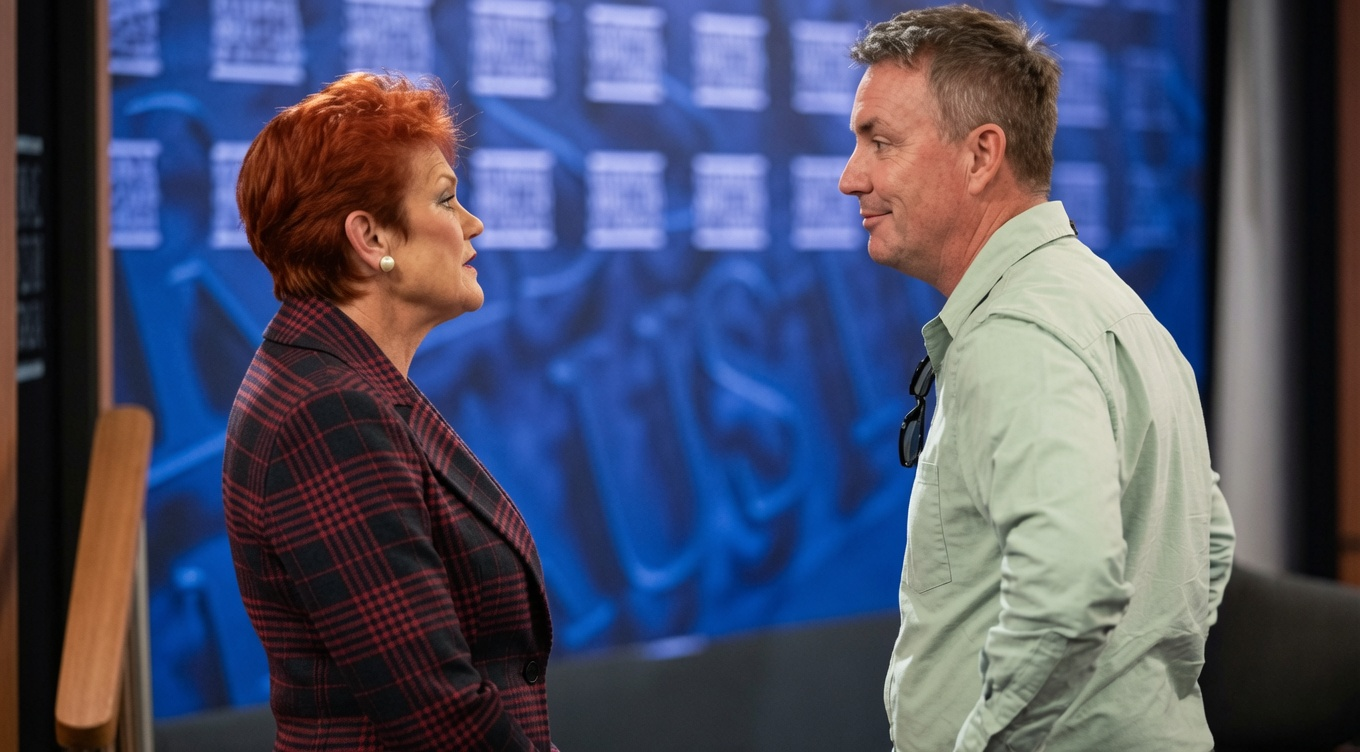
The disagreement follows the broadcast of Seven’s Spotlight special, which devoted almost an hour to Hanson’s two-week visit to the United Kingdom, including her appearance on Tommy Robinson’s podcast and interviews examining her views on immigration, multiculturalism and national identity.
During the program, journalist Liam Bartlett questioned Hanson about why she would risk her political reputation by associating with Robinson, one of Britain’s most controversial political activists.
Hanson defended the interview during the broadcast, but the criticism intensified after the program aired.
Speaking after the broadcast, James Ashby described the program as a “stitch-up”, arguing that Seven had itself helped facilitate the very interview it later portrayed as politically damaging.
Ashby claimed the original itinerary for the United Kingdom trip did not include Tommy Robinson.
According to him, the production team had initially organised the documentary around a proposed interview with Reform UK leader Nigel Farage, but after that interview fell through, Seven suggested Robinson as an alternative.
“There was no indication that we’d be doing an interview with Tommy,” Ashby said.
“I could send you the itinerary for the trip. It didn’t include Tommy.”
Ashby went further, alleging that Seven organised practical aspects of the meeting, including hiring the room where the podcast interview was recorded and arranging security for the production crew.
He said One Nation supplied Robinson’s contact details only after Farage became unavailable and maintained that the broadcaster took responsibility for organising the replacement interview.
The claims have become central to One Nation’s criticism of the program.
Ashby argued that Spotlight had shifted away from its original concept of examining immigration policy and instead produced a program questioning Hanson’s judgment and political leadership.
“This had nothing to do with immigration; it had everything to do with trying to call into question Pauline’s capability of not only running a political party but running a country,” he said.
Seven has rejected suggestions that the program was misleading or unfair.
In a statement, the broadcaster said the documentary was the product of months of planning involving extensive communication with Hanson and her staff, and that the story naturally evolved as events unfolded during the overseas trip.
The network said the final program reflected developments that occurred while filming and described the documentary as balanced journalism that allowed Hanson to fully present her views while also subjecting them to scrutiny.
Seven also responded to claims regarding production arrangements.
The broadcaster acknowledged paying for standard production expenses, including a hotel room used as a filming location and security required for its crew while recording in Britain.
However, it denied paying for Hanson’s overseas travel and did not confirm organising the Robinson interview in the manner alleged by Ashby.
The controversy has become one of several disputes arising from Hanson’s European tour.
During the trip she met Tommy Robinson, whose real name is Stephen Yaxley-Lennon, a British far-right activist who has attracted widespread controversy over his public campaigning and legal history.
Robinson has previously served as leader of the English Defence League and has faced numerous legal proceedings over the past decade.
Footage from the Spotlight documentary also showed Hanson walking through the English town of Luton with Robinson while discussing immigration and demographic change.
The program featured Hanson making a number of comments about immigration, Islam and multiculturalism that subsequently attracted criticism from political opponents and community leaders.
Since returning to Australia, Hanson has attempted to clarify several aspects of the trip.
She has argued that some of her comments were taken out of context and has insisted she is not advocating the return of the White Australia policy, despite controversy surrounding remarks made during Robinson’s podcast.
In an effort to support her criticism of Seven, Hanson later published what she said was the original email pitch from a Spotlight producer.
The document outlined a proposed documentary focused on Australia’s record migration levels and suggested filming in Britain to examine the political consequences of immigration, including a planned interview with Nigel Farage.
Hanson argued the broadcast that ultimately aired differed substantially from the original proposal.
The disagreement has prompted broader discussion about editorial independence in television current affairs.
Journalists frequently adjust stories as new developments emerge during production, particularly on overseas assignments where interviews may be cancelled or significant events alter the direction of reporting.
Equally, political participants sometimes argue that changes in editorial emphasis result in programs that differ from their original expectations.
Whether Seven’s production decisions reflected normal editorial evolution or amounted to the kind of “stitch-up” alleged by One Nation remains a matter of dispute between the broadcaster and the party.
The controversy has also highlighted the increasingly adversarial relationship between politicians and television current affairs programs.
Access documentaries often involve months of negotiation, with media organisations seeking editorial independence while political participants hope to ensure their positions are accurately represented.
Disagreements over the final product are not uncommon, particularly when controversial public figures or politically sensitive issues are involved.
For One Nation, the dispute has become part of a broader argument that Hanson was unfairly portrayed during her overseas visit.
For Seven, the broadcaster maintains the documentary fairly examined one of Australia’s most polarising political figures while giving viewers an opportunity to hear her views directly.
As debate continues over the program, the disagreement has extended beyond the substance of Hanson’s immigration policies to include questions about how political documentaries are produced, how editorial decisions evolve and where responsibility lies when planned interviews change during filming.






