Pauline Hanson’s One Nation has launched a fresh attack on the Albanese Government, accusing Labor of relying on what it describes as outdated political smears instead of addressing the issues many Australians say matter most.
In a strongly worded statement shared by the party, One Nation said the federal government had become “desperate” and was increasingly resorting to personal attacks rather than engaging with policy.
“The failing, desperate Labor Government are resorting to lying and tired old progressive attack lines to hit One Nation,” the statement said.
The party argued that such tactics were becoming less effective because more Australians were judging political parties on their responses to everyday economic pressures instead of campaign rhetoric.
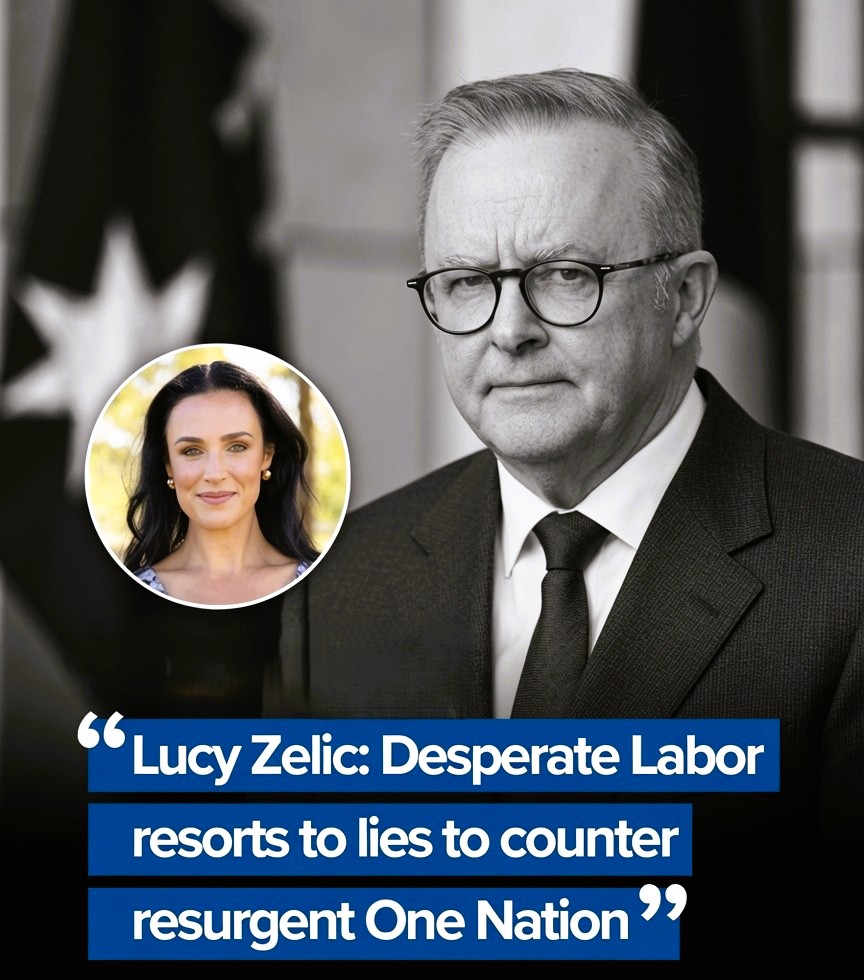
“These tactics don’t work anymore. More and more voters are seeing through it. Smearing us won’t solve their political problems. The problem for them is that it’s all they seem to know how to do.”
The comments come during a period of heightened political competition in Australia, with recent polling suggesting One Nation has attracted significantly more public attention than in previous election cycles. While polling numbers vary between surveys, the party has emerged as an increasingly influential force in national political debate, particularly on issues including immigration, housing affordability, cost-of-living pressures and energy policy.
One Nation has consistently argued that Australia’s major parties have failed to respond effectively to concerns about rapid population growth, infrastructure pressures and rising household costs.
The party maintains that reducing migration, strengthening border controls and prioritising Australian workers would help ease pressure on housing, wages and public services.
Labor, however, has rejected those claims, arguing Australia’s economic challenges require balanced reforms rather than what it describes as simplistic solutions.
Government ministers have repeatedly criticised One Nation’s platform, while other major parties have also questioned the feasibility of several of the party’s proposals.
The broader political contest has become increasingly heated following One Nation’s improved polling performance.
Recent weeks have seen sharp exchanges not only between Labor and One Nation but also between One Nation and the Coalition.
Opposition Leader Angus Taylor recently criticised One Nation’s economic policies, warning they could increase inflation and place additional pressure on households. Pauline Hanson responded by accusing the Coalition of adopting many of One Nation’s policies while continuing to attack the party publicly.
The dispute highlights how One Nation has become a significant factor in Australia’s evolving political landscape.
Political analysts note that the party’s growth has complicated traditional assumptions about preference flows and electoral contests, particularly in regional Australia and outer metropolitan electorates where dissatisfaction over cost-of-living pressures has become more pronounced.
Supporters of One Nation argue the party has successfully tapped into frustrations among voters who believe the major parties have become disconnected from everyday concerns.
Critics, however, contend that many of the party’s proposals lack detailed implementation plans or would create unintended economic consequences.
Immigration remains one of the defining issues in One Nation’s political messaging.
The party has long advocated significantly lower migration levels, arguing Australia’s infrastructure, housing supply and public services have struggled to keep pace with population growth.
Labor has defended its migration settings as part of a broader strategy to address workforce shortages while maintaining economic growth, although it has also introduced measures aimed at reducing net overseas migration following the post-pandemic surge.
Housing affordability has become another major battleground.
One Nation argues that reducing migration would help ease pressure on property prices and rental markets, while Labor says increasing housing construction and planning reforms are essential to improving long-term supply.
The debate also extends to energy policy, taxation and government spending, where the two parties offer markedly different approaches.
As political campaigning intensifies, observers expect increasingly robust exchanges between Australia’s major and minor parties.
For One Nation, the latest statement reinforces its long-standing argument that criticism from political opponents reflects growing concern about the party’s electoral momentum rather than the substance of its policies.
For Labor, challenging One Nation remains part of a broader effort to defend its policy agenda while warning voters against alternatives it considers economically risky.
Ultimately, it will be Australian voters who determine whether either narrative resonates as the next election approaches.






