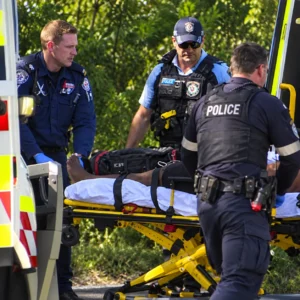
Northern Territory paramedics could be offered pepper spray and body-worn cameras as the government considers new ways to protect ambulance crews from repeated assaults, threats and violent scenes that St John Ambulance NT says are increasingly affecting both staff welfare and patient care.
The proposal is not yet an implemented policy. Alice Springs Member for Braitling Joshua Burgoyne said the government had been speaking with ambulance management about whether staff wanted the option of carrying pepper spray for defensive purposes, while acknowledging there would be mixed views within the workforce. Body-worn cameras have also been under consideration.
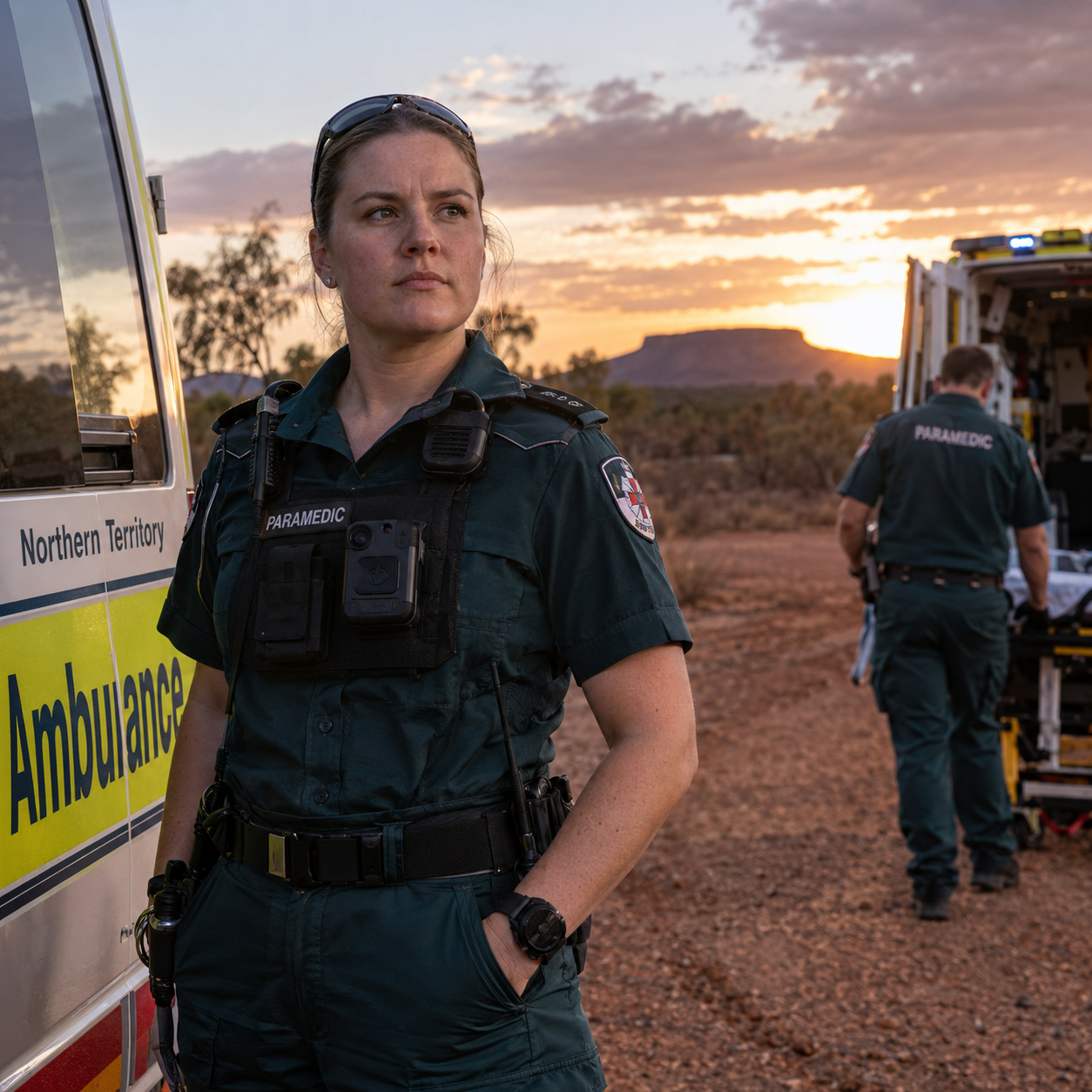
The discussion follows a series of violent incidents in Central Australia. St John Ambulance NT says paramedics in the region have faced 88 instances of serious violence since January, while crews in Darwin have also reported record levels of assault. Those figures have turned workplace violence from an occasional operational risk into a sustained workforce and service-delivery problem.
One incident in Larapinta on 11 September illustrates the danger. Six paramedics were treating a critically unwell patient inside a home when, according to St John, a large group arrived and the scene changed rapidly. Crew members were forced to stop focusing solely on the patient and protect themselves as violence escalated around the property.
St John southern regional manager Abbey Studley said the paramedics had to push violent people out of the house and barricade themselves inside using their bodies and a stretcher. They activated duress alarms and continued trying to provide lifesaving treatment while waiting for police assistance.
The patient was eventually transported to Alice Springs Hospital after police arrived and the scene was brought under control. St John said the paramedics were not physically injured in that incident, but staff were distressed and the normal pattern of clinical care had been disrupted by the threat.
Other incidents in the same period included crews facing threats while transporting a patient and a paramedic being struck by a thrown glass bottle. St John has also described cases in which clinicians altered or stopped treatment because aggression made the scene unsafe.
That creates an ethical and operational problem for ambulance staff. Paramedics are trained to prioritise urgent patient care, but they are not expected to remain in a situation where they face a serious threat of violence. St John has introduced a policy encouraging crews to withdraw if they believe a scene is unsafe, even though doing so can delay treatment.
The effect extends beyond the individual call-out. When a crew has to wait for police, retreat from a scene or spend extra time managing violence, that ambulance remains unavailable for other emergencies. In a jurisdiction with long distances and limited resources, a delay can affect people far from the original incident.
St John has responded with additional training in prevention, de-escalation and cultural safety. Those measures aim to reduce conflict before it becomes physical and help crews recognise when a scene is deteriorating. The renewed debate over pepper spray suggests the government and service are considering what happens when de-escalation is not enough.
Pepper spray, or oleoresin capsicum spray, can temporarily incapacitate a person by causing intense irritation to the eyes and respiratory system. Giving it to paramedics would be a significant change because ambulance officers are healthcare workers, not police, and their primary role is treatment rather than enforcement.
Any formal policy would therefore need detailed rules. Staff would require training on when spray could be used, how it should be stored, how to avoid contaminating a patient or colleague and what to do after deployment. The service would also need to consider the risk that a canister could be taken from a paramedic or that its use could escalate an already volatile scene.
Confined environments make those questions especially important. Paramedics often work in bedrooms, bathrooms, vehicles and small houses where pepper spray can affect everyone nearby. A patient with respiratory illness, intoxication or other medical vulnerabilities could react differently from a healthy bystander.
Body-worn cameras raise a different set of trade-offs. Cameras may deter some abusive behaviour and can provide evidence if a worker is assaulted. They can also help reconstruct a disputed incident. But ambulance work routinely involves private medical information, people in distress and treatment inside homes, so recording cannot be treated like ordinary public-space surveillance.
A camera program would need rules covering when recording starts and stops, how long footage is retained, who can access it, how patients are notified where practical and what happens when a patient cannot consent. Health privacy obligations would have to be considered alongside workplace safety and evidence preservation.
The Northern Territory already has a separate public trial involving OC spray for self-defence, but that scheme should not be confused with the paramedic proposal. A member of the public carrying an approved defensive spray is in a different legal and professional position from a paramedic entering homes under an emergency-response role.
The ambulance workforce also faces pressures beyond violence. Central Australian paramedics work across large distances, remote roads and difficult environments. St John training programs already prepare crews for prolonged care, remote access and coordination with police, emergency services and aviation resources. Adding a defensive weapon would create another operational responsibility in an already complex role.
Supporters of giving paramedics more protective options argue that repeated assaults show existing measures are not sufficient and that workers should not have to rely entirely on police arriving in time. Critics can reasonably question whether arming healthcare workers changes the character of the job or creates new risks. The government has not yet settled that argument.
Burgoyne’s comments indicate the current approach is consultative. He said the government wants to know what the service and its staff need rather than imposing a single solution immediately. That means workforce views will matter, particularly because some paramedics may feel safer carrying pepper spray while others may not want the responsibility.
The strongest case for action is the documented pattern of violence. Eighty-eight serious incidents in Central Australia since January is not an isolated spike, and St John says the cumulative effect is affecting staff welfare. Repeated exposure to threats can contribute to stress, burnout and decisions to leave the profession, which in turn makes staffing more difficult.
Patient care is the other side of the same problem. A paramedic who is unsafe cannot provide normal treatment, and a crew forced to withdraw cannot reach the next patient. Measures that reduce violence may therefore improve both occupational safety and ambulance availability, even though the proposed tools themselves carry risks.
The next step is whether discussions become a formal policy proposal. If they do, the details will matter more than the headline. Voluntary or mandatory carriage, training standards, legal authority, use-of-force thresholds, health safeguards, privacy rules and incident review would all need to be clear before pepper spray or body cameras could be considered routine equipment.
Until then, the confirmed position is that the NT government and St John Ambulance NT are discussing additional protections in response to sustained violence against crews. Pepper spray and body-worn cameras are options on the table, not measures already rolled out across the ambulance service.
Any trial of protective equipment would also need transparent incident review. If spray were deployed, St John and the government would need to know whether it prevented injury, created medical complications or escalated the scene. The same applies to body-camera footage: collecting video only has value if there are clear procedures for reviewing serious incidents and protecting patient privacy.
Workforce consultation will be especially important because paramedics are the people who would carry the operational risk. A policy that looks reassuring from outside the ambulance service may be viewed differently by staff who have to decide, in seconds, whether reaching for a defensive spray helps or makes a volatile patient or bystander more dangerous.
The discussion therefore should not be reduced to a simple choice between arming paramedics and doing nothing. Police response times, staffing levels, dispatch intelligence, duress systems, scene-risk information, training and community violence-prevention work are all part of the safety picture. Pepper spray and cameras are only two possible tools within that wider system.