The NSW Liberals have pledged to freeze the state’s planned gun buyback and remove general firearm ownership caps for farmers if they win government at the 2027 state election, reopening a politically sensitive debate over laws passed after the Bondi Beach terrorist attack.
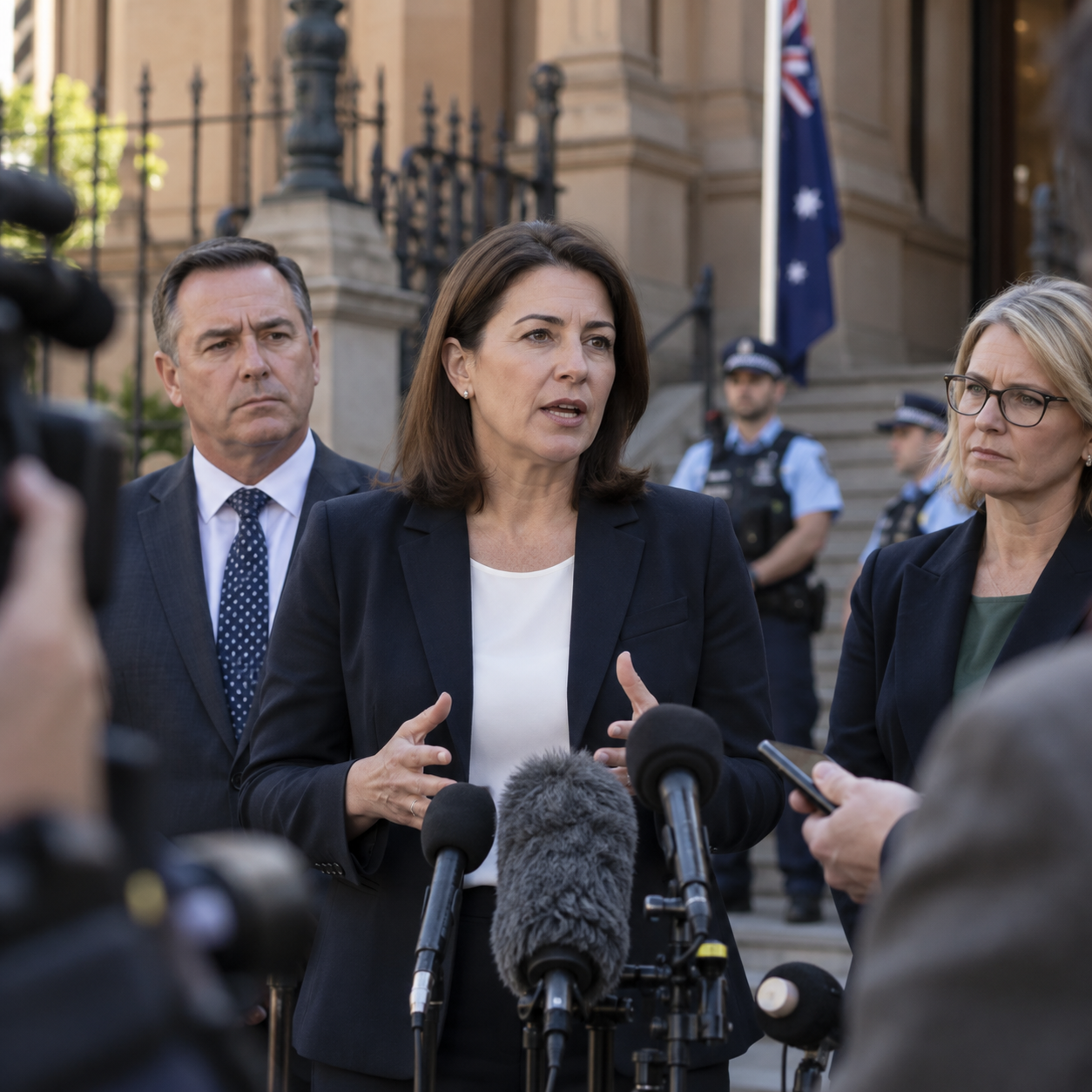
The proposal would not immediately repeal the current law. Opposition leader Kellie Sloane says any changes would be informed by a commission of inquiry into firearms legislation and consultation with farmers, sporting shooters, police and other stakeholders.
The Liberals supported the government’s firearms package when it passed Parliament in December 2025, but the party now says parts of the regime should be reconsidered.
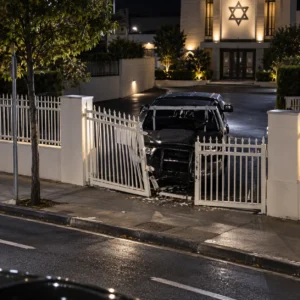
The existing reforms were introduced after the antisemitic terrorist attack at Bondi Beach on 14 December 2025, in which 15 people were killed. The NSW Government described the changes as the state’s toughest firearms reforms in a generation.
Among the changes are tighter firearm limits, shorter licence periods, stronger identity and eligibility checks, changes to firearm classifications and new rules affecting permits to acquire.
Some provisions are already operating. From 24 December 2025, restrictions on permit-to-acquire applications meant a new permit could not be issued if it would take a licence holder above the applicable firearm limit.
For primary producers and people with certain rural or occupational reasons, the general limit is 10 firearms, although the legislation provides mechanisms for the Police Commissioner to approve higher numbers in prescribed circumstances.
For many other licence holders, a four-firearm limit applies. Dealer and collector licences are treated differently.
Other changes took effect from 1 July 2026, including reducing the maximum ordinary firearm-licence term from five years to two and strengthening identity-verification and permit requirements.
The planned buyback is intended to compensate eligible owners whose firearms can no longer be lawfully retained because of the new limits or reclassifications.
The NSW Government says the state will begin participating in the National Gun Buyback Scheme from 2 November 2026, with NSW and the Commonwealth sharing costs equally.
Under the announced first phase, eligible owners above the new limits would be able to surrender firearms for fixed compensation. Published rates include different amounts for rifles, shotguns, handguns and other eligible firearms.
A second phase, expected in early 2027, is designed to provide a compensation pathway for some higher-value firearms, subject to a fee and a payment cap.
The Liberal proposal would freeze that process if the party forms government and would seek to remove the broad ownership cap for farmers. The final design would depend on the promised inquiry and any legislation ultimately introduced.
That qualification matters. An election pledge is not an enacted legal change, and the current rules remain in force unless Parliament amends them or relevant commencement provisions are changed.
The Liberals argue farmers can have legitimate operational reasons for owning more than 10 firearms, including pest management across large properties and the need for different firearms for different agricultural tasks.
Supporters of the current cap argue that limits reduce the total number of firearms held by individuals and form part of a broader risk-reduction strategy.
These are competing policy arguments. The evidence needed to assess them includes not just the number of firearms owned but licence-holder risk, storage standards, firearm type, compliance history and how exemptions are administered.
NSW Police information already makes clear that the 10-firearm rule is not an absolute ceiling in every possible agricultural circumstance. The law allows higher numbers to be approved in specified cases, including where a special need can be established.
That means part of the political dispute is about whether exemptions are sufficient or whether the general cap itself should be removed for farmers.
The opposition also proposes a commission of inquiry into the operation of the broader firearms regime. Such an inquiry could examine the practical impact of the post-Bondi reforms, the buyback, licence administration and how the rules affect rural users, but its terms of reference would determine the actual scope.
Labor has criticised the Liberal position as a reversal of the bipartisan support given to the 2025 reforms. Police Minister Yasmin Catley has argued the current laws were designed to strengthen public safety after the Bondi attack.
The government’s position is that the buyback and ownership limits are parts of an integrated package rather than isolated measures. It points to stronger licence checks, shorter licence terms, firearm reclassification and restrictions on magazine capacity alongside the ownership caps.
The Liberals say supporting the emergency legislation in 2025 does not prevent them from reviewing whether all elements are proportionate or workable after implementation.
For firearm owners, the immediate practical point is that the existing law has not changed because of the opposition announcement. Licence holders still need to comply with current NSW Police requirements and the staged commencement of the 2025 Act.
The buyback is also still scheduled to begin in NSW in November 2026 under the government’s published plan.
For farmers, the interaction between the general 10-firearm limit and commissioner-approved exceptions will be central to the debate. Some rural users may already be able to seek approval above the standard limit where the legal criteria are met.
For the wider public, the policy dispute raises a familiar firearms-law question: how to balance legitimate occupational and sporting use against the objective of reducing access to weapons that could be misused.
There is no need to turn that question into an election verdict. Voters will be presented with different policy approaches and can assess the evidence and trade-offs themselves.
The most important distinction is between what is law now and what is being proposed. The current NSW framework includes ownership limits and a scheduled buyback. The Liberals are promising to freeze the buyback and change farmer caps if elected, but say those decisions would be shaped by an inquiry.
Labor opposes that change and is defending the post-Bondi reforms.
The next milestones are likely to be the planned start of the buyback in November, further implementation of the 2025 legislation and more detail from the opposition about the inquiry it would establish.
The published buyback design also adds practical detail to the dispute. Phase one is scheduled to use fixed prices for eligible firearms affected by the new limits or reclassifications, with different amounts for handguns, rifles and shotguns.
The NSW Government says a second phase in early 2027 will create a pathway for eligible higher-value firearms with an indicative market value above $3,000, with payments capped at $10,000 per firearm and a fee applying to that process.
The scheme is expected initially to operate for 12 months. NSW and the Commonwealth have agreed to share the cost equally.
Those arrangements matter because freezing the buyback would affect not only future policy but owners who may already be planning to surrender firearms after the new limits commence.
The current law also contains more nuance than a simple four-versus-10 rule. Primary producers, people with rural occupational reasons and some pest-control users fall within the 10-firearm category, while regulations can allow higher numbers approved by the Commissioner.
Existing category C rules also have separate restrictions on particular self-loading rifles and shotguns, with discretion in some circumstances where a special need is established.
That means removing a general farmer cap would not eliminate the rest of the licensing framework. Genuine-reason requirements, safe storage, permit rules, firearm categories and police suitability checks would continue unless separately amended.
Conversely, keeping the cap does not mean every farmer is permanently limited to exactly 10 firearms regardless of circumstance. The current regime includes pathways for approvals above standard limits in defined situations.
The commission of inquiry proposed by the Liberals could become important because it would provide a forum to test how those exemptions are working in practice and whether the buyback is achieving the intended risk reduction.
But an inquiry can recommend; it does not change legislation by itself. Any substantial rollback would still require executive or parliamentary action within the legal framework in force at the time.
Implementation dates also matter for voters and licence holders trying to understand the debate. Some reforms began immediately in December 2025, including restrictions on permits that would take owners above the new limits. Other changes, including shorter licence terms and strengthened identity checks, began on 1 July 2026. Additional classification and buyback-related provisions are being introduced in stages.
This staged rollout means the practical effects are still emerging. Police, rural organisations and firearm owners are dealing with transitional rules at the same time political parties are arguing about what should happen next.
Any future government considering a rollback would therefore have to decide which provisions to leave in place, how to treat people who had already surrendered firearms or altered their holdings, and how to transition licence holders between regimes without creating legal uncertainty.
Until a future Parliament changes the law, firearm owners remain subject to the current NSW regime rather than the opposition’s proposed alternative.