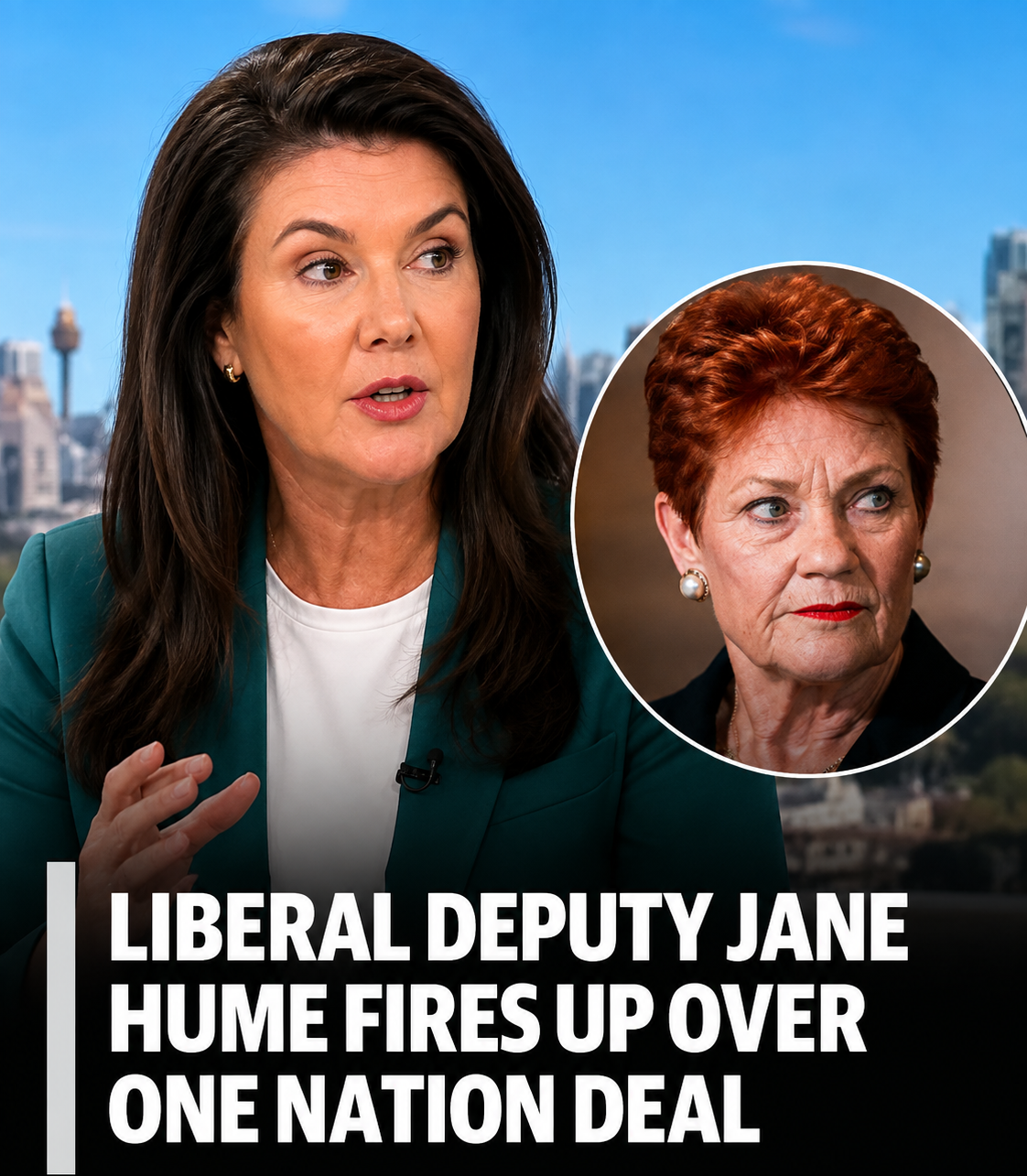
Liberal deputy leader Jane Hume has emphatically ruled out any formal coalition agreement between the Liberal Party and Pauline Hanson’s One Nation, seeking to end growing speculation about the Coalition’s post-election strategy as One Nation continues to attract attention in national polling.
Appearing on ABC’s Insiders, Senator Hume rejected suggestions that the Liberal Party could enter into a formal governing arrangement with One Nation if the numbers after the next federal election made it possible.
“No, we will not,” Hume said when asked whether the Liberals would form a coalition with Pauline Hanson’s party, reiterating that the Coalition’s long-standing partnership remains exclusively between the Liberal Party and the National Party.
Her comments were among the clearest statements yet from the Coalition leadership following days of public debate sparked by remarks from several Coalition figures who appeared less definitive when asked about potential cooperation with One Nation after an election.
The issue has gained prominence as recent opinion polling suggests One Nation has significantly increased its support, raising the possibility that the party could hold greater influence in a future parliament, particularly if neither Labor nor the Coalition secures a clear majority.
Hume’s intervention follows comments from Liberal senator Andrew Bragg, who indicated political realities after an election could depend on the numbers in parliament, while other Coalition figures have similarly acknowledged that hypothetical post-election scenarios cannot always be predicted in advance.
Those remarks fuelled speculation that One Nation could potentially become a more influential crossbench player, prompting renewed questions about whether a formal alliance could ever be considered.
Hume sought to draw a distinction between parliamentary realities and a formal coalition agreement.
She stressed that the Coalition intends to contest the next election on its own policies, leadership team and platform, with the objective of winning government outright rather than relying on another political party to form a governing coalition.
Her comments also come as One Nation seeks to build momentum following a series of high-profile announcements, including the unveiling of its Victorian election team and continued efforts to expand its presence across multiple state and federal contests.
Pauline Hanson has consistently argued that growing voter dissatisfaction with the major parties has created opportunities for One Nation to broaden its parliamentary representation.
At the same time, Hanson has indicated that while her party is prepared to negotiate legislation on individual issues, she is not actively pursuing a formal coalition arrangement with the Liberal Party.
The debate reflects a broader strategic challenge confronting the Coalition.
One Nation and the Coalition often campaign on similar concerns, including immigration levels, cost-of-living pressures, energy policy and crime. However, the Liberal Party has also sought to preserve a clear distinction between its own political identity and that of Pauline Hanson’s party.
Political analysts note that while Australian minority governments frequently negotiate with crossbench MPs and smaller parties on legislation, a formal coalition agreement is a far more significant constitutional and political arrangement.
The Coalition itself is a long-established partnership between the Liberal Party and the National Party, with shared shadow ministries, agreed policy positions and formal governing arrangements developed over decades.
Hume’s remarks therefore reinforce that the Liberal Party sees no intention of expanding that formal structure to include One Nation, regardless of continued public discussion about hypothetical election outcomes.
The issue has become increasingly relevant because recent polling has indicated a volatile political environment.
Some surveys have suggested One Nation has recorded substantial gains in primary vote support, while others show a more competitive contest between Labor, the Coalition and several minor parties. Polling results have varied depending on methodology, meaning analysts caution against treating any single survey as predictive of election outcomes.
Former prime minister John Howard also entered the broader political debate this week, arguing that the Coalition should continue promoting its own vision of Australian multiculturalism while distinguishing itself from One Nation’s approach to immigration and national identity. His intervention aligned with Hume’s message that the Coalition remains an independent political force despite overlapping policy debates.>
For One Nation, the attention surrounding possible cooperation with the Coalition highlights the party’s growing relevance in national political discussion.
Whether that translates into additional parliamentary seats remains uncertain, but the speculation itself reflects the changing dynamics of Australian politics as voters increasingly look beyond the traditional two-party contest.
For the Liberal Party, however, Jane Hume’s message was unambiguous: while parliamentary negotiations may always depend on election arithmetic, there will be no formal Coalition agreement with Pauline Hanson’s One Nation.






