A major international update to the medical definition of a heart attack is putting greater emphasis on differences between women and men, with Australian specialists saying the change could help reduce missed or delayed diagnoses in women.
The Fifth Universal Definition of Myocardial Infarction, released in 2026 by major international cardiology organisations, reorganises heart attacks into three broad clinical groups and explicitly incorporates sex-specific cardiac troponin thresholds into diagnosis. Troponin is a protein released into the blood when heart muscle is injured, and the level detected in a blood test is one of the key pieces of evidence doctors use when assessing a suspected heart attack.
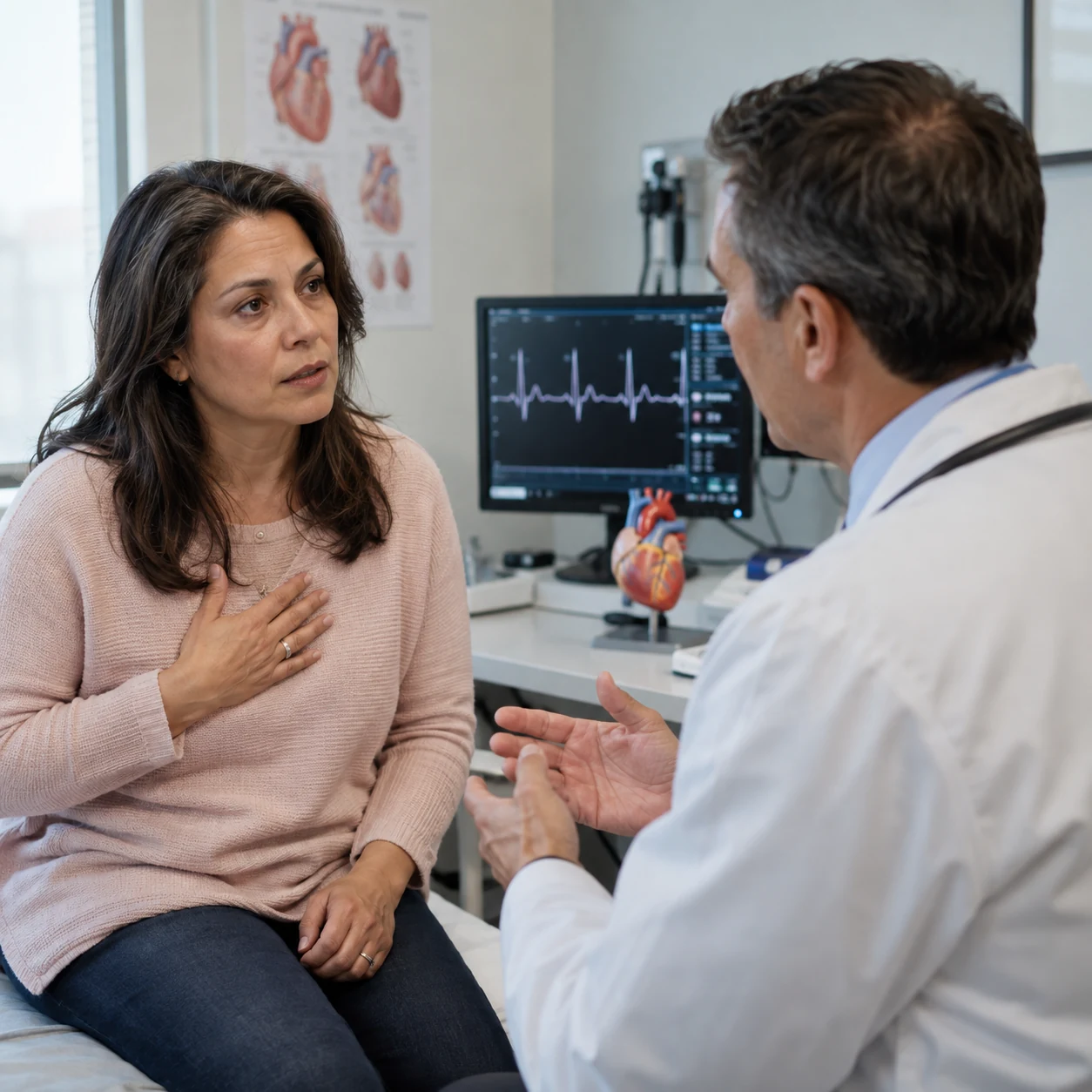
The update matters because women can present differently, can develop different forms of coronary disease and may have lower troponin concentrations than men even when clinically important heart injury is occurring. Australian cardiologists interviewed by ABC Health said the new approach should make it harder for a single one-size-fits-all threshold to obscure those differences.
What has changed in the definition?
The new universal definition groups myocardial infarction into three broad categories: primary heart attacks, secondary heart attacks and procedure-related heart attacks.
A primary heart attack generally involves an acute problem in a coronary artery, such as disruption of a plaque or another event that suddenly interrupts blood flow to heart muscle. A secondary heart attack occurs when the heart’s oxygen supply and demand become badly mismatched because of another condition, rather than a primary clot-forming event in a coronary artery. Procedure-related heart attacks are those associated with interventions such as coronary procedures or surgery.
The categories are intended to make the diagnosis more closely reflect what actually caused the heart injury. That distinction can affect treatment, follow-up and the information patients receive about future risk.
The definition also places more emphasis on imaging where appropriate to help establish the mechanism of injury, rather than relying on a blood-test number in isolation. A raised troponin level shows heart muscle injury, but not every rise has the same cause and not every rise represents the same type of heart attack.
Why the change could matter for women
One of the most significant changes is the formal incorporation of sex-specific troponin thresholds.
Troponin tests are highly sensitive, but the normal distribution of troponin can differ between women and men. If a laboratory or clinical pathway relies on a threshold that does not account for those differences, some women with meaningful heart injury may fall below the point that triggers further investigation.
The new definition says sex-specific upper reference limits should be used where validated assays support them. The aim is not to lower the diagnostic bar indiscriminately. It is to use reference values that better reflect biological differences and reduce diagnostic bias.
That does not mean a troponin result can diagnose a heart attack by itself. Doctors still consider symptoms, electrocardiograms, repeat blood tests, imaging and the overall clinical picture. Troponin can rise for other reasons, including severe illness and other forms of cardiac stress.
For women, however, more tailored thresholds could help ensure that a suspicious presentation is not dismissed simply because a result falls below a cut-off derived largely from a mixed or male-dominated reference population.
Where SCAD fits
The revised framework is also relevant to spontaneous coronary artery dissection, known as SCAD.
SCAD occurs when a tear or bleeding within the wall of a coronary artery disrupts blood flow. It is different from the more familiar process in which fatty plaque ruptures and a blood clot blocks an artery.
SCAD disproportionately affects women, including younger women who may not have the conventional cardiovascular risk profile people associate with heart attacks. ABC Health cited Australian research suggesting SCAD accounts for nearly one in four acute coronary syndrome events among women under 60 in the study population.
Under the updated international framework, SCAD is more clearly recognised within the primary heart-attack category rather than being treated as an awkward exception to the usual model. That matters because patients can experience a genuine myocardial infarction without having the classic plaque-related disease many people imagine when they hear the words “heart attack”.
What does not change
The new definition does not mean every episode of chest discomfort is a heart attack, and it does not replace clinical judgement.
Doctors still need evidence of acute myocardial injury together with signs that the injury is caused by ischaemia — inadequate blood supply to heart muscle — before diagnosing myocardial infarction. The definition is designed to give clinicians a clearer framework for interpreting those findings and describing the cause.
It also does not mean women and men have completely separate diseases. The same major warning signs can occur in both sexes, and both women and men can experience chest pressure, shortness of breath, sweating, nausea, pain in the arm, shoulder, jaw or back, or a sudden feeling that something is seriously wrong.
Symptoms can vary from person to person. Some patients do not present with the textbook picture, which is one reason emergency assessment remains important when symptoms are severe, new or concerning.
What Australians should take from it
For patients, the most important change may be invisible. The update is mainly aimed at clinicians, laboratories, researchers and health systems rather than asking people to self-classify their symptoms into one of the three categories.
Its practical effect should be more consistent diagnosis, clearer documentation of why a heart attack occurred and greater attention to biological differences that can affect testing.
For Australian women, the sex-specific troponin recommendation is particularly significant because under-recognition of cardiovascular disease in women has been a persistent concern for clinicians and advocacy groups.
The update also reinforces a broader point: a heart attack is not a single disease process. It can result from plaque rupture, spontaneous artery dissection, severe imbalance between oxygen supply and demand, or complications around a cardiac procedure. Identifying the mechanism is important because treatment and future risk can differ.
The Fifth Universal Definition is therefore less about changing the everyday meaning of “heart attack” and more about making the medical diagnosis more precise.
Anyone experiencing severe or persistent chest pain, unexplained breathlessness, faintness or other symptoms suggesting a medical emergency should seek urgent care rather than trying to interpret laboratory thresholds themselves. In Australia, life-threatening emergencies should be directed to Triple Zero (000).