A Melbourne-based consultant has admitted defrauding Australia’s National Disability Insurance Scheme (NDIS) of almost $229,000 that was intended to fund support for people with disability, with a Victorian court indicating a prison sentence is likely when the matter returns for sentencing later this year.
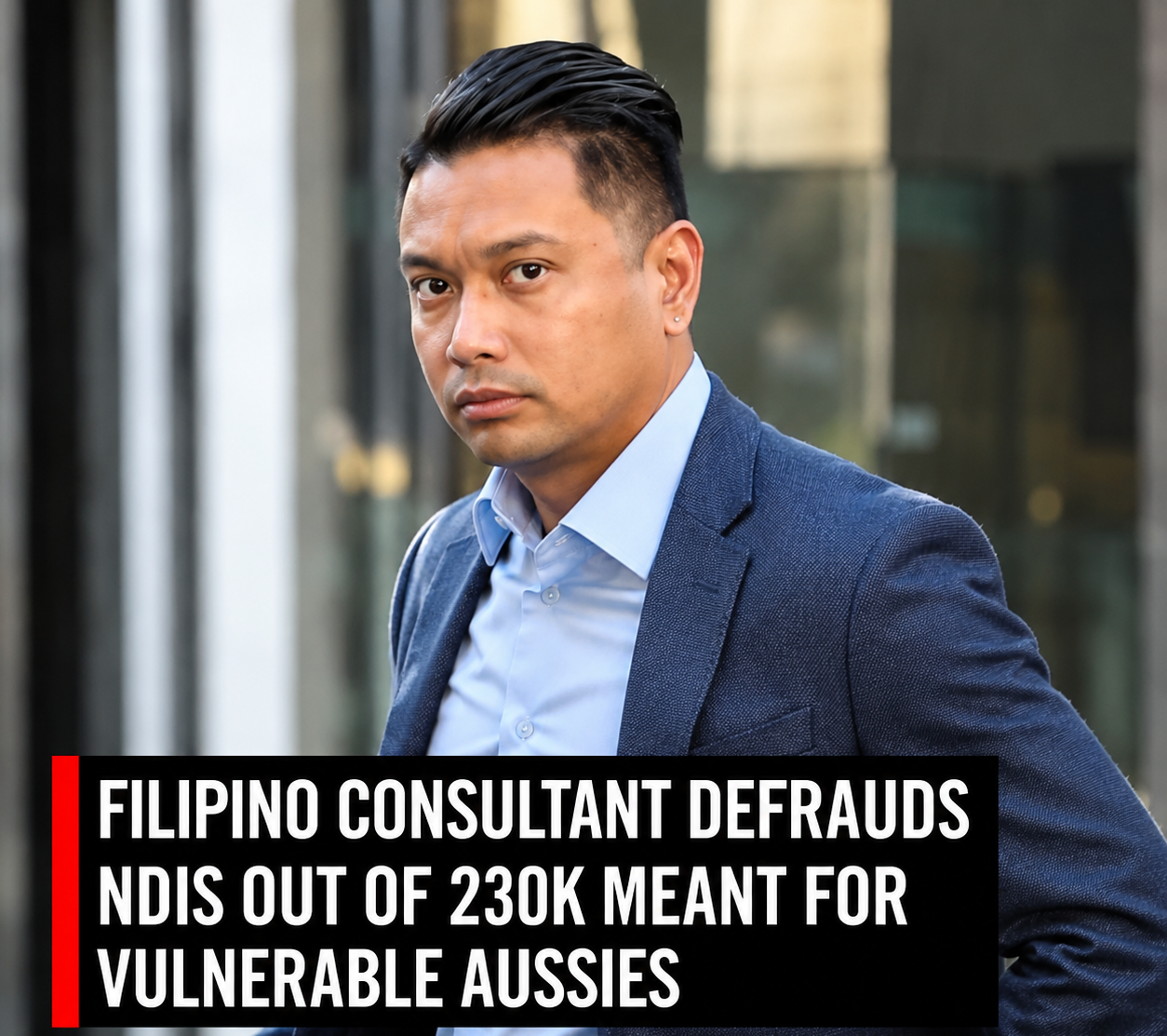
Ryogie Tumandao, 30, of Weir Views in Melbourne’s west, appeared before the County Court after pleading guilty to three counts of dishonestly obtaining a financial advantage, one count of causing a loss to a Commonwealth entity and one count of dealing with proceeds of crime. The offences relate to a scheme that diverted NDIS funds intended for vulnerable Australians into his own bank accounts.
Judge Michael Cahill told Tumandao that imprisonment was the likely outcome given the seriousness of the offending. However, the court granted him continued bail so he could accompany his wife to a medical appointment and undergo a psychiatric assessment before sentencing. The matter has been adjourned until October.
The court heard that between 2019 and 2020, Tumandao worked as a consultant for two private businesses providing NDIS services. During that period, prosecutors said he accessed an online payment portal and altered the businesses’ bank account details so that payments intended for legitimate providers were instead redirected into accounts under his control.
Authorities alleged the fraudulent claims related to disability services that were never delivered to NDIS participants.
According to evidence presented to the court, Tumandao received $228,931 through the scheme. Investigators also identified a further $9,708 in payments associated with his accounts but were unable to establish who had submitted those additional claims. Prosecutors alleged that the majority of the fraudulent payments were obtained while Tumandao was living in the Philippines.
One of the victims whose identity was used during the fraud addressed the court through a victim impact statement.
The participant, who lives with the long-term effects of polio, told the court that Tumandao had never provided any disability services despite claims being submitted in the participant’s name.
“I’ve been affected with polio disability which I’ve been suffering with for many years. That person never provided service to me,” the victim said in a statement read before the court.
The prosecution argued the fraud extended well beyond the financial loss to government.
The offending also affected legitimate disability service providers, whose businesses were disrupted after payments were diverted, while participants were recorded as having received supports they never actually accessed. Such conduct undermines confidence in the integrity of the NDIS payment system and diverts public funds away from Australians with genuine disability support needs.
During the hearing, the court was told Tumandao had previously admitted changing the businesses’ banking details and acknowledged spending the money. He reportedly indicated he intended to repay the stolen funds, although no full restitution has yet been made.
The National Disability Insurance Agency (NDIA) reaffirmed its strong stance against fraud.
In a statement following the court proceedings, an NDIA spokesperson said the agency maintained “zero tolerance” for fraud committed against NDIS participants and emphasised ongoing efforts to strengthen safeguards across the scheme.
“We’re making the NDIS stronger every day, to stop exploitation of individuals and to make sure every NDIS dollar goes to help participants,” the spokesperson said.
The case forms part of a broader national crackdown on fraud targeting the NDIS.
Since late 2022, the Australian Government has significantly expanded compliance and investigative resources through the multi-agency Fraud Fusion Taskforce. The taskforce brings together the NDIA, Australian Federal Police, Services Australia, AUSTRAC, the Australian Taxation Office and numerous other agencies to investigate complex fraud involving disability supports and Commonwealth payments.
The government has invested hundreds of millions of dollars into fraud detection, payment integrity and investigative capability following widespread concern that organised criminal groups and dishonest providers had exploited weaknesses in the rapidly expanding disability support scheme. Official figures indicate thousands of high-risk providers have been disrupted and dozens of criminal prosecutions have been commenced since the taskforce was established.
The NDIS, introduced nationally to provide lifetime support for Australians living with significant and permanent disability, now represents one of the Commonwealth’s largest social expenditure programs. With annual spending continuing to grow, protecting the integrity of the scheme has become a major policy priority for successive governments.
Fraud affecting the NDIS takes many forms, including false invoices, claims for services never delivered, identity misuse, inflated billing and collusion between providers and participants. Authorities have increasingly relied on advanced data analytics and cross-agency intelligence sharing to identify suspicious payment patterns before funds leave the scheme.
Recent years have seen several high-profile prosecutions involving fraudulent NDIS claims worth hundreds of thousands—and in some cases millions—of dollars. Courts have consistently imposed custodial sentences where offenders deliberately exploited vulnerable participants or abused positions of trust within the disability sector.
Legal experts note that offences involving Commonwealth fraud are treated seriously because they involve public money intended for essential government services. When sentencing offenders, courts typically consider the amount of money involved, the duration of the offending, the level of planning, whether vulnerable victims were affected and the offender’s willingness to cooperate with investigators or make restitution.
Although Tumandao has pleaded guilty, sentencing remains at the discretion of the County Court. Judge Cahill has not yet determined the final penalty, and no sentence has been imposed. The forthcoming psychiatric assessment, together with submissions from prosecutors and defence counsel, will form part of the material considered before the court delivers its final decision.
The case serves as another reminder of the continuing effort by Australian authorities to protect public funds allocated to people living with disability. While the overwhelming majority of providers operate lawfully, governments have made clear that individuals who exploit the NDIS for personal financial gain face increasingly sophisticated investigations and the prospect of significant prison terms where criminal conduct is proven.






