Be careful what you publish online.
Not because somebody might disagree with you.
Not because an old post might embarrass you at work.
Because the words you type in a chat room can eventually be printed in court documents, examined by federal investigators and presented as evidence of what police believe you intended.
Nathan Ballesty has become a particularly confronting Australian example.
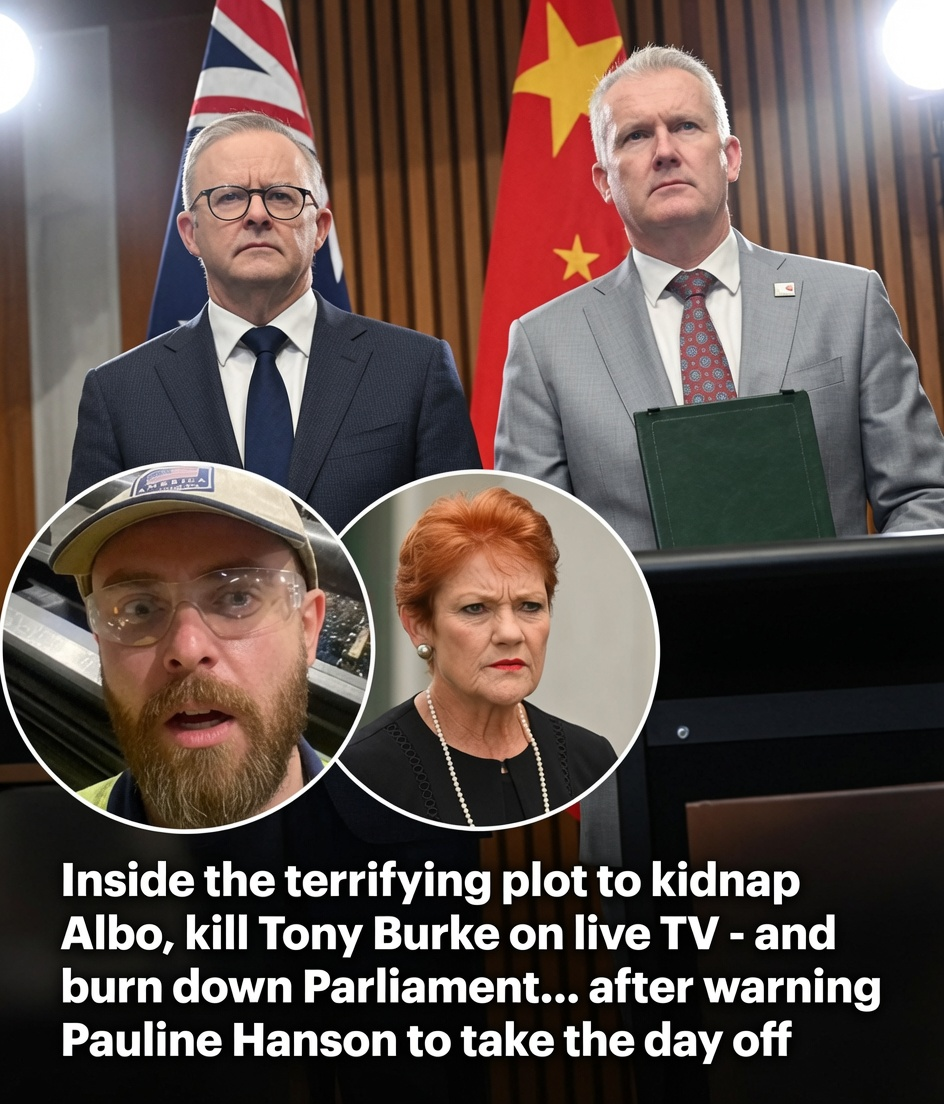
The 28-year-old Sydney man allegedly wrote about trapping federal politicians inside their Canberra workplace and burning the building to the ground.
According to reports of the alleged online communications, Ballesty wanted one politician spared.
One Nation leader Pauline Hanson.
The alleged plan was to send Hanson a warning.
“Don’t come to parliament today.”
Read casually on a social media feed, somebody might call it an outrageous rant.
A sick joke.
Edgelord content.
Political fantasy written for an audience inside an online group.
Read by national security investigators after a series of alleged communications about federal politicians, the same words can look very different.
That distinction now sits at the centre of Ballesty’s extraordinary legal story.
The case began with alleged online threats against federal politicians
Ballesty, from Beacon Hill on Sydney’s Northern Beaches, came to public attention after an Australian Federal Police national security investigation in December 2025.
The AFP alleged an online post had called for a federal parliamentarian to be kidnapped.
Contemporary reporting identified the politician as Prime Minister Anthony Albanese.
Federal investigators linked the online activity to Ballesty and raided his Beacon Hill home.
Electronic devices were seized for examination.
Ballesty was arrested and initially charged with using a carriage service to threaten serious harm, along with an offence relating to an order to provide access to an electronic device.
When he appeared in Manly Local Court, strict bail conditions were imposed.
He was ordered not to approach parliamentarians or their offices.
He had to report to police.
His passport was surrendered.
He was restricted in his use of encrypted applications including Discord.
The case immediately attracted national attention because it arrived during a period of growing concern about threats against Australian politicians.
The AFP had already established specialist National Security Investigations teams targeting individuals and groups considered capable of causing serious harm to Australia’s social cohesion.
Federal parliamentarians were specifically identified as a focus.
Ballesty’s alleged communications therefore did not land on the desk of an ordinary social media moderator.
They became part of a national security investigation.
Then the case changed
There is an important qualification to the Ballesty story.
The original allegation that he threatened serious harm against the Prime Minister was later withdrawn by prosecutors.
In March, federal prosecutors told the court the conduct was covered by a less serious charge of using a carriage service to menace or offend.
That change matters.
The serious harm offence carried a maximum penalty of seven years’ imprisonment.
The carriage-service offence carried a lower maximum of three years.
At the time of the March court update, Ballesty still faced 11 charges.
They included eight counts of using a carriage service to menace or offend and one count relating to an alleged Nazi salute in a public place.
He had not entered pleas to the remaining charges at that stage.
That legal position must not be blurred simply because the alleged online material is shocking.
Ballesty is entitled to the ordinary protections of the criminal justice system.
Allegations are not convictions.
Prosecutors have already demonstrated that charges can change as a case progresses.
But the withdrawal of one charge does not make the wider investigation imaginary.
Nor does it erase the alleged communications now being reported.
The case instead demonstrates how complicated online threat investigations can become.
Police see a collection of words, images, calls and messages.
Prosecutors have to decide which criminal offences those communications can actually prove.
Courts must then assess the evidence under legal standards far more demanding than a social media argument.
The Parliament House allegation is chilling because of its specificity
Angry political speech is everywhere online.
Australians call politicians traitors.
They demand governments be thrown out.
They write that Canberra should be “cleaned out”.
They talk about revolution.
Most of that language never produces a federal police raid.
The difficulty begins when rhetoric moves towards identifiable people, locations and acts of violence.
The alleged Ballesty material, as reported, did not merely express hatred for politicians.
It contemplated trapping federal politicians inside their Canberra workplace and setting the building alight.
Then came the alleged exception for Hanson.
“Don’t come to parliament today.”
The line is disturbing because it mimics the language of advance warning.
It suggests knowledge of a future event.
It identifies a potential beneficiary.
It turns a general fantasy of destruction into a scenario with an apparent before and after.
That does not tell a court, by itself, what Ballesty intended.
Context matters.
The surrounding conversation matters.
Whether there was any capability or preparation matters.
What other participants said matters.
The precise charge matters.
But it is easy to understand why investigators would not simply scroll past the words.
Imagine being the officer who reads the message and decides it is probably a joke.
Then imagine Parliament House is attacked.
That is the burden threat investigators carry.
They do not have the luxury of hindsight when the message first arrives.
Discord is not a private room in the way many users imagine
The Ballesty case is also a warning about the false intimacy of online communities.
Discord servers and group chats can feel private.
The same usernames appear every day.
People develop in-jokes.
Language becomes more extreme.
One person tries to shock another.
The group develops its own vocabulary and political assumptions.
Statements that would sound extraordinary in a workplace or family dinner become normal inside the chat.
Users begin writing as though the room has walls.
It does not.
A participant can take screenshots.
A platform can hold records.
A device can be seized.
A court order can compel access in circumstances allowed by law.
Investigators can examine communications alongside other evidence.
A message can be removed from the social context in which the author expected it to be read and placed inside a police brief.
Then every word is examined differently.
Who was the target?
Was a location identified?
Was a time discussed?
Did the person repeat the statement?
Were others encouraged to act?
Was there evidence of preparation?
Did the author possess relevant material?
Did the communication cause fear?
Could an ordinary person regard it as menacing?
“I was only joking” may be part of an explanation.
It is not a magical delete button.
Australia’s federal police have made threats to politicians a national security priority
The wider context is important.
Threats against Australian politicians have become a growing concern for law enforcement.
In September 2025, the AFP announced the creation of National Security Investigations teams.
The teams were designed to target individuals and groups causing high levels of harm to social cohesion.
The targeting of federal parliamentarians was explicitly within their remit.
That enforcement focus has since appeared in multiple cases.
A Sydney man was charged over alleged threats to kill Communications Minister Anika Wells and members of her family.
A Queensland man was charged after federal politicians allegedly received threatening and harassing communications.
Electronic devices have repeatedly become central evidence in these investigations.
The pattern is obvious.
Politicians’ offices receive an email or become aware of a social media communication.
The matter is referred to federal police.
Investigators attempt to identify the person behind the account.
Search warrants follow where the legal threshold is met.
Phones and computers are seized.
Online anonymity suddenly becomes much less reliable than the user assumed.
AFP Commissioner Krissy Barrett has publicly warned that people should not assume they are anonymous online.
The message is not subtle.
Political anger is lawful.
Threatening communications can become a police matter.
Free speech does not mean every online statement is legally consequence-free
Australia does not have an American-style constitutional First Amendment.
There is an implied freedom of political communication recognised by Australian constitutional law, but it is not a personal licence to say anything without legal consequence.
Commonwealth criminal law contains offences dealing with the use of carriage services to threaten, menace or harass.
A “carriage service” can include electronic communications.
That means the phone in your hand is not legally separate from the communication it sends.
A direct message can matter.
An email can matter.
A post can matter.
A Discord call can matter.
The legal questions depend on the particular offence and evidence.
But Australians should abandon the idea that typing something is automatically less serious than saying it face to face.
In some respects, the opposite is true.
Spoken words disappear into memory.
Online words create records.
They can be timestamped.
They can be linked to accounts.
They can be compared with earlier messages.
They can establish patterns.
They can be recovered from devices.
They can be placed in chronological order.
The internet has given Australians an unprecedented ability to broadcast anger.
It has also given investigators an unprecedented archive of what people chose to broadcast.
The line between an ugly joke and a threat is not decided by Facebook comments
The Ballesty case will inevitably produce two simplistic camps.
One will say the alleged messages prove everything.
The other will say people are being arrested for jokes and political speech.
The criminal law cannot operate on either slogan.
Context is critical in communications cases.
A comedian making an obvious joke before an audience is one thing.
A person privately communicating a specific threat to a target may be another.
A fantasy written in an extremist chat can raise different questions again.
Courts may examine the language, audience, surrounding communications and circumstances.
Prosecutors must prove the elements of the actual offence charged.
That is why the change in Ballesty’s charges is so significant.
The original serious-harm allegation concerning Albanese was withdrawn.
The prosecution did not simply continue with the most dramatic available accusation because it produced the best headline.
It shifted to a different carriage-service charge said to cover the alleged conduct.
That is the legal process doing something social media rarely does.
Separating outrage from the precise offence that can be prosecuted.
Australians can find the alleged Parliament House comments appalling while still insisting the remaining charges be proved.
Those positions are not contradictory.
Pauline Hanson’s name gives the alleged warning a strange political dimension
Hanson is one of the most polarising figures in Australian politics.
She is also the federal leader of One Nation and a Queensland senator.
According to the reported allegation, Ballesty contemplated warning her not to attend Parliament House before the imagined fire.
There is no suggestion Hanson was involved in, endorsed or had prior knowledge of any alleged threat.
The reported message places her in the story only as the politician Ballesty allegedly wanted to spare.
That distinction is essential.
Political movements attract supporters ranging from ordinary voters to people whose conduct party leaders would never endorse.
A person’s claimed admiration for a politician does not make that politician responsible for the person’s actions.
Hanson should not be blamed for an alleged communication she did not write.
But investigators are entitled to examine political references when assessing the meaning and context of alleged threats.
Why was one politician singled out?
What did the writer say about others?
Was the language part of a broader ideology?
Did other communications reveal an escalating fixation?
Those are evidentiary questions, not accusations against Hanson.
The internet frequently collapses that distinction.
A court must not.
The most dangerous sentence online may be the one written for applause
There is another lesson in cases involving extreme online rhetoric.
People perform for their own political tribe.
They want likes.
They want laughing emojis.
They want the group to see them as fearless.
One person posts an angry meme.
The next person writes something darker.
Somebody else escalates again.
Eventually, the language has moved far beyond anything the participants would say to a police officer, employer or magistrate.
But the record remains.
The audience that encouraged the performance may disappear when police arrive.
The person who typed the message is left explaining the words alone.
This is why “be careful what you publish online” is more than advice for teenagers worried about future employers.
It is basic adult common sense.
If you write about kidnapping a prime minister, investigators may want to know whether you mean it.
If you write about trapping politicians in a building and burning it, somebody may assess whether you pose a threat.
If you communicate through an encrypted platform, you should not assume the communication can never become evidence.
And if your defence is that everybody in the chat understood your sense of humour, you may eventually have to explain that context somewhere far less friendly than the chat itself.
Australia should protect fierce political disagreement — and take specific threats seriously
There is a danger in overreacting to ugly speech.
A democracy cannot treat every furious citizen as a terrorist.
Australians have the right to despise the government.
They have the right to campaign against Anthony Albanese.
They have the right to support Pauline Hanson.
They have the right to call for radical political change.
They have the right to say the political system has failed.
Governments should be extremely cautious when police powers intersect with political expression.
But there is an equal danger in pretending specific violent language is meaningless because it appeared online.
Politicians are real people.
Their staff are real people.
Parliament House is a real workplace.
A threat does not become fictional because it is transmitted through Wi-Fi.
The task for police and courts is to distinguish protected political anger from criminal communications using evidence and law.
That is difficult.
It is also necessary.
Ballesty’s case is still a legal matter, and the remaining allegations must be dealt with through the courts.
The withdrawal of the serious-harm charge involving Albanese is a reminder not to convict anybody through headlines.
The alleged Parliament House communications are a reminder not to dismiss every extreme online statement as meaningless banter.
Both lessons can be true at once.
The internet remembers the sentence you wish you had never typed
For years, Australians were warned that an embarrassing party photograph could cost them a job.
The modern warning is more serious.
Online communications can become part of national security investigations.
They can lead investigators to a home.
They can provide context for search warrants.
Devices can be seized.
Messages can be examined alongside other messages.
Prosecutors can argue over the exact offence those words constitute.
And a sentence typed for an audience of online friends can eventually be repeated to millions of strangers.
Nathan Ballesty’s case has not finished.
He must be judged on the charges and evidence that actually proceed through the legal system, not on internet commentary.
But the broader warning requires no verdict.
The screen in front of you can create a dangerous illusion.
You are at home.
You are angry.
You are talking to people who agree with you.
You type something extreme.
You press send.
Then the context changes.
The message is read by a federal investigator.
The politician has a name.
The building has an address.
The violent act has been described.
And the joke you thought everybody understood is now being examined word by word.
Be careful what you publish online.
The internet may feel casual.
The consequences do not have to be.






