A 33-year-old Mildura woman has been charged with a Commonwealth drug-importation offence after Australian Border Force officers intercepted a shipment of 1,4-butanediol allegedly bound for the regional Victorian city.
Victoria Police allege the woman attempted to import about 500 millilitres of the substance, commonly known as 1,4-BD or “bute”. The material was intercepted at Melbourne Airport in June before a multi-agency investigation led detectives to Mildura.
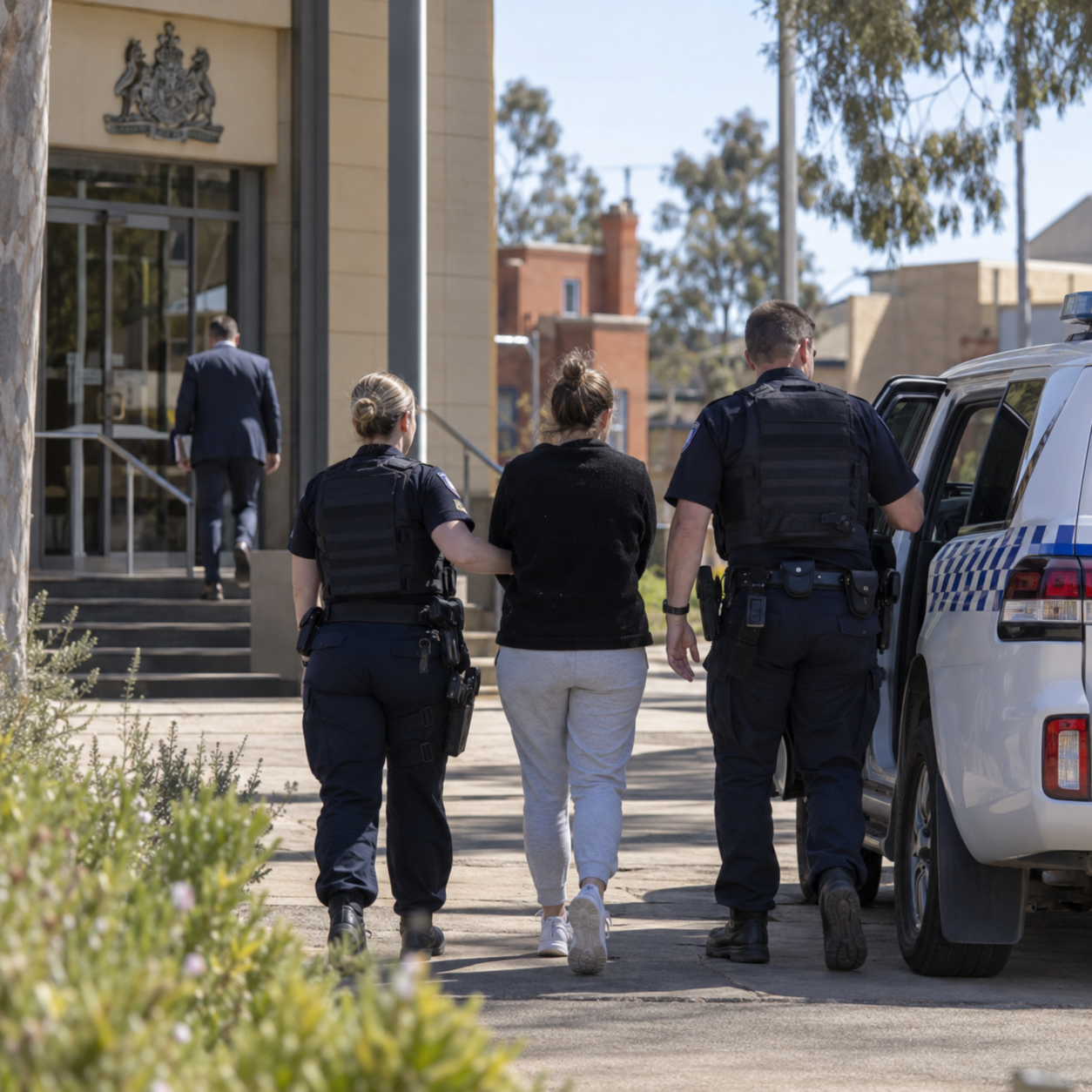
Officers from the Mildura Divisional Response Unit arrested the woman at a Mildura address on Friday morning. She was charged with importing a marketable quantity of a border-controlled substance and has been remanded to appear before the Mildura Magistrates Court on December 16.
The allegation has not been proven. A charge is not a finding of guilt, and the accused is entitled to the presumption of innocence unless and until a court determines otherwise.
The case involves a substance that has become a growing focus for Australian border and federal law-enforcement agencies. Commonwealth legislation was changed in March 2024 to list 1,4-butanediol as a border-controlled drug for relevant importation offences.
Under the Criminal Code Regulations, 1,4-BD appears on a restricted border-controlled drug list. The regulations specify a marketable quantity of 2 grams and a commercial quantity of 1 kilogram for the purposes of relevant offences.
Those legal thresholds are expressed by weight. The current Mildura allegation has been publicly described by police in terms of approximately 500 millilitres of liquid, so it would be inappropriate to independently convert that volume into a legal weight or to infer the precise quantity that prosecutors will rely upon. Police have charged the woman with the marketable-quantity offence.
Australian Border Force and Australian Federal Police have previously warned about a sharp rise in illegal imports of 1,4-BD. The substance has legitimate industrial uses, including as a chemical solvent and in manufacturing, but authorities say it can be consumed for effects similar to gamma-hydroxybutyrate, or GHB.
When ingested, 1,4-BD is converted by the body into GHB. Federal authorities have linked its non-medical use to overdoses and to drug-facilitated sexual offending.
Those warnings describe the risks associated with the substance generally. They are not an allegation that the Mildura accused intended to use the intercepted liquid in any particular kind of offence beyond the importation charge now before the court.
In a joint warning issued in 2025, the AFP and ABF said federal investigators had seized more than 18 tonnes of 1,4-BD between March 2024 and the end of April 2025. The agencies said the substance had become one of the most commonly encountered border-controlled drugs in that period.
The figures provide context for why border authorities are giving the chemical close attention, but they should not be used to imply that the Mildura case is connected with other investigations unless police establish such a link.
Border-control cases often involve more than one agency because the suspected importation can begin at an international mail, air-cargo or freight entry point and then require an investigation in the state or territory where the consignment was intended to go.
In this case, the ABC reports that ABF officers intercepted the substance at Melbourne Airport and that the subsequent investigation involved Victoria Police and federal agencies before the Mildura arrest.
The regional destination is notable because the initial interception occurred hundreds of kilometres away in Melbourne. Modern parcel and freight networks mean a border-controlled substance can enter through a major airport while the intended recipient is in a regional community.
That is one reason agencies share intelligence and evidence across jurisdictions. The Commonwealth controls the criminal law relating to many border-drug importation offences, while state police can assist with arrests, search warrants and local investigations.
1,4-BD was added to the Commonwealth border-controlled drug regime after authorities and health agencies raised concerns about its increasing use as a substitute or precursor for GHB-type effects.
Earlier ABF and AFP cases have involved the substance being shipped in containers labelled as ordinary commercial or consumer products. Those previous cases demonstrate the variety of concealment methods encountered by authorities, but they are separate from the Mildura prosecution and should not be treated as evidence about what occurred in this matter.
The legal change in 2024 also means conduct that might previously have been dealt with differently can now attract specific federal importation offences when the substance is brought into Australia without lawful authority.
For courts, the relevant issues will include whether prosecutors can prove the accused was responsible for the attempted importation, whether she knew or was reckless as to the nature of the substance, and whether the quantity element of the charged offence is made out under the Commonwealth law.
Those are matters for evidence and legal argument. Nothing in the charge announcement establishes those elements by itself.
The woman has been remanded, meaning she remains in custody ahead of her next listed court appearance. Remand is not a punishment or a finding of guilt. Courts make bail and remand decisions under separate legal tests while the substantive charge remains unresolved.
The December 16 hearing in Mildura Magistrates Court is expected to be an early stage of the criminal process rather than a final determination. Serious Commonwealth drug-importation matters can involve later committal, directions or transfer processes depending on the charge and how the prosecution proceeds.
For the Mildura community, the case is a reminder that regional centres are not isolated from international drug-supply networks. Border interceptions in capital cities can lead to investigations in smaller communities when authorities allege consignments are destined for regional addresses.
It is also a case where precise language matters. The substance was allegedly intercepted, the woman has been charged, and the prosecution will have to prove its case in court. Reporting should not turn those allegations into a conclusion that she imported the drug or intended any specific downstream use.
The scale of national enforcement activity helps explain why 1,4-BD has become a priority. In May 2025, the ABF and AFP said more than 3.8 tonnes had already been seized in the first months of that year, and more than 18.3 tonnes had been seized between March 2024 and the end of April 2025.
Those seizure totals cover many unrelated investigations and cannot be used to infer anything about the alleged Mildura import beyond the fact that the substance is a recognised border-enforcement issue.
Authorities have also emphasised that 1,4-BD is unusual because it can have legitimate industrial uses while also being misused when ingested. The Commonwealth restricted-list framework is designed to address importation offences without treating every lawful industrial possession as the same conduct.
That is why the legal language in the current charge matters. The allegation is not simply that a person possessed a chemical solvent; it is that she imported a marketable quantity of a substance that the regulations treat as a border-controlled drug for relevant import offences.
The marketable-quantity threshold in the regulations is two grams and the commercial-quantity threshold is one kilogram. Those thresholds are legal definitions used to classify offences. They do not tell a court who imported a substance or what a particular accused knew.
Past ABF cases have involved consignments detected through international mail and cargo streams before federal and state investigators identified an alleged recipient. Public releases show that the agencies often work jointly because the border interception and the local arrest can occur in different jurisdictions.
For Mildura, that cooperation is visible in the current timeline: the interception occurred at Melbourne Airport in June, while the arrest happened in the north-west Victorian city months later after investigation.
The delay between interception and arrest should not be interpreted as proof of a wider network. Investigators may need time to test substances, obtain records and gather evidence, but police have not publicly alleged that this accused was part of a larger organisation.
Health warnings around GHB-like substances also require care. The danger can vary with dose, other substances and individual circumstances. News reporting should communicate the recognised risk without presenting medical advice or implying a specific intended use in this prosecution.
The court process will eventually provide more reliable information about the prosecution case than an initial charge announcement. Until evidence is tested, the presumption of innocence remains the most important legal qualifier.
The next verified milestone will come through the court process. Until then, the confirmed facts are that authorities intercepted a consignment, police allege it contained about 500 millilitres of 1,4-butanediol intended for Mildura, and a 33-year-old woman now faces a Commonwealth marketable-quantity importation charge.