A Melbourne secondary school student helping organise a nationwide classroom walkout against Pauline Hanson says the One Nation leader’s growing popularity reflects what she believes is the increasing acceptance of the party’s political message by mainstream institutions.
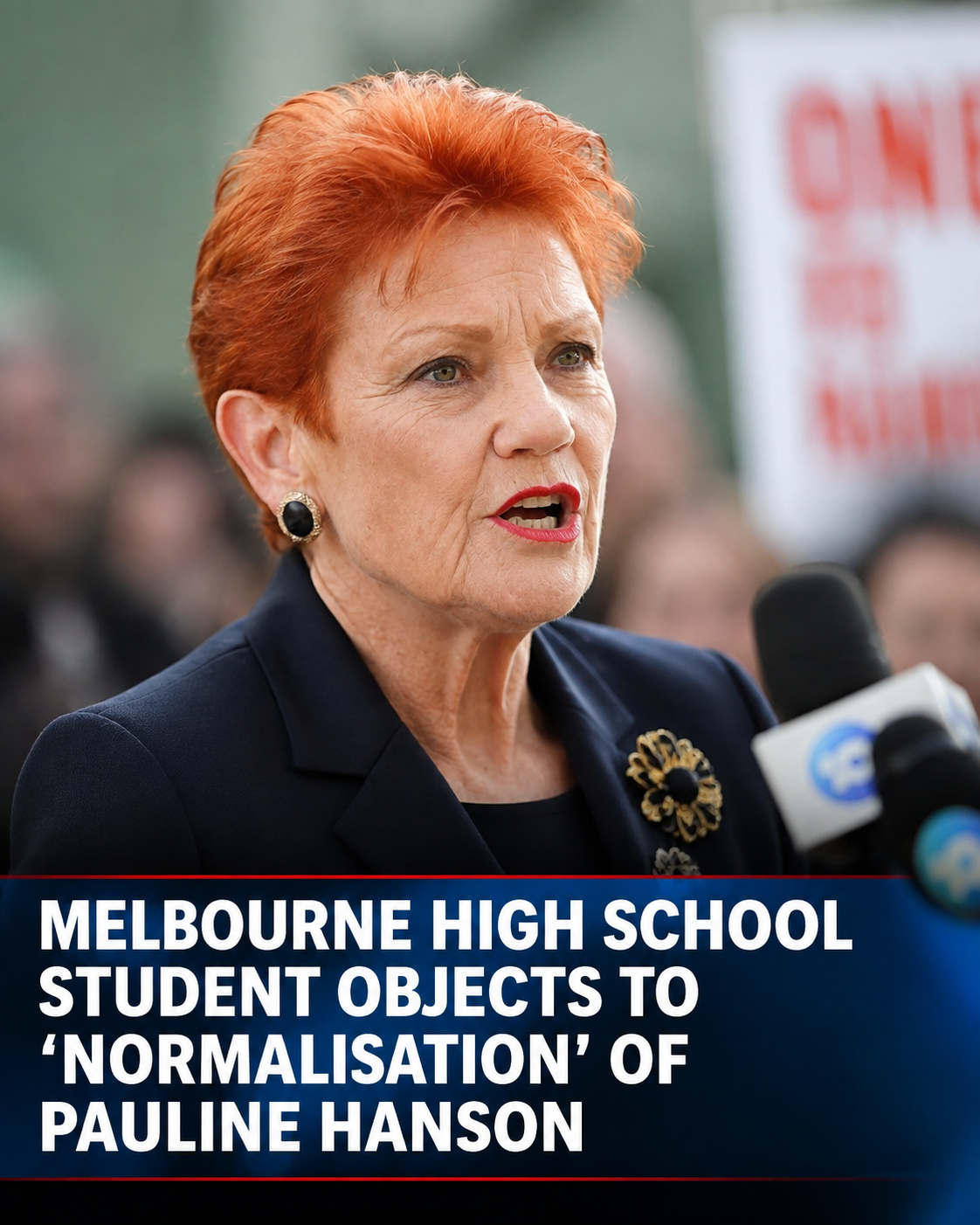
Jules Arpula, one of the Melbourne organisers behind next week’s “Students Say No to Hanson” protest, made the comments during an interview with 3AW Mornings host Tom Elliott as preparations continue for coordinated demonstrations planned across Australia on August 13.
During the interview, Arpula argued that Pauline Hanson’s continued political influence was not simply the result of public support but had been strengthened because major political institutions and prominent public figures had increasingly provided a platform for her views.
“These are big things in politics, things she is being offered by the ruling class,” Arpula said while discussing what she described as the “normalisation” of Hanson and One Nation.
She said many young Australians believed they had a responsibility to publicly oppose what organisers characterise as the growing influence of far-right politics.
According to organisers, the nationwide demonstrations are intended to challenge One Nation’s policies on immigration, multiculturalism and other social issues. Campaign material promoting the rallies describes the party as advancing “far-right, sexist, racist and anti-worker politics” and argues that students should not remain silent as its electoral support grows.
The walkout is expected to involve both high school and university students in Melbourne, Sydney, Brisbane, Adelaide, Canberra, Perth, Wollongong and Newcastle.
In Melbourne, organisers plan to gather outside the State Library of Victoria during school hours, while similar rallies are scheduled in other state capitals.
Student groups supporting the campaign include the High School Anti-Capitalists as well as several university-based organisations such as Socialist Alternative branches and pro-Palestinian student groups. Organisers have encouraged students to recruit classmates through social media and school networks ahead of the demonstrations.
Arpula said organisers were inspired by earlier student political movements and believed young people should speak out before they are old enough to vote.
“We’re appalled by her meteoric rise, her normalisation by the mainstream, and we feel a responsibility as students to protest like the students did in 1998,” she said.
The campaign comes as One Nation enjoys renewed political momentum in the lead-up to the Victorian state election. Recent polling has suggested the party remains a significant third-force contender behind Labor and the Coalition, with support particularly strong in some outer suburban and regional areas.
Pauline Hanson has also attracted national attention in recent months after outlining a series of policies on immigration, multiculturalism and national identity during her first address to the National Press Club. In that speech, she argued Australia should become a “monocultural” rather than multicultural society, comments that generated widespread political debate and criticism from opponents while being defended by supporters as reflecting concerns about social cohesion and migration.
The planned student protests follow demonstrations earlier this week outside a One Nation campaign event in Melbourne, where supporters and opponents of the party gathered under a significant police presence.
One Nation has criticised the school walkout, arguing that classrooms should not become venues for organised partisan activism during teaching hours. Party representatives have said students are entitled to peaceful protest but believe school attendance should remain the priority.
Education authorities have likewise reminded families that normal attendance expectations continue to apply. Victorian education officials have indicated schools will manage unauthorised absences under existing attendance policies, while South Australia’s Education Minister Lucy Hood has said participation remains a decision for individual parents but emphasised that school is generally the best place for students during the school week.
The planned demonstrations highlight the growing role of young Australians in political activism. Student-led protests have become increasingly common over the past decade on issues including climate change, Indigenous affairs, education funding and international conflicts.
Supporters argue that students have a legitimate interest in policies that will shape the country’s future, even before they become eligible to vote. Critics, however, contend that political disagreements should be debated through democratic institutions rather than by encouraging students to leave classrooms during school hours.
Regardless of the competing political views, next week’s rallies are expected to become one of Australia’s largest coordinated student political demonstrations of 2026.
Whether turnout matches organisers’ expectations remains uncertain, but the protests are already reflecting the increasingly polarised debate surrounding Pauline Hanson, One Nation and the broader direction of Australian politics ahead of upcoming state and federal electoral contests.