A Melbourne man has been sentenced to 27 years in prison for murdering a 22-year-old international student who stepped in to help a friend during a violent confrontation sparked after a housemate left a party without saying goodbye.
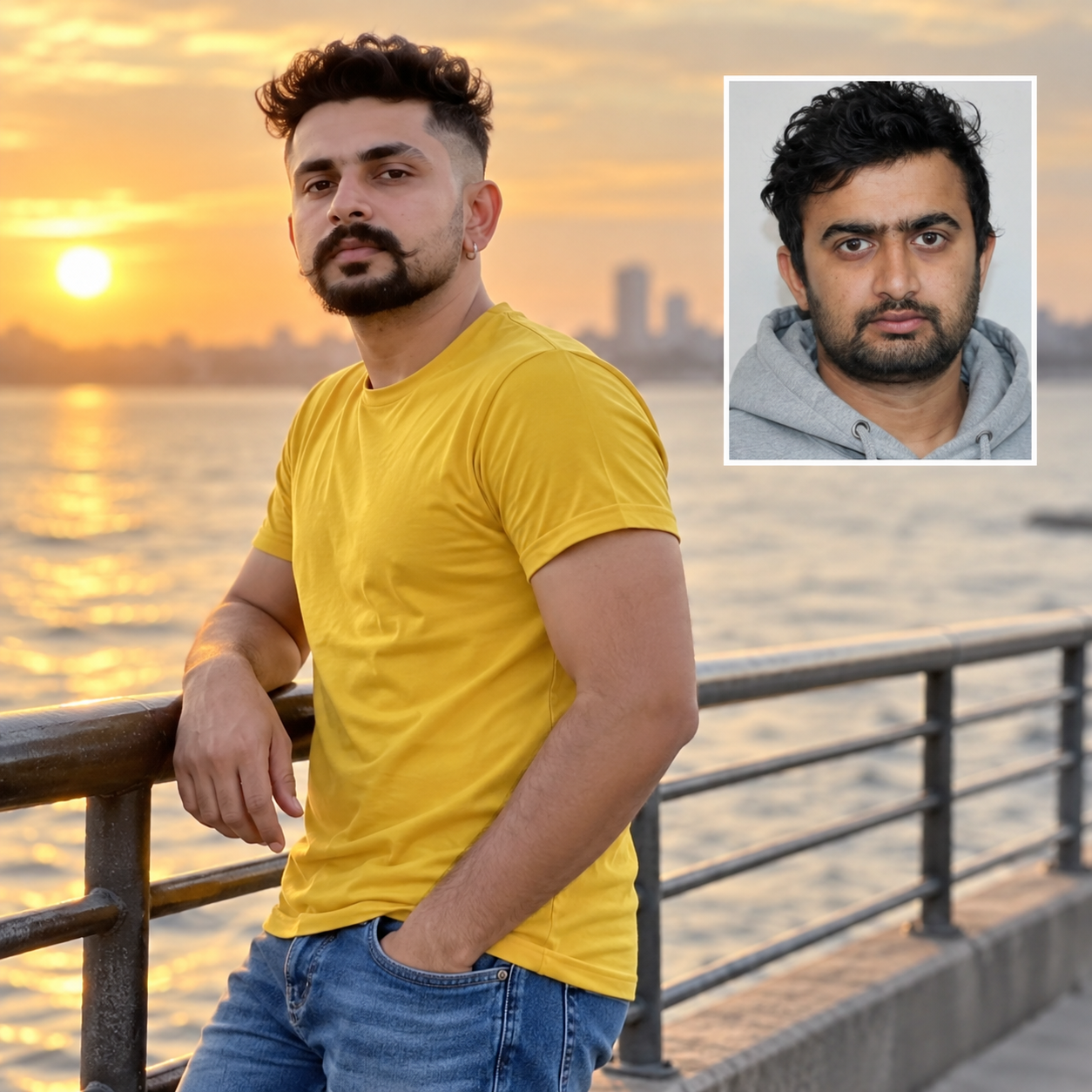
Robin Robin, 30, was sentenced in the Supreme Court of Victoria on Friday after a jury found him guilty earlier this year of murdering Navjeet Singh Sandhu and attempting to murder his housemate, Sharwan Singh.
Justice Andrew Tinney imposed a total sentence of 27 years’ imprisonment and ordered Robin to serve at least 20 years before becoming eligible for parole.
The judge described the attack as an episode of “extreme and wanton” violence against innocent victims and said the sentence had to express the court’s condemnation of what he called Robin’s “outrageous violence”.
“Your violence was extreme and wanton, carried out on innocent victims in public and causing fear in the community,” Justice Tinney told him.
The fatal attack occurred outside Robin’s home in the south-eastern Melbourne suburb of Ormond in the early hours of May 5, 2024.
The events leading to the killing began hours earlier with what should have been an ordinary social gathering.
Robin had been drinking whisky with friends while celebrating his brother Abhijeet Abhijeet’s purchase of a car.
Sharwan, who was living with Robin at the time, left the gathering at about 6.30pm and went to Navjeet’s home to play cards.
According to evidence accepted at trial and described during sentencing, Robin became angry that his housemate had left without saying goodbye.
He repeatedly called Sharwan, verbally abused him and demanded that he return.
Robin eventually told him he was no longer welcome in the house and threatened to throw his belongings onto the street unless he came to collect them.
Navjeet offered to help his friend retrieve his possessions and drove with him back to the Ormond property shortly after midnight.
The decision would cost the young international student his life.
As Sharwan began gathering his belongings, Robin confronted him with a knife and stabbed him in the chest.
Justice Tinney described the assault on Sharwan as “unprovoked and uncalled for”.
Robin continued attacking his housemate, inflicting further stab wounds to his shoulder.
Navjeet then stepped between the two men in an attempt to stop the violence.
The court heard that Robin turned his attention to Navjeet, gripping him by the shirt collar and repeatedly stabbing him as the younger man tried to escape.
Navjeet suffered catastrophic wounds to his heart and lung.
Emergency services responded, but he could not be saved.
Sharwan survived the stabbing.
The contrast between what triggered the confrontation and the violence that followed was central to Justice Tinney’s sentencing remarks.
A disagreement that began because one man had left a social gathering without saying goodbye escalated into a murderous attack that killed a young man who had returned to the property only to help a friend.
Robin’s conduct after the stabbing also weighed heavily against him.
Rather than remain at the scene or assist the mortally wounded Navjeet, Robin went back inside, collected his passport and fled.
Evidence at trial indicated he told his brother that he had stabbed someone and urged him to run with him.
The brothers left in a Toyota Camry before continuing north through a combination of rideshare vehicles, hitchhiking and a taxi.
Police ultimately arrested them in New South Wales two days later.
During his arrest, Robin told an officer that he was responsible and that his brother had done nothing wrong.
“I want to tell you that I am guilty,” he told police, according to evidence presented at trial.
But when the case reached a jury, Robin pleaded not guilty and argued he had acted in self-defence.
His lawyers also relied on his level of intoxication during the confrontation.
The jury rejected that case.
In April, Robin was found guilty of both murder and attempted murder.
His defence later told the sentencing court that he felt regret and remorse, but Justice Tinney was not persuaded.
The judge pointed to Robin’s conduct immediately after the violence, including leaving Navjeet dying on the road and fleeing interstate.
“Your lack of regret and remorse for your offending has persisted until the present time,” Justice Tinney said.
The consequences of the attack extend far beyond the prison term now imposed.
Navjeet was an international student from India who had been in Australia pursuing a future that his family hoped would allow him to build a career and support them financially.
Friends described him after his death as someone who placed extraordinary value on friendship and was always willing to help when somebody called.
That instinct was evident on the night he died.
He had not been the person involved in the original dispute with Robin. He went to the Ormond house because Sharwan needed help collecting his belongings.
When violence broke out, Navjeet again tried to help, intervening after his friend was stabbed.
His father, Jitender Sandhu, told the court through a victim impact statement that the family had been “completely shattered”.
He described Navjeet as the family’s only son and said his death had extinguished the joy and hopes of their household.
“The joy and laughter of our home have now turned into silence and endless tears,” his statement said.
Jitender watched Friday’s sentencing by video link.
The court also heard about the impact of the violence on people who witnessed its aftermath.
At Robin’s pre-sentence hearing, civilian witness Ella Cross described how the experience had fundamentally changed her sense of safety and the way she viewed the world.
She said the trauma was compounded by the lengthy court process, which required witnesses to return repeatedly to the events of May 2024 through statements, hearings and testimony.
Despite that experience, Cross said she would still try to save another person in danger rather than stand by and do nothing.
Her account highlighted a feature of serious violent crime that sentencing courts frequently confront: its damage rarely ends with the direct victim.
Family members, survivors, witnesses and first responders can live with the consequences long after a crime scene has been cleared.
Robin’s sentence reflects the seriousness of both offences.
Murder carries a maximum penalty of life imprisonment in Victoria, and attempted murder is itself among the state’s most serious crimes.
Justice Tinney was required to sentence Robin not only for killing Navjeet but also for the attempt to kill Sharwan during the same violent episode.
The 20-year non-parole period does not mean Robin will automatically be released after 20 years.
It represents the earliest point at which he may become eligible to apply for parole. Any eventual release would depend on the parole system and the circumstances applying at that time.
Robin has also already spent more than two years in custody, which is counted as pre-sentence detention towards his term.
His immigration status means another consequence may follow if he is eventually released from prison.
Current reporting indicates Robin faces deportation to India after completing his custodial sentence.
That should not be treated as equivalent to a final publicly announced deportation order. Immigration decisions can involve separate Commonwealth processes, including visa cancellation and removal arrangements.
The murder drew significant attention in India when it occurred because Navjeet and the men involved were from the Indian community and his family initially faced the additional ordeal of arranging for his body to be returned home.
Early reports also contained differing accounts of what had triggered the confrontation.
The completed criminal trial has now provided a clearer picture.
The dispute did not begin between Navjeet and Robin.
It arose from Robin’s anger towards Sharwan after his housemate left the gathering. Navjeet entered the situation later as a friend offering transport and assistance.
The jury’s verdict also resolves another question that remained contested when the case first came before the courts.
Robin maintained that he had acted in self-defence. The jury rejected that explanation and convicted him of intentionally murdering Navjeet and attempting to murder Sharwan.
Those findings mean the events can now be reported as established criminal conduct rather than merely allegations.
For Navjeet’s family, however, the verdict and sentence cannot restore what was lost.
The 22-year-old had spent only about 18 months in Australia before his death and was studying commercial cookery while trying to establish a new life.
His friends remembered him as loyal, generous and prepared to help others at any hour.
Those qualities ultimately placed him outside the Ormond house that morning.
He had driven there to help Sharwan collect his things. When his friend was attacked, he stepped in.
Justice Tinney described that intervention as brave.
Robin responded by turning the knife on him.
More than two years later, the criminal proceedings have ended with one young man dead, another surviving a potentially fatal stabbing and Robin facing decades behind bars.
What started with anger over a housemate leaving a party without a farewell became, in the judge’s assessment, an eruption of murderous violence for which a lengthy prison term was required.