A confrontation preserved in Senate estimates records shows how a dispute over Northern Territory safety funding became a personal exchange between Lidia Thorpe and Malarndirri McCarthy. Thorpe objected to money for high-visibility policing when youth and community services were struggling. McCarthy defended First Nations people working in the police service and accused her colleague of showing disrespect. Both senators withdrew remarks made during the heated exchange.
The dispute began in a Senate estimates hearing, where Thorpe pressed officials about funding allocated to police operations while youth services and community organisations were under strain. McCarthy responded by defending Indigenous police officers and frontline workers, arguing that Thorpe's language disrespected people who were trying to improve safety in the Territory.
Officials from the National Indigenous Australians Agency outlined funding for high-visibility policing and law-enforcement measures. The package described to the hearing included money for operations aimed at alcohol-related offending, compliance activities and security in public places. Officials also identified funding for justice reinvestment initiatives, illustrating that the government's approach was not limited to uniformed policing.
Thorpe was not satisfied with the allocation. She challenged why money associated with support for Aboriginal people would go to Northern Territory police when youth services were struggling. She directed that criticism at McCarthy, asking how the government could justify the choice. Her objections were about priorities and the role of police in communities where public safety and mistrust of law enforcement can both be significant concerns.
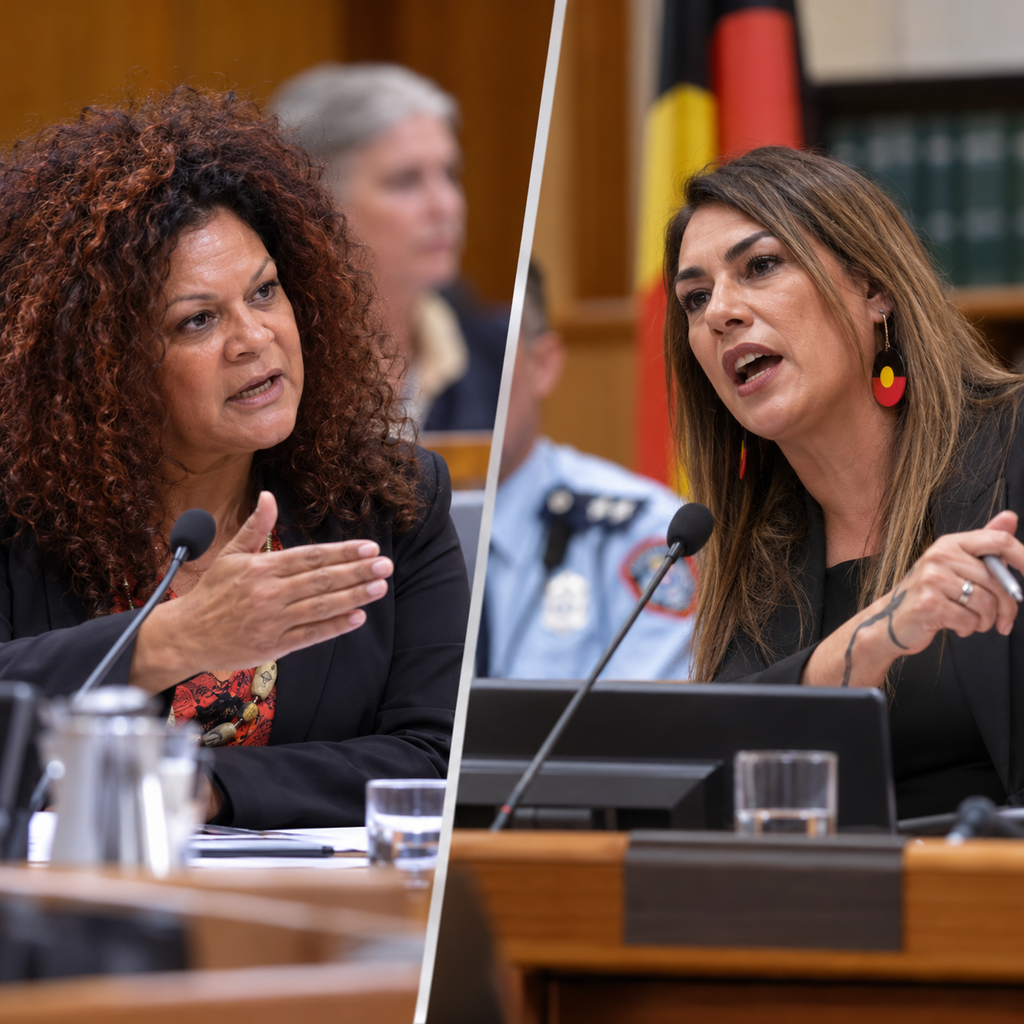
McCarthy replied angrily, saying there were First Nations people working within the police service who were trying to improve conditions. She told Thorpe: 'You're a disgrace to the Senate and you're a disgrace to your people.' She accused Thorpe of rubbishing those staff and others, using the word "disgrace" in an attack on her fellow senator. The remark was unmistakably personal, even though it emerged from a policy dispute about how money should be spent.
Thorpe responded that police were police, continuing her criticism of the institution and referring to serious concerns about the treatment of Aboriginal people. The exchange was reported by ABC and SBS NITV. Both senators later withdrew their remarks. Their withdrawals were part of the proceedings, although the disagreement over funding continued.
The disagreement began with identifiable allocations, not an abstract argument over law and order. A National Indigenous Australians Agency official outlined $14.2 million for high-visibility policing and law-enforcement activities, including work on liquor restrictions and public safety. She also referred to $10 million for justice reinvestment in Central Australia. Thorpe's question was why policing received support when she believed young people needed more direct community assistance.
The historical funding figures cited in the hearing refer to the package being examined there. They describe the allocations under discussion in that historical hearing, not the current Northern Territory budget or a permanent division of government resources. Comparisons about what youth services receive would require equivalent figures for the same programs and periods, not simply a single policing announcement.
McCarthy's response reflected the fact that Aboriginal people also work in the NT Police and can be committed to improving local safety. Criticism of law-enforcement policies is not necessarily criticism of every First Nations officer. Thorpe's rejoinder focused on the institution and Aboriginal experiences of policing. It is possible to recognise those as distinct positions without asserting that either senator represented the views of every Indigenous community.
Prevention services can reach people before an incident becomes a police matter. The programs discussed around the funding package included youth support, rehabilitation, community safety and justice reinvestment. Those services operate in different ways from patrols and enforcement operations. The existence of one type of funding does not show another is adequate, and the dollar amounts alone cannot tell readers how quickly people in remote communities can reach a worker or a safe place.
Justice reinvestment is relevant because it is intended to direct attention to the drivers of offending and the relationship between communities and the justice system. Its success depends on design, local engagement and evaluation. Mentioning that government had allocated money to justice reinvestment does not settle whether it was enough, nor whether implementation met the needs of people who were supposed to benefit.
To assess the competing funding priorities, the announced sums would need to be examined by purpose, recipient, implementation stage and the period they covered. A budget allocation does not establish when a community organisation received funding or whether an additional service actually became available. Equally, an amount assigned to policing does not, by itself, show how public safety changed. Those are questions for spending records and outcome evaluations, not conclusions that can be drawn from the dollar figures alone.
The associated Central Australia response also involved services outside policing. ABC reporting identified support for community organisations running residential rehabilitation and violence-prevention programs. SBS NITV reported McCarthy's reference to $25 million for organisations including some of those Thorpe had raised. Those were allocations connected with the government package discussed in the archived hearing, not figures that can be treated as a statement of present NT expenditure.
Access is the missing measurement in the funding argument. A program on a government list can still be limited by staffing, travel distances, opening hours or local suitability. For young people needing crisis help or an alternative to detention, the relevant questions are where services operate, whether community-controlled organisations designed them, and what outcomes were recorded. Neither senator's rebuke supplies those performance measures.
ABC reporting also identified federal funding to help community organisations in Alice Springs continue services, including residential rehabilitation and violence-prevention work. Those interventions affect costs that are easy to overlook in a debate centred on police visibility. A family seeking help with substance misuse, a young person needing emergency accommodation and a woman escaping violence may rely on different providers. Pressure in one part of that system can leave people depending on emergency services elsewhere, although the effect cannot be quantified from this single Senate exchange.
Justice reinvestment aims to address factors contributing to repeat offending and contact with the criminal justice system, often through local initiatives developed with communities. It is distinct from an allocation for visible police operations. A reliable comparison would look at rates of harm, access to support, local trust and costs, rather than treating money committed to either approach as proof of success. The testimony supplies the amounts, but not a full performance evaluation.
Those outcomes matter to public finances. Repeated emergency responses, court appearances and detention place different demands on government budgets from sustained investment in housing, family services, education and prevention. Yet claiming that any particular program will save a fixed amount in policing or prison expenses requires evidence about its effectiveness over a comparable period. The funding figures discussed at the hearing do not supply that result. Both prevention and enforcement can be expensive; their relative value must be demonstrated rather than assumed.
The legal dimension cannot be separated from trust. Police exercise coercive powers, and their actions can have serious consequences for individual rights. Community organisations must also account for public money and protect the people who use their services. McCarthy highlighted the work of First Nations police personnel; Thorpe criticised how enforcement can affect First Nations people. Neither emphasis proves that all police conduct is sound or that police have no role in community safety.
A reliable test of the original government choices would consider more than an expenditure total. The relevant records would show whether promised community programs opened, how many people used them, what service gaps remained and whether the outcomes justified the resources assigned. The same scrutiny applies to increased police presence: its success is not established by the size of an allocation or by the visibility of officers alone. The senators' clash exposed those competing expectations, without producing evidence that one entire approach had succeeded and the other had failed.
The argument also exposed how discussions about Indigenous funding can become divisive when they imply that one institution or one advocate speaks for everyone. First Nations communities are not uniform in their experiences of policing. Some people may want more protection from violence, others may be concerned about discriminatory treatment or deaths in custody, and many may hold both concerns at once.
McCarthy's defence of Aboriginal police personnel and Thorpe's criticism of the policing system should therefore be understood as different political positions, not as a simple choice between caring about safety and ignoring it. Both were responding to problems with real consequences for households and communities. The personal insults obscured the potential for a more detailed assessment of which interventions work.
Thorpe invoked controversies involving deaths following contact with police. Public anger about those cases remains distinct from the outcomes of criminal proceedings. In the case discussed in ABC reporting, the former officer involved in the death of Kumanjayi Walker had been acquitted of criminal charges. That court outcome does not end the debate about policing practices, but it is an essential part of the legal context.
A useful review of the allocations would examine how much of the announced money reached organisations and police operations, whether services were available across remote communities, and what independent evaluations found. It would also ask First Nations organisations about their priorities. The hearing contains clear evidence of a fierce disagreement but no comprehensive comparison demonstrating that either spending model consistently delivered better outcomes.
The estimates hearing placed spending priorities on the parliamentary record, but the sharp exchange left little room for a detailed comparison of results. Both senators subsequently withdrew remarks made during the confrontation. That parliamentary record can be examined alongside agency spending reports and the experience of communities that were supposed to benefit from the announced measures.
The unresolved policy choice is how to balance immediate community-safety responses with services intended to prevent harm and reduce unnecessary contact with the justice system. Transparent spending records, locally informed planning and credible measures of outcomes will do more to test those choices than the personal insult that dominated the hearing. The allocations discussed were historical; they should not be presented as fresh funding announcements.






