One Nation has unveiled one of the more unconventional candidates of Victoria’s 2026 state election campaign, selecting former criminal lawyer and political cartoonist Mark Nicholson to spearhead the party’s challenge in the Northern Metropolitan Region.
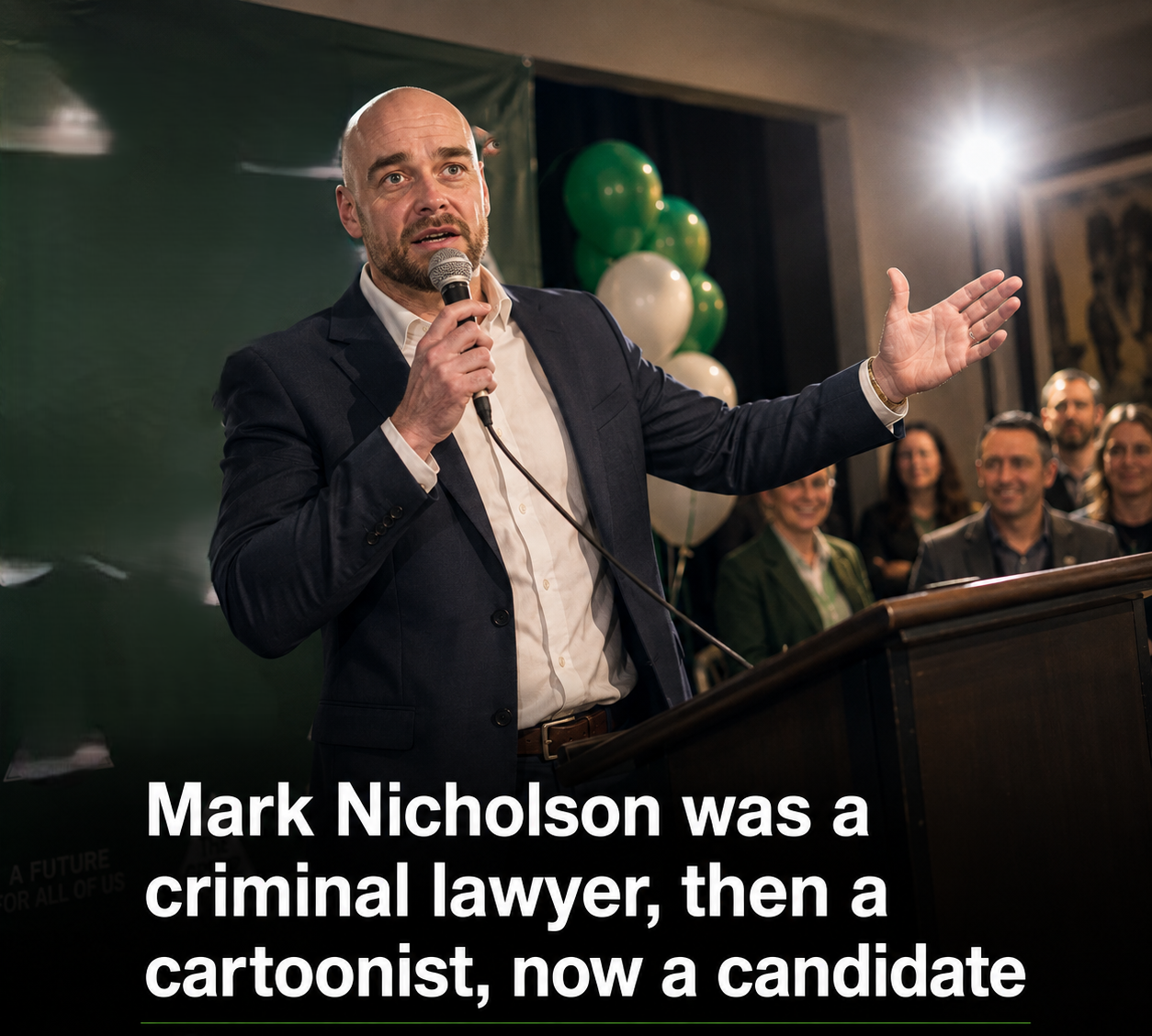
For many Australians, Nicholson is better known as the creative force behind Please Explain, the animated political satire series produced by Melbourne-based Stepmates Studios for Pauline Hanson’s One Nation. Since launching in 2021, the cartoons have become one of the party’s most recognisable online campaigns, regularly lampooning politicians from across the political spectrum while portraying Hanson as the central protagonist.
Now Nicholson is stepping out from behind the drawing tablet and into frontline politics.
Speaking after being announced as One Nation’s lead upper house candidate for Northern Metropolitan, Nicholson said his journey into politics was shaped long before he began producing cartoons.
According to Nicholson, his time practising criminal law left him increasingly frustrated with what he viewed as a justice system that prioritised offenders over victims.
He said spending time inside Victorian courtrooms convinced him that repeat offenders were too often treated with sympathy rather than accountability, an experience he says fundamentally changed how he viewed government and public policy.
His second turning point came after leaving the legal profession to build an animation business.
Nicholson said running a company exposed him to a different set of frustrations, particularly around employing staff and operating under what he believes has become an increasingly difficult regulatory environment for Victorian businesses.
Those experiences eventually led him to work alongside Pauline Hanson and One Nation, creating the Please Explain animation series that has become a significant component of the party’s digital campaigning.
The cartoons, commissioned in 2021, blend political satire with commentary on contemporary Australian issues. While supporters argue the series has helped One Nation connect with younger audiences through humour and social media, critics have accused some episodes of blurring the line between satire and misinformation, with several episodes attracting scrutiny from academics, media organisations and the Australian Electoral Commission. Despite that criticism, the series has generated millions of online views and become one of the party’s most recognisable media products.
Now Nicholson hopes to translate that public profile into electoral success.
His target is one of Victoria’s most politically distinctive regions.
The Northern Metropolitan Region stretches across Melbourne’s inner north and northern suburbs, including communities such as Richmond, Fitzroy, Brunswick, Preston, Coburg, Broadmeadows and surrounding areas.
It is widely regarded as one of the Greens’ strongest areas in Victoria, with the party holding several nearby lower house electorates and maintaining a substantial support base throughout the region.
That political reality makes Nicholson’s campaign an ambitious one.
At the 2022 Victorian election, One Nation attracted less than one per cent of the primary vote in Northern Metropolitan, well short of the quota required to secure an upper house seat.
However, party officials believe the political landscape has shifted significantly since then.
Recent polling has suggested One Nation’s statewide support has increased substantially ahead of the November election, encouraging the party to contest seats that would previously have been considered unwinnable. Whether those statewide numbers ultimately translate into votes within Melbourne’s progressive inner north remains one of the more closely watched questions of the campaign.
Nicholson was one of eight upper house candidates announced by Pauline Hanson during the party’s Victorian campaign launch in Melbourne.
The announcement formed part of One Nation’s broader strategy to contest seats across the state while attempting to capitalise on voter dissatisfaction with both Labor and the Coalition.
The candidate launch itself attracted attention beyond policy announcements after Hanson excluded journalists from the ABC, The Guardian and The Age from attending the event, arguing those organisations had repeatedly reported unfairly on her party. The move generated immediate criticism from media organisations and political opponents, becoming one of the defining stories surrounding the campaign launch.
Although Nicholson is entering politics for the first time, he is hardly new to political debate.
As co-founder of Stepmates Studios, he has spent the past several years creating animated political content that has become closely associated with Pauline Hanson and One Nation.
The success of Please Explain has also transformed the Melbourne animation business itself.
Nicholson has previously described the project as the turning point in his company’s history, saying the decision to work with One Nation generated significant criticism but also dramatically increased the studio’s profile.
He has acknowledged losing friends, business relationships and attracting public criticism following the partnership, while maintaining that political satire should be free to challenge all sides of politics.
Whether that public profile proves an electoral advantage remains uncertain.
Candidates entering politics from media, entertainment or advocacy backgrounds often benefit from greater public recognition than first-time candidates, but converting recognition into votes has historically been far less predictable.
For One Nation, however, Nicholson represents more than simply another candidate.
His selection signals the party’s intention to compete aggressively in metropolitan Melbourne rather than concentrating solely on regional and outer suburban electorates where it has traditionally performed more strongly.
The Victorian election, scheduled for 28 November, will determine whether that strategy resonates with voters.
For Nicholson personally, it marks an unusual career trajectory—from criminal lawyer, to political satirist, to parliamentary hopeful.
Whether Victorian voters embrace that transition will become clear when ballots are counted later this year, but his candidacy has already ensured that one of Australia’s most recognisable political cartoonists is now part of the political contest itself rather than simply drawing it.






