Support for the Albanese Government has fallen to its equal lowest level since Labor won office in 2022, according to the latest Newspoll, while Pauline Hanson’s One Nation has rebounded to match Labor’s primary vote in one of the most striking opinion poll results of the current parliamentary term.
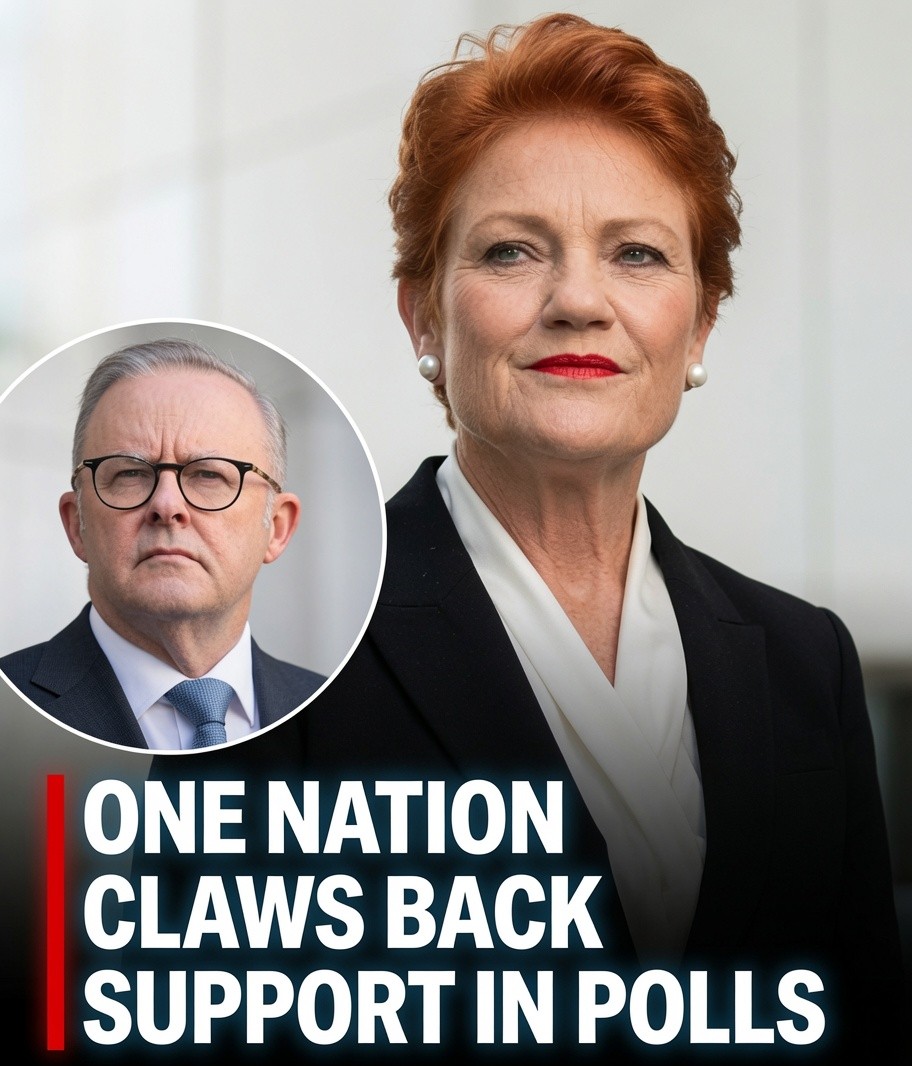
The exclusive Newspoll, conducted between Monday and Thursday last week, found Labor’s primary vote fell three percentage points from 33 per cent to 30 per cent, equalling its lowest result since Anthony Albanese led the party to victory at the 2025 federal election.
At the same time, One Nation recovered from 29 per cent in the previous survey to 30 per cent, placing Pauline Hanson’s party level with Labor on primary vote support. The Coalition also recorded a modest improvement, rising to 19 per cent after reaching a record low of 17 per cent last month, while the Greens were unchanged at 12 per cent.
The polling period coincided with a week of intense media attention surrounding Hanson’s visit to Europe, where the One Nation leader appeared on a podcast hosted by British far-right activist Tommy Robinson, attended a Dolce & Gabbana fashion event in Italy and later addressed the CPAC GB conservative conference in London.
Those appearances generated widespread political debate after Hanson linked Australia’s immigration challenges to the abolition of the White Australia policy before later clarifying that she did not support reinstating the policy.
Despite the controversy, the latest polling suggests One Nation retained much of the support it gained during recent months.
The result has renewed discussion about the growing influence of minor parties in Australian politics, particularly as dissatisfaction with both major parties continues to shape voter behaviour.
Although Labor and One Nation recorded the same primary vote in this survey, Australia’s preferential voting system means primary vote figures alone do not determine election outcomes.
On a two-party-preferred basis, separate national polling continues to show Labor maintaining a clear lead over both One Nation and the Liberal-National Coalition, highlighting the distinction between primary support and the final distribution of preferences.
Prime Minister Anthony Albanese’s personal approval ratings remain under pressure.
The Newspoll found his net approval rating remained negative, with more respondents dissatisfied than satisfied with his performance, although he continues to lead Opposition Leader Angus Taylor as preferred prime minister.
Hanson’s personal ratings also improved, with satisfaction and dissatisfaction both measured at 47 per cent, producing a neutral net approval rating.
Political analysts say Labor’s declining primary vote reflects ongoing concerns about cost-of-living pressures, housing affordability and broader economic uncertainty rather than any single issue.
Inflation has eased from its peak, but many households continue to experience pressure from higher mortgage repayments, rents, electricity prices and everyday living costs.
The Government has argued its policies are designed to improve affordability over the medium term through housing reform, tax changes and continued investment in productivity.
Opposition parties, meanwhile, have accused Labor of failing to address immediate economic pressures quickly enough.
One Nation has attempted to capitalise on voter dissatisfaction by campaigning heavily on immigration, energy policy, cost of living and regional Australia.
The party has argued that reducing migration, expanding domestic energy production and easing regulatory burdens would improve affordability for Australian households.
Its recent polling gains have prompted renewed debate over whether minor parties are becoming a more permanent feature of Australia’s political landscape.
Nevertheless, several political commentators caution against reading too much into a single poll.
Opinion polling can fluctuate significantly between elections, particularly when the next federal election is not due until 2028.
Recent surveys from other polling organisations have painted a different picture. For example, a YouGov poll published only days earlier continued to show Labor comfortably ahead of both One Nation and the Coalition on a two-party-preferred basis despite shifts in primary vote support.
That divergence illustrates an important feature of Australia’s electoral system.
While primary vote figures measure a party’s first-preference support, governments are ultimately elected after preferences from smaller parties and independents are distributed.
Historically, Labor and the Coalition have generally benefited from preference flows in ways that differ substantially from headline primary vote numbers.
The Newspoll also highlighted the Coalition’s modest recovery after several months of declining support.
Its increase to 19 per cent represented the first improvement after three consecutive falls, although support remained well below the levels traditionally recorded by the Liberal-National Coalition.
Opposition Leader Angus Taylor has continued to rule out any formal coalition agreement with One Nation, despite increasing speculation following Barnaby Joyce’s move to the minor party and ongoing cooperation on several parliamentary issues.
Labor is expected to discuss its political strategy and policy priorities at its upcoming national summit, where ministers are likely to focus on rebuilding support ahead of the second half of the parliamentary term.
Senior government figures have argued that many of the reforms currently attracting criticism—including housing affordability measures, energy policy and tax changes—are intended to deliver benefits over several years rather than immediately.
For One Nation, the latest poll provides encouragement following an eventful fortnight dominated by Hanson’s overseas appearances.
Although critics argued her comments about immigration and the White Australia policy damaged the party’s reputation, the polling suggests those controversies have not resulted in an immediate collapse in support.
Political analysts note that One Nation has increasingly attracted voters dissatisfied with both major parties, particularly in regional areas and among Australians concerned about immigration, housing affordability and living costs.
Whether that support can be sustained over the longer term remains uncertain.
Minor parties have often experienced periods of rapid growth between elections before support moderates during formal election campaigns, when greater attention is given to government formation, economic management and leadership.
With almost two years remaining before Australians are next expected to vote federally, pollsters caution that voter sentiment is likely to continue shifting in response to economic conditions, policy announcements and major political events.
For now, however, the latest Newspoll has delivered a symbolic moment in Australian politics: Labor’s primary vote has fallen to its lowest point since returning to government, while One Nation has once again demonstrated its capacity to compete for a substantial share of first-preference votes despite sustained political controversy.






