Support for the Albanese government has fallen to one of its weakest levels in more than a decade, with the latest Newspoll showing Labor’s primary vote slipping to 30 per cent—its equal lowest result since Anthony Albanese led the party to victory in 2022 and the weakest level recorded by Labor since the Julia Gillard era.
The result underlines a remarkable transformation in Australian politics. Rather than a straightforward contest between Labor and the Liberal-National Coalition, the country’s electoral landscape is increasingly characterised by fragmented voter loyalties, rising support for minor parties and growing dissatisfaction with the political establishment.
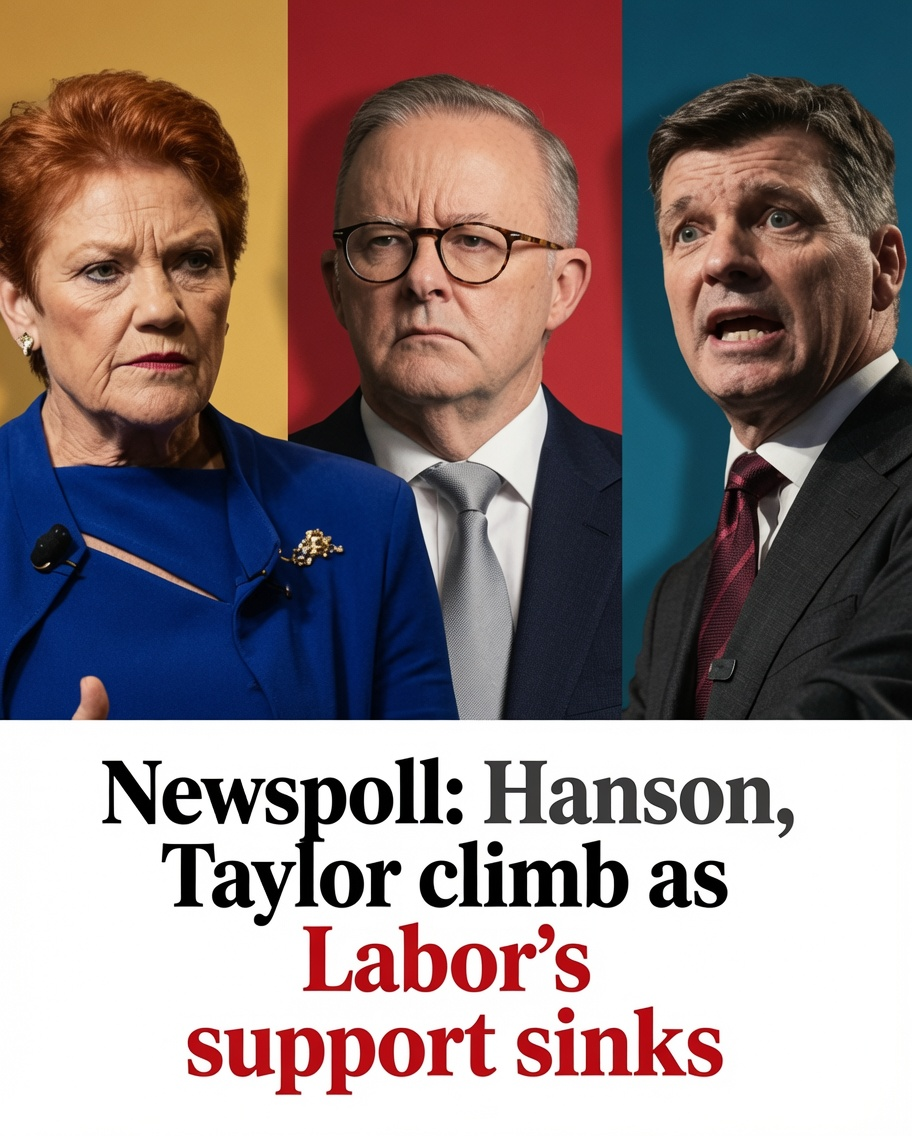
According to the latest Newspoll, Labor’s primary vote has fallen three percentage points to 30 per cent, while Pauline Hanson’s One Nation has recovered from a temporary setback to reach the same level. The Coalition improved slightly but remained in third place on the primary vote, highlighting the pressure facing both traditional major parties.
Although the numbers have intensified political pressure on Prime Minister Anthony Albanese, they should not be interpreted as an election forecast.
Australia’s preferential voting system means primary vote percentages alone do not determine which party forms government. Geographic concentration of support, electorate-level contests and preference flows remain decisive factors in converting votes into parliamentary seats.
A significant political milestone
The symbolism of Labor falling to 30 per cent extends beyond the immediate polling cycle.
The figure places the party in territory not seen since the final years of the Gillard government, when Labor endured prolonged internal divisions, leadership instability and declining public confidence.
While the political circumstances today are very different, the comparison illustrates how sharply Labor’s electoral position has weakened since its commanding 2025 federal election victory.
Only a year ago, Albanese led Labor to one of the party’s strongest modern election results, expanding its parliamentary majority while the Coalition suffered historic losses.
That success created expectations that Labor would dominate federal politics for years.
Instead, opinion polling throughout 2026 has revealed growing voter frustration over economic conditions, housing affordability and migration policy, with much of that dissatisfaction flowing towards One Nation rather than the Coalition.
One Nation’s recovery changes the political landscape
Perhaps the most striking feature of the latest poll is not simply Labor’s decline but One Nation’s recovery.
Only weeks earlier, Pauline Hanson’s party appeared to have lost momentum following controversy surrounding her National Press Club speech, comments advocating a “monocultural” Australia and criticism over her meetings with British activist Tommy Robinson during a visit to the United Kingdom.
Several polls conducted in late June showed One Nation losing support after those events.
The latest Newspoll suggests that setback was temporary.
The party has climbed back to 30 per cent, matching Labor and reinforcing its position as a significant force in federal politics.
The rebound indicates that while Hanson’s public statements remain highly polarising, they have not significantly eroded the loyalty of the party’s core supporters.
For political strategists, that distinction matters.
Controversial leaders often experience fluctuations among undecided voters while maintaining a stable and committed support base that is less influenced by daily political disputes.
The Coalition faces its own challenge
Labor is not the only party confronting uncomfortable questions.
The Coalition has improved modestly from previous polling but continues to trail both Labor and One Nation on the primary vote.
That presents Opposition Leader Angus Taylor with a strategic dilemma.
The Coalition must decide how to regain conservative voters attracted to One Nation without alienating moderate supporters in metropolitan electorates.
Taylor has repeatedly ruled out governing arrangements with One Nation while criticising many of the party’s economic proposals.
At the same time, Liberal strategists recognise that a substantial proportion of One Nation’s support comes from voters who previously backed the Coalition.
Winning those voters back is essential if the Coalition hopes to rebuild into a competitive alternative government.
Cost of living remains the dominant issue
The deterioration in Labor’s polling has occurred against a backdrop of persistent household financial pressure.
Although inflation has moderated considerably from its post-pandemic peak, Australians continue to face significantly higher prices for groceries, insurance, electricity, housing and many everyday essentials.
Mortgage holders have experienced substantial increases in repayments following the Reserve Bank’s interest-rate tightening cycle, while renters continue to confront limited housing supply and elevated rental costs.
International comparisons have also shown Australia endured one of the sharpest declines in real household disposable income among OECD economies during the post-pandemic period.
The Albanese government has introduced tax cuts, energy bill relief, Medicare investment and housing initiatives aimed at easing pressure.
However, many households continue to judge economic conditions according to their weekly expenses rather than broader macroeconomic indicators.
That gap between improving headline statistics and lived financial experience has become one of Labor’s greatest political vulnerabilities.
Migration and housing continue to dominate debate
Another major factor influencing public sentiment has been migration.
Australia experienced record post-pandemic net overseas migration as international students, skilled workers and temporary visa holders returned following border reopening.
The rapid population increase coincided with an already severe housing shortage.
Although economists differ over the precise contribution migration has made to housing affordability, higher population growth has clearly increased demand for homes, transport infrastructure, schools and health services.
One Nation has made migration the centrepiece of its political strategy, arguing population growth has exceeded Australia’s capacity to build housing and infrastructure.
Labor has responded by tightening parts of the migration system and seeking to reduce arrivals from their post-pandemic peak while maintaining skilled migration necessary for the economy.
The Coalition has also advocated lower migration than recent levels, though generally without embracing One Nation’s more aggressive reductions.
Why primary vote is only part of the story
The headline figures inevitably generate dramatic headlines, but Australia’s electoral system requires a more nuanced interpretation.
Members of the House of Representatives are elected in individual electorates using full preferential voting.
A party can achieve a strong national primary vote yet fail to win a comparable number of seats if its support is spread broadly across the country.
Conversely, concentrated support in marginal electorates can deliver substantial parliamentary representation even with a lower national vote.
One Nation therefore faces a different challenge from Labor.
Its growing national support demonstrates increasing voter appeal, but converting that support into House of Representatives seats requires competitive local candidates, effective campaigning and favourable preference flows.
Historically, preference flows have not always worked in One Nation’s favour.
That means a primary vote equal to Labor’s would not necessarily produce anything like the same parliamentary outcome.
Leadership remains another battleground
While Labor’s party vote has weakened, Albanese continues to perform more strongly than many of his political opponents in preferred prime minister comparisons.
Recent polling has consistently shown him maintaining an advantage over Angus Taylor, although the gap has narrowed as Labor’s overall support has declined.
Leadership ratings nevertheless remain volatile.
If economic conditions improve, Labor may recover support relatively quickly.
If household pressures persist, leadership advantages alone may not be sufficient to offset broader dissatisfaction with the government’s performance.
For One Nation, Pauline Hanson remains the party’s defining political figure.
Its polling resilience despite repeated controversies suggests supporters continue to prioritise her positions on immigration, housing and the cost of living over criticism relating to overseas travel or public remarks.
A more fragmented Parliament may become the norm
The latest Newspoll reinforces a broader trend emerging across multiple polling organisations during 2026.
Australian politics is becoming increasingly fragmented.
Rather than alternating comfortably between Labor and the Coalition, voters are distributing support across a wider range of parties and independents.
The Greens continue to attract a stable progressive vote, while community independents retain influence in several metropolitan electorates.
At the same time, One Nation has expanded beyond its traditional protest-party base to become a major force in national polling.
This fragmentation creates challenges for both major parties.
Labor must defend support simultaneously against the Greens, independents and One Nation.
The Coalition faces pressure from One Nation on its political right while attempting to regain centrist urban voters lost at recent elections.
The result is a far more competitive and unpredictable political environment than Australia experienced for much of the previous two decades.
Can Labor recover?
History suggests governments can recover from weak polling if economic conditions improve and voters regain confidence.
Polling also fluctuates over time, particularly when elections remain some distance away.
Nevertheless, Labor’s fall to 30 per cent represents a significant political warning.
The government now faces the challenge of convincing voters that its policies on living costs, housing, migration and public services are producing tangible improvements rather than simply promising future benefits.
For Albanese, the task is increasingly about restoring confidence before dissatisfaction becomes entrenched.
For One Nation, the challenge is different.
Maintaining support at this level will require demonstrating that the party offers practical policy alternatives rather than simply capturing voter frustration.
As scrutiny intensifies, One Nation’s economic platform, migration proposals and broader governing credentials are likely to receive much closer examination.
The Coalition, meanwhile, must determine whether it can persuade conservative voters to return without sacrificing broader electoral appeal.
Those competing pressures explain why the latest Newspoll matters well beyond a single week’s headlines.
Labor’s 30 per cent primary vote is not merely another polling fluctuation.
It reflects a deeper shift in Australia’s political landscape, where voter loyalty to the traditional major parties has weakened and alternative political movements are playing a larger role than at any time in recent decades.
Whether that transformation proves temporary or becomes a defining feature of the next federal election cycle will depend on how effectively each party responds to the economic and social concerns driving today’s increasingly unsettled electorate.






