The Albanese government has reaffirmed that Australia’s rapidly expanding artificial intelligence industry will be powered by renewable energy rather than nuclear generation, despite some of the world’s largest technology companies increasingly embracing nuclear power for their overseas data centre operations.
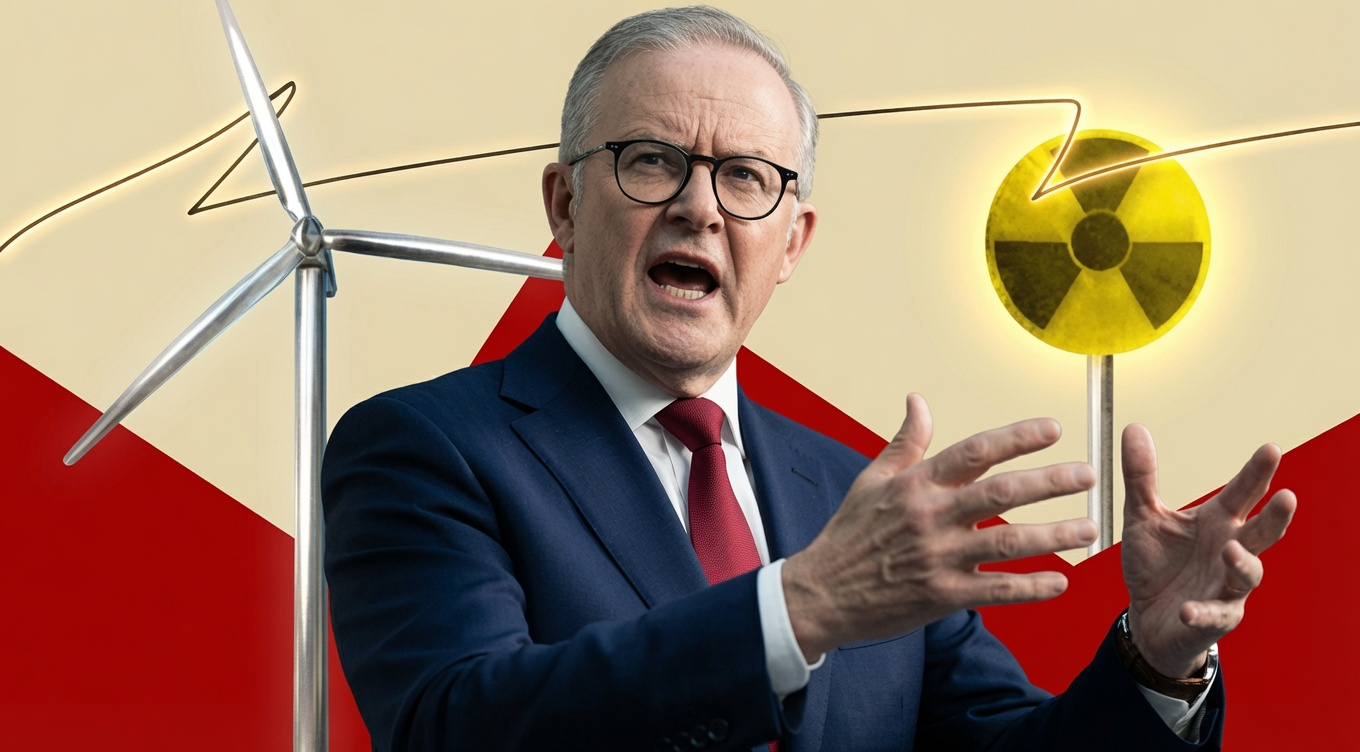
The position highlights a growing policy divide between Australia and the United States as demand for AI computing infrastructure accelerates worldwide.
Companies including Amazon, Microsoft, Google and Meta have all announced significant investments or long-term agreements linked to nuclear energy projects in the United States to secure reliable electricity for next-generation AI infrastructure. Meanwhile, the Albanese government insists Australia’s competitive advantage lies in renewable energy backed by new regulatory standards governing major data centre developments.
The debate comes as AI systems require unprecedented computing power, driving a global boom in hyperscale data centres capable of consuming as much electricity as medium-sized cities.
Speaking as part of the government’s broader artificial intelligence strategy, ministers have made it clear they expect new Australian AI infrastructure to support the nation’s clean energy transition rather than increase pressure on existing electricity supplies.
Under the government’s proposed framework, large AI data centres will be expected to finance their own additional power generation, cover the full cost of connecting to the electricity network and operate in ways that minimise impacts on consumers, communities and the environment.
Labor argues this approach allows Australia to attract billions of dollars in AI investment while ensuring households are not left paying higher electricity bills because of soaring industrial demand.
The government’s proposed Australian Standards for AI would also require operators to improve water efficiency and reduce electricity consumption during periods of heavy pressure on the national grid.
Those standards build upon earlier expectations released for AI infrastructure developers, which prioritise renewable electricity and responsible resource management rather than alternative generation technologies such as nuclear power.
The policy arrives at a time when global technology companies are scrambling to secure reliable electricity supplies for AI expansion.
Training advanced AI models and operating cloud computing platforms requires enormous amounts of uninterrupted electricity. Industry analysts expect demand to continue climbing sharply as businesses, governments and consumers increasingly rely on generative AI services.
To meet that demand, several major US technology companies have turned towards nuclear energy.
Microsoft reached a long-term agreement supporting the restart of the Three Mile Island nuclear facility, Google has invested in advanced small modular reactor technology, Amazon has backed nuclear development through X-energy, while Meta has announced multiple large-scale nuclear energy partnerships to support future AI infrastructure.
Supporters argue nuclear generation provides consistent, carbon-free electricity that complements renewable energy and reduces dependence on fossil fuels.
However, Australia continues to prohibit domestic nuclear power generation, with Labor maintaining that renewable energy combined with storage, transmission upgrades and flexible demand management offers a more appropriate pathway.
The government’s position has become increasingly significant as Australia competes for international investment in digital infrastructure.
Microsoft has already committed billions of dollars towards expanding Australian AI capability, including cloud infrastructure, cybersecurity investment and workforce training. As part of its agreement with Canberra, the company has committed to aligning future Australian operations with the government’s expectations for data centres and AI infrastructure.
Officials argue Australia remains attractive because of its stable regulatory environment, strong digital connectivity and growing renewable energy sector.
Labor says those advantages can support long-term investment without changing Australia’s long-standing opposition to domestic nuclear electricity generation.
The rapid expansion of AI infrastructure is also creating broader policy challenges beyond electricity supply.
Modern hyperscale data centres require substantial land, high-capacity transmission connections and significant water resources for cooling equipment.
Governments around the world are increasingly weighing the economic benefits of AI investment against local environmental impacts and competing demands for infrastructure.
Several overseas jurisdictions have introduced restrictions or tighter planning requirements for new data centre developments because of concerns over electricity consumption, water usage and land availability.
Australia is moving in a similar direction through national standards rather than outright development bans.
The Albanese government has indicated future approvals will consider energy efficiency, environmental performance, community consultation and broader national interests alongside economic benefits.
Large facilities are also expected to avoid shifting additional electricity costs onto households or existing businesses.
Ministers have argued this framework strikes a balance between attracting AI investment and protecting consumers from rising energy prices.
The issue has become increasingly important because AI infrastructure is now viewed as strategically significant.
Beyond supporting consumer services such as online search, translation and digital assistants, data centres underpin financial systems, healthcare, scientific research, defence technologies and cloud computing used across much of the modern economy.
Governments increasingly view domestic AI infrastructure as part of national economic resilience and technological competitiveness.
That explains why Australia is simultaneously encouraging new investment while imposing stricter operating expectations.
As part of Labor’s wider AI agenda, the government plans to establish an Office of AI to coordinate regulation, safety standards and long-term policy development across the public sector.
The proposed framework also includes stronger protections for copyright holders, clearer rules around AI deployment and new standards governing where future large-scale data centres should be located.
Industry observers note that Australia’s renewable-focused strategy differs from the path emerging in North America but does not necessarily prevent investment from global technology firms.
Many international companies already purchase renewable electricity for Australian operations through long-term power purchase agreements while simultaneously investing in nuclear energy elsewhere where regulations and electricity markets differ.
That means the same company may support multiple energy strategies depending on local policy settings and available infrastructure.
The broader debate over nuclear versus renewable energy is therefore likely to remain a central issue as AI continues reshaping global electricity demand.
For Australia, the Albanese government’s position remains clear.
The country intends to expand its AI economy, attract major international data centre investment and develop advanced digital infrastructure, but expects those projects to fit within a renewable energy transition rather than drive a shift towards nuclear generation.
Whether that approach ultimately proves more competitive than the nuclear-backed strategies emerging in the United States may become clearer as global investment decisions continue over the coming decade.






